No. 1
Heat pump repair
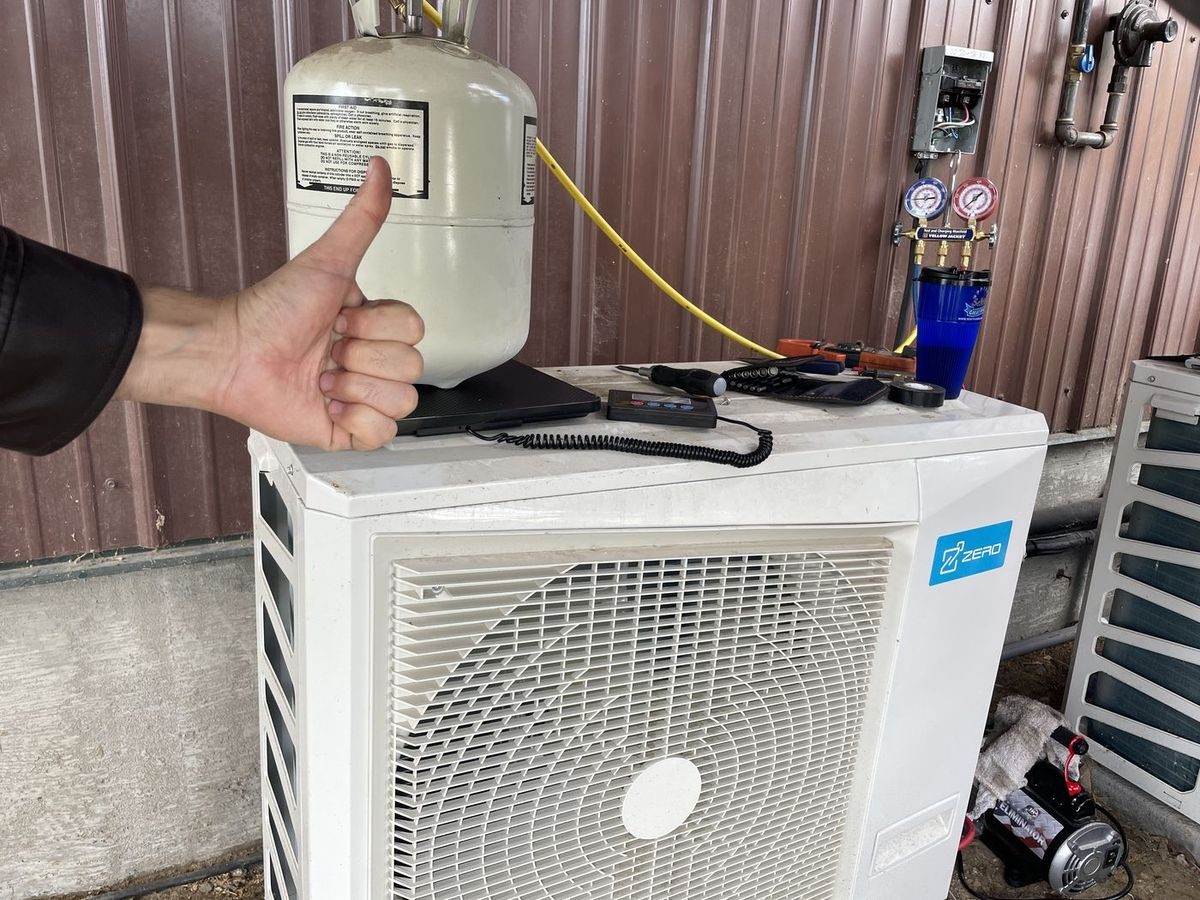
Olympia winters stay wet and just above freezing for weeks, so defrost does a lot of work. We read the coil sensor, the defrost board and the charge before anything else.
Go to the service page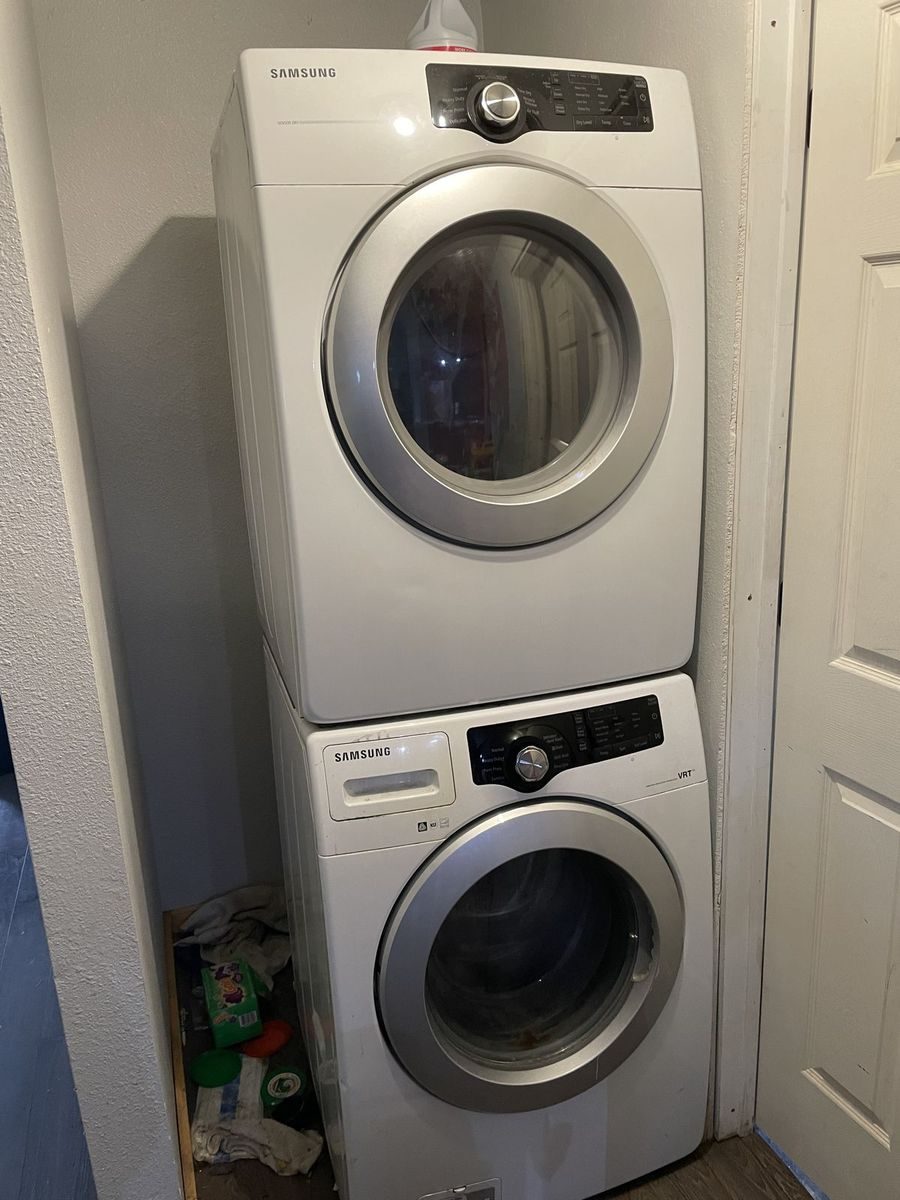
DuPont, Pierce County, 98327
DuPont pairs a National Register village of old company-town houses with the newer streets of Northwest Landing, and many households here arrive or leave every few years. We look after the heat pumps, gas furnaces, ductless heads and AC in both, plus the kitchen and laundry machines bruised on moving day.
Quick answer
Larch HVAC & Appliance works in DuPont and ZIP 98327, just north of the Nisqually River in Pierce County. Repairs cover heat pumps, ductless systems, air conditioning and gas or electric furnaces, along with fridges, laundry pairs, dishwashers and cooking appliances. Book a DuPont arrival window online or phone us from 8 AM until 7 PM, and expect a short call from the office to confirm the slot.
Two things set DuPont apart: the age split in its housing and how often families come and go. Most homes sit in Northwest Landing, a newer planned community where much of the original equipment was picked by the builder rather than the owner, so heat pumps, furnaces and kitchen packages on neighboring streets often wear out in similar ways. A smaller cluster of older houses stands in the DuPont Village Historic District, the original company town, where heating has usually been updated piece by piece.
Many DuPont households move every few years, so a lot of homes here change hands on a regular cycle. Moves are rough on appliances. A front-load washer hauled without its shipping bolts, a refrigerator that rode on its side, or a stacked washer and dryer pulled apart and rebuilt in a new laundry closet can all misbehave during the first week. Heating and cooling get less attention in the shuffle, so a filter left behind by the last occupant or a thermostat running someone else's schedule is easy to overlook.
The weather is South Sound weather: long gray winters in the upper 30s and 40s, fog rolling in off the Nisqually delta, and the odd scorcher, such as the late-June 2021 heat dome that sent Olympia to 110°F. Door switches, flame sensors, run capacitors, igniters, contactors and fan motors already ride on our trucks. Your technician tests before naming any part, and you see the repair cost written out and say yes to it before a single screw comes loose.
Usually because builder-grade equipment has reached the age when small electrical parts give out and airflow problems pile up. Run capacitors drift below their rated microfarads, contactor points pit after thousands of starts, and the outdoor fan or compressor begins to hesitate or hum. Indoors, a clogged filter, a closed register in a spare bedroom or a return grille hidden behind a couch pushes static pressure up and the temperature split down. Our technician measures both, and on a gas furnace reads the flame sensor in microamps and tests the inducer and pressure switch before calling anything failed. Condensate drains get a look too, because algae thrives in them through the damp months.
DuPont winters suit heat pumps nicely, yet they keep the defrost cycle busy. Wet air between 35 and 45°F frosts the outdoor coil, and the unit reverses for a few minutes to clear it, sometimes with a plume of steam and a whoosh from the reversing valve. That is normal. A coil that stays white, or a thermostat showing AUX hour after hour, hints at trouble with the defrost control, the coil thermistor, the charge or that valve. We check superheat and subcooling and hunt for leaks; refrigerant recovery and charging are done by our crew under the EPA 608 Universal credential, inside the 06A HVAC/Refrigeration specialty on our state license. When an arctic outbreak drops nights well below 20°F, backup heat strips carry more of the load, so we test those as well.
Laundry and refrigeration take most of the damage. A front-loader moved without shipping bolts lets the drum slam the cabinet, which can tear the door boot or wreck the shock absorbers, and its first spin in the new house sounds like a crash. A refrigerator laid flat in the truck may cool weakly at first, and a stacked pair that was split and rejoined can end up with a pinched drain hose, an unlevel base or a dryer vent that no longer lines up. Our technicians check the drum, bearings, drain pump, door lock and leveling before anyone blames the control board.
Everyday failures in DuPont kitchens match the rest of the South Sound: a bake element that blisters and quits, an oven igniter whose glow looks fine while its current stays too low for the gas valve, an evaporator fan that stalls and lets the freezer warm, or a failed defrost heater that leaves the coil packed with ice. Common parts travel with us, anything that has to be special-ordered gets priced for you first, and warranty terms come printed on the invoice. Our 07D Appliance Repair specialty covers the whole lineup, from cooktops and ovens to freezers, ice makers and dishwashers.
Most DuPont homes are here, on newer streets laid out as a planned community. Builder-installed heat pumps and gas furnaces are typical, with the furnace or air handler tucked into a garage, closet or attic. Calls often involve a weak capacitor, a dirty flame sensor or a condensate line choked with algae, and readings at the unit come before any talk of parts.
The original company-town houses in this National Register district are the oldest in DuPont, and their heating tends to be a mix: a retrofitted heat pump, electric baseboard with a ductless head added, or a furnace whose ducts run through a damp crawlspace. Our technicians work carefully around older framing and tight spaces and explain options before anything changes.
Families who just arrived often need a washer, fridge or dryer looked at within days of the truck pulling away. Tell the office your move date and which appliances traveled on their side or without bolts. While on site, the technician can also look over the heat pump and thermostat so the first winter in a new place starts smoothly.
Owners and renters can both book. When a home changes hands, a quick look at filters, condensate lines, dryer vents and refrigerator door gaskets catches problems the last household simply lived with. If someone else owns the equipment, tell the office whose approval counts, and the written figure goes to them before any work begins.
Houses nearest the Sound and the Nisqually delta catch fog and wind first. Their outdoor coils gather fir needles, moss and a faint salty film that holds moisture against the fins. A soft rinse from a garden hose a few times a year, with shrubs kept well back, helps; on a visit we look for corrosion on fins, fan blades and terminals.
Each tab carries a photo from our service work and the first checks we make on that job. Choose a tab, or let them change by themselves.
No. 1
Olympia winters stay wet and just above freezing for weeks, so defrost does a lot of work. We read the coil sensor, the defrost board and the charge before anything else.
Go to the service page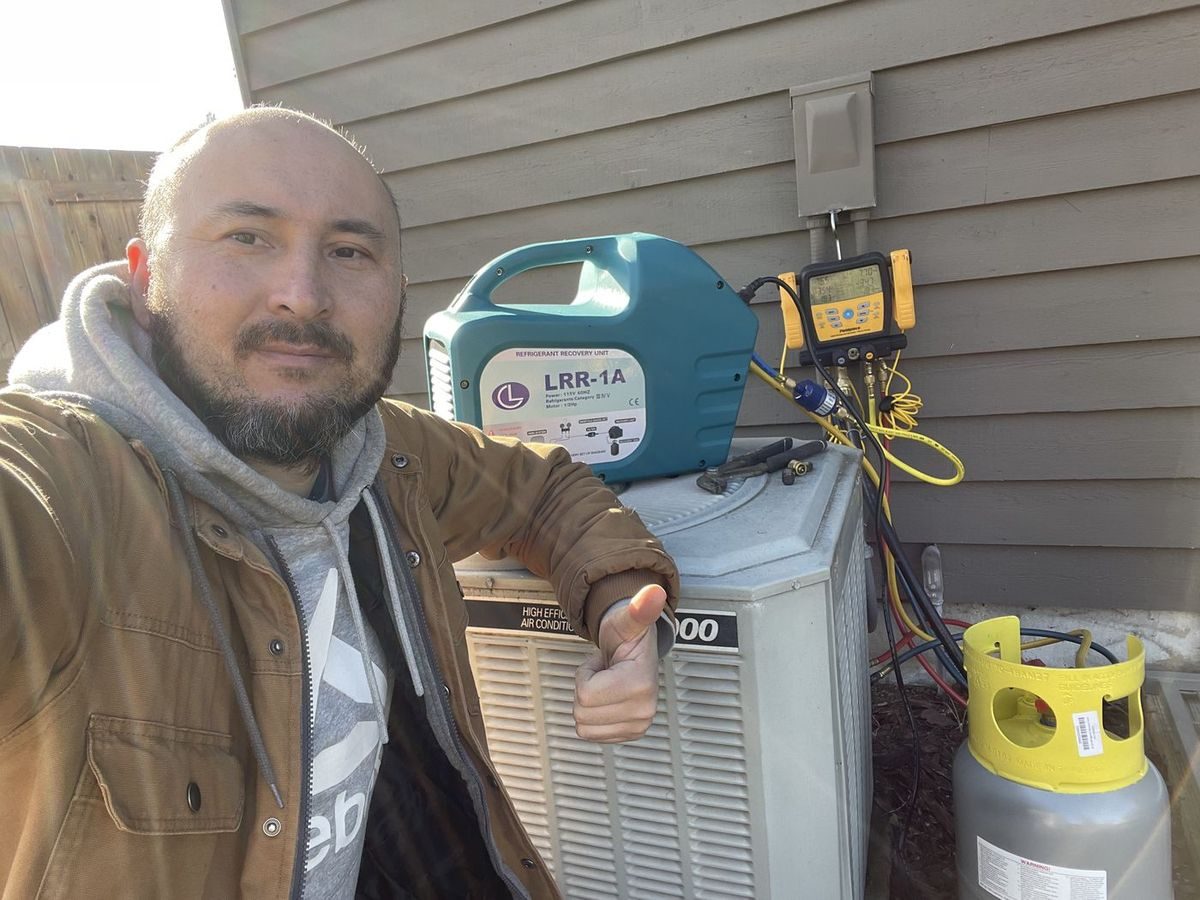
No. 2
Cooling was an afterthought in many South Sound homes until the 2021 heat dome. When a newer system lags on a hot day, airflow, the capacitor and the charge come first.
Go to the service page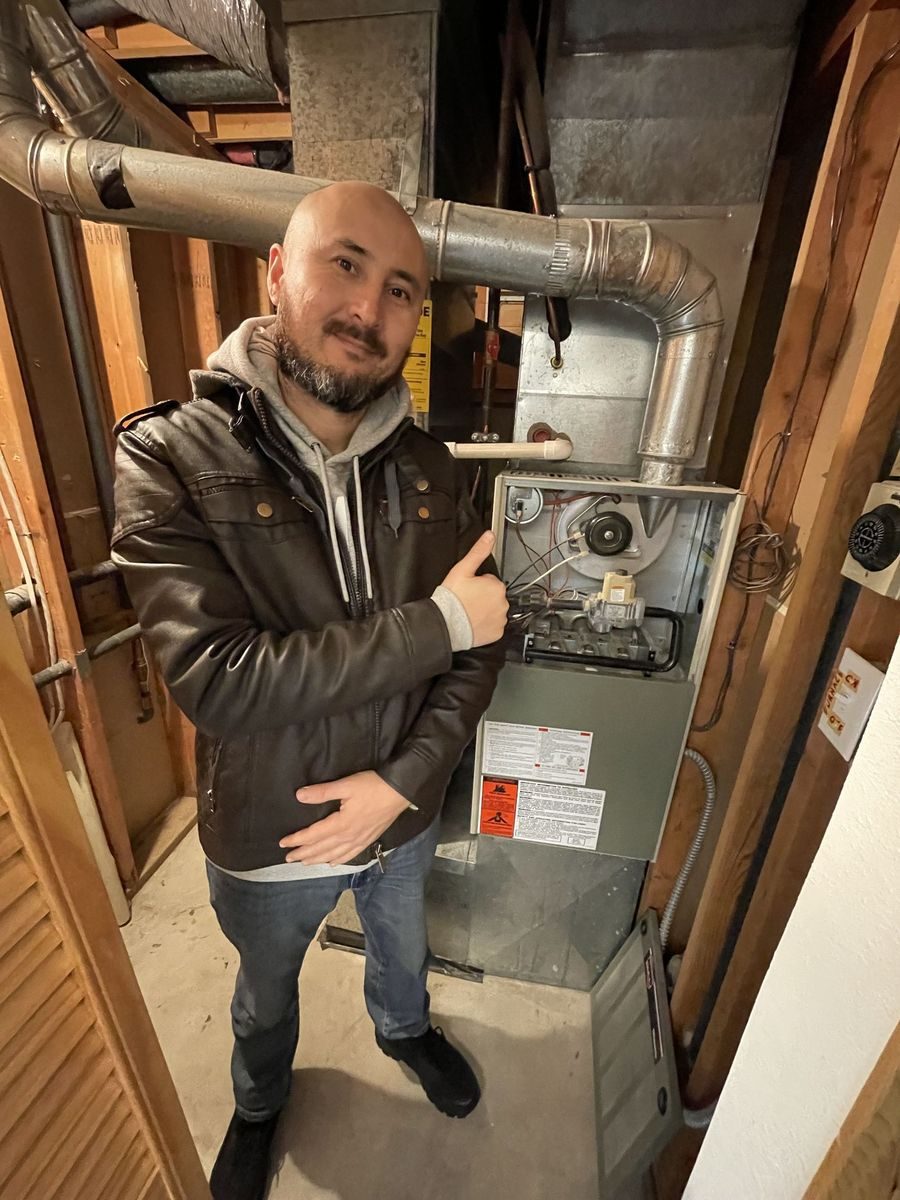
No. 3
Gas or electric, a furnace that quits on a cold morning is traced step by step: thermostat call, inducer, pressure switch, igniter, flame sensor, limit.
Go to the service page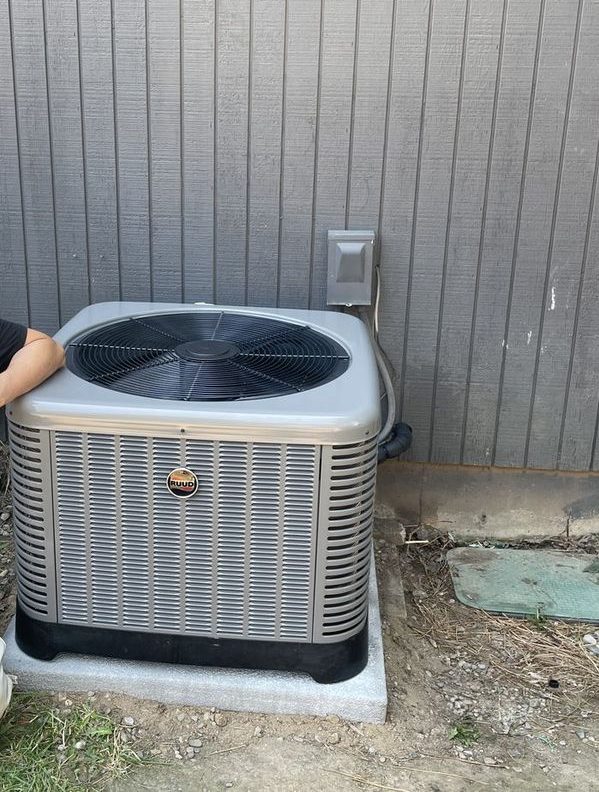
No. 4
A new system starts with a load calculation and a dry, level pad. Prairie gravel drains fast; in low clay corners we set the unit higher.
Go to the service page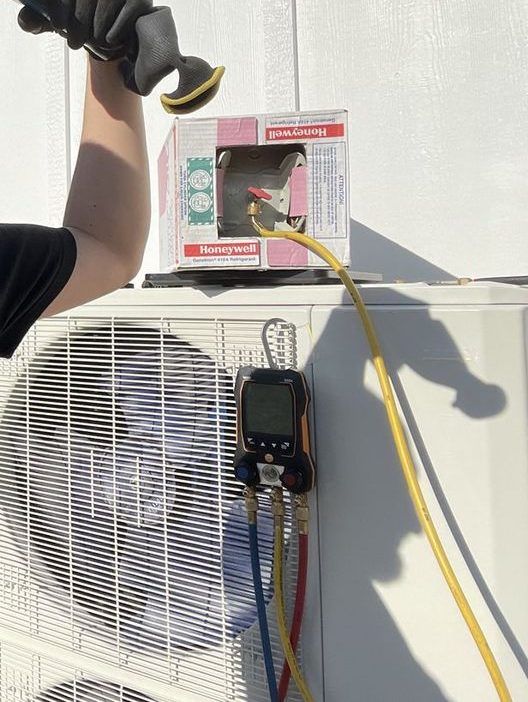
No. 5
Ductless heads suit older Olympia houses with no space for ducts. The line set runs outside, so its insulation and the condensate drain get a close look.
Go to the service page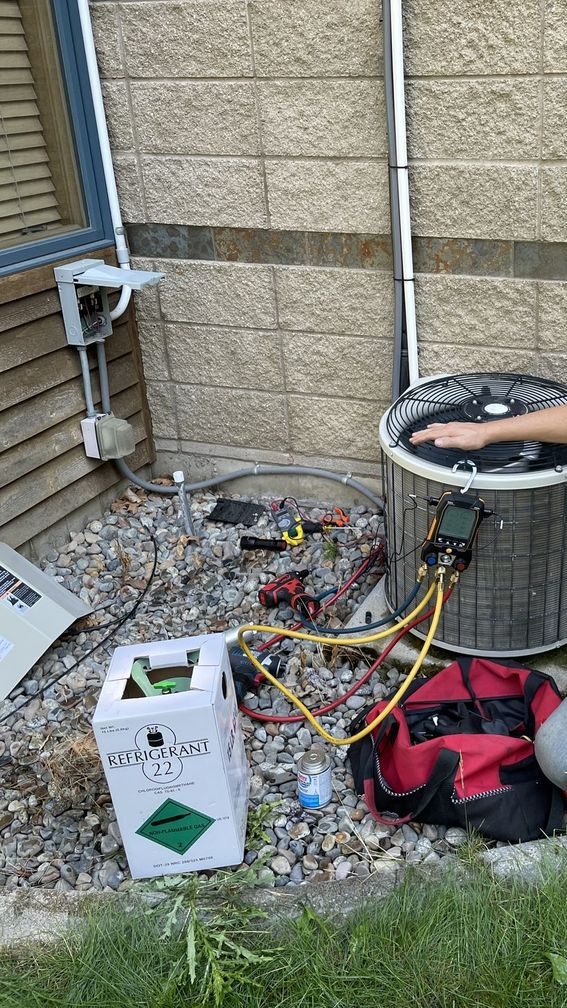
No. 6
Spring and fall visits clear needles and moss from the coil, open the drain holes in the base and test the defrost cycle before the long gray season.
Go to the service page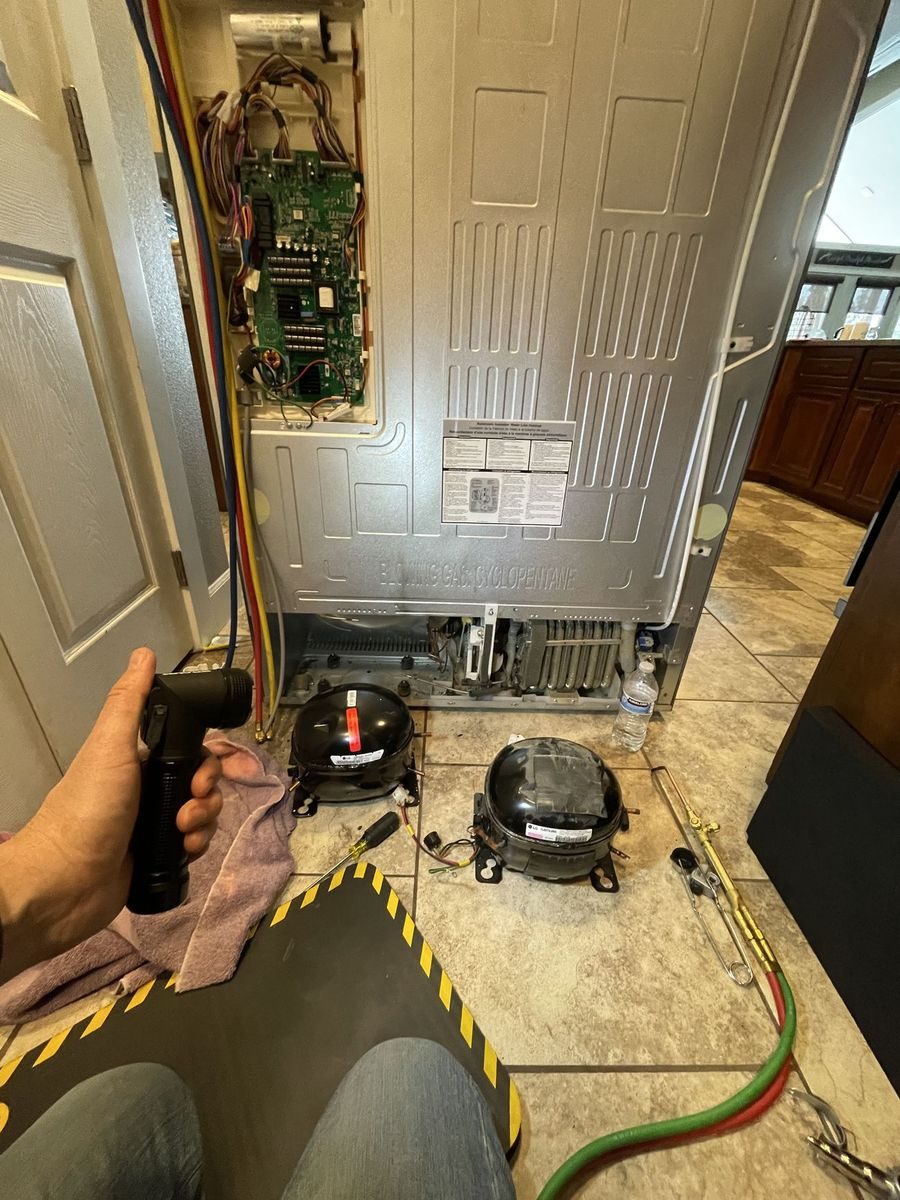
No. 7
Warm shelves usually come from frost on the coil, a fan that has stopped or a failed defrost part. Sealed-system repairs happen at home, by technicians holding EPA 608 Universal credentials.
Go to the service page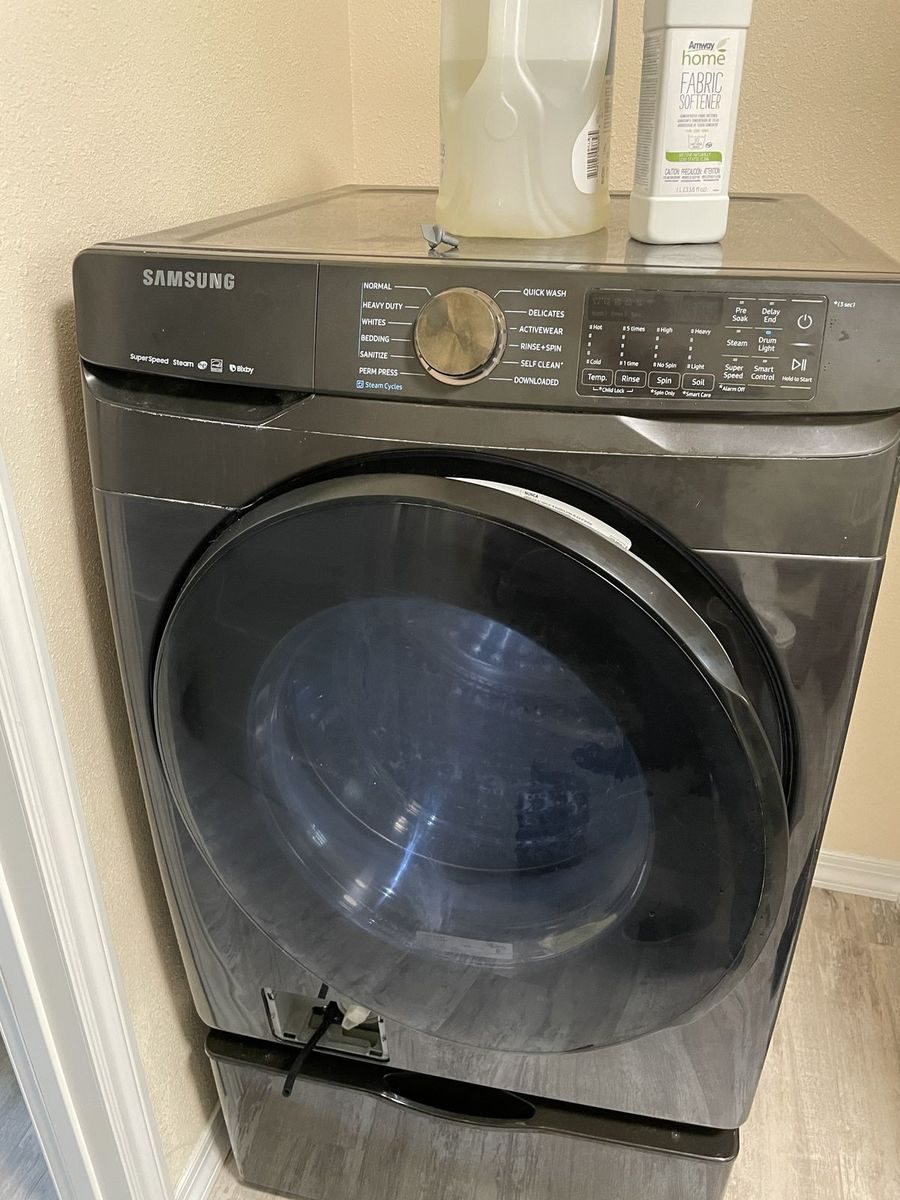
No. 8
Rural wells around Yelm and Rochester carry sediment that clogs inlet screens. A slow fill or a musty front-loader boot is where most washer visits start.
Go to the service page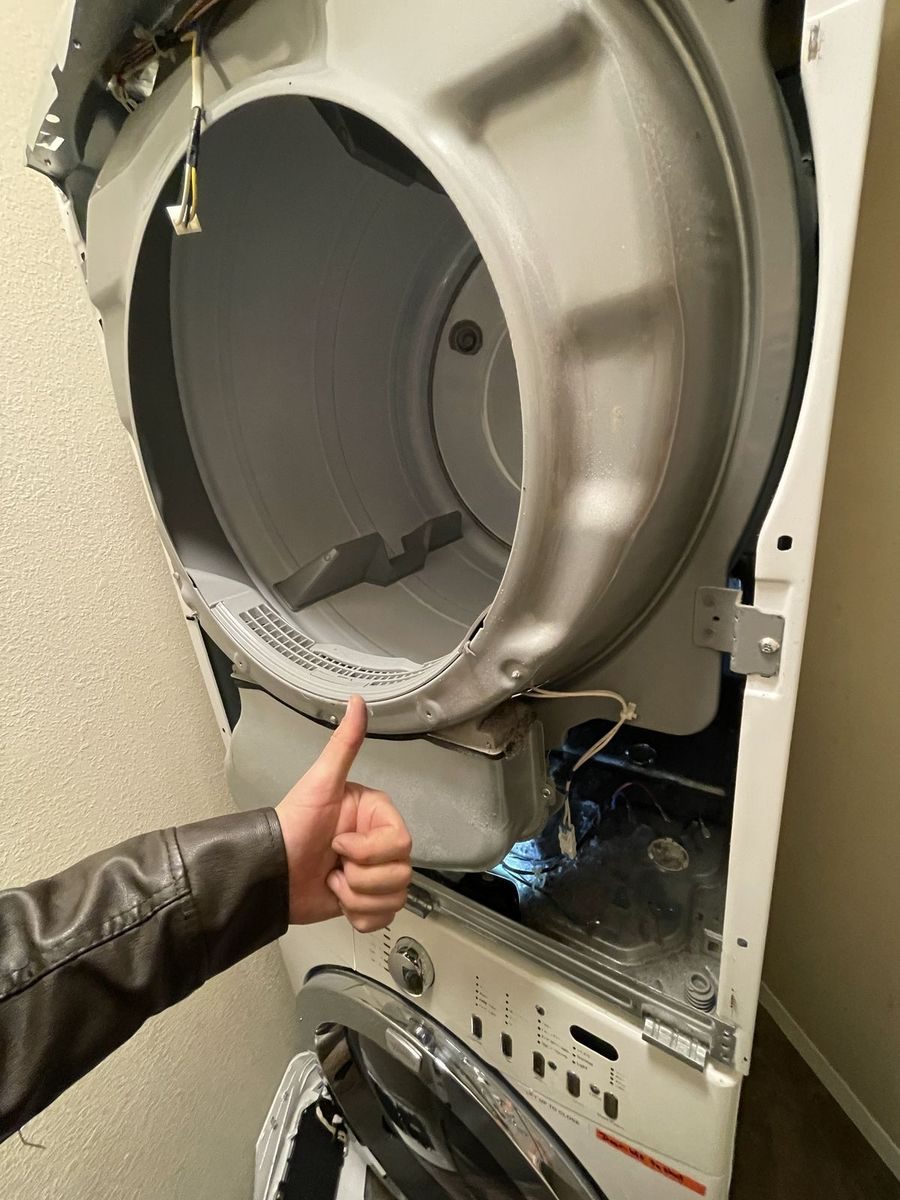
No. 9
Damp air and long vent runs make lint pile up fast in South Sound laundry rooms. The vent is tested together with the element or burner and the thermal fuse.
Go to the service page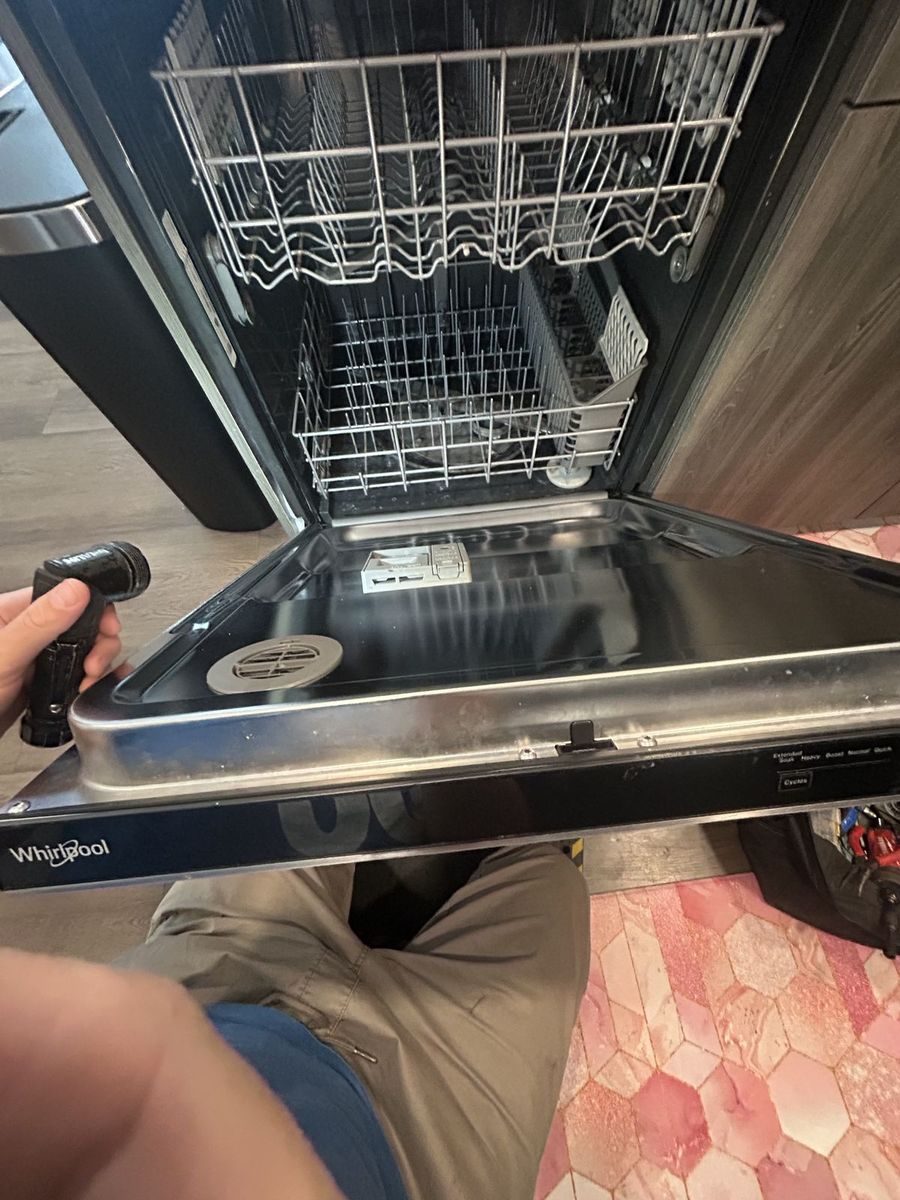
No. 10
Cloudy glasses and a tub that will not drain point to the filter, the drain pump or a hose without its loop under the counter. Each gets checked in order.
Go to the service page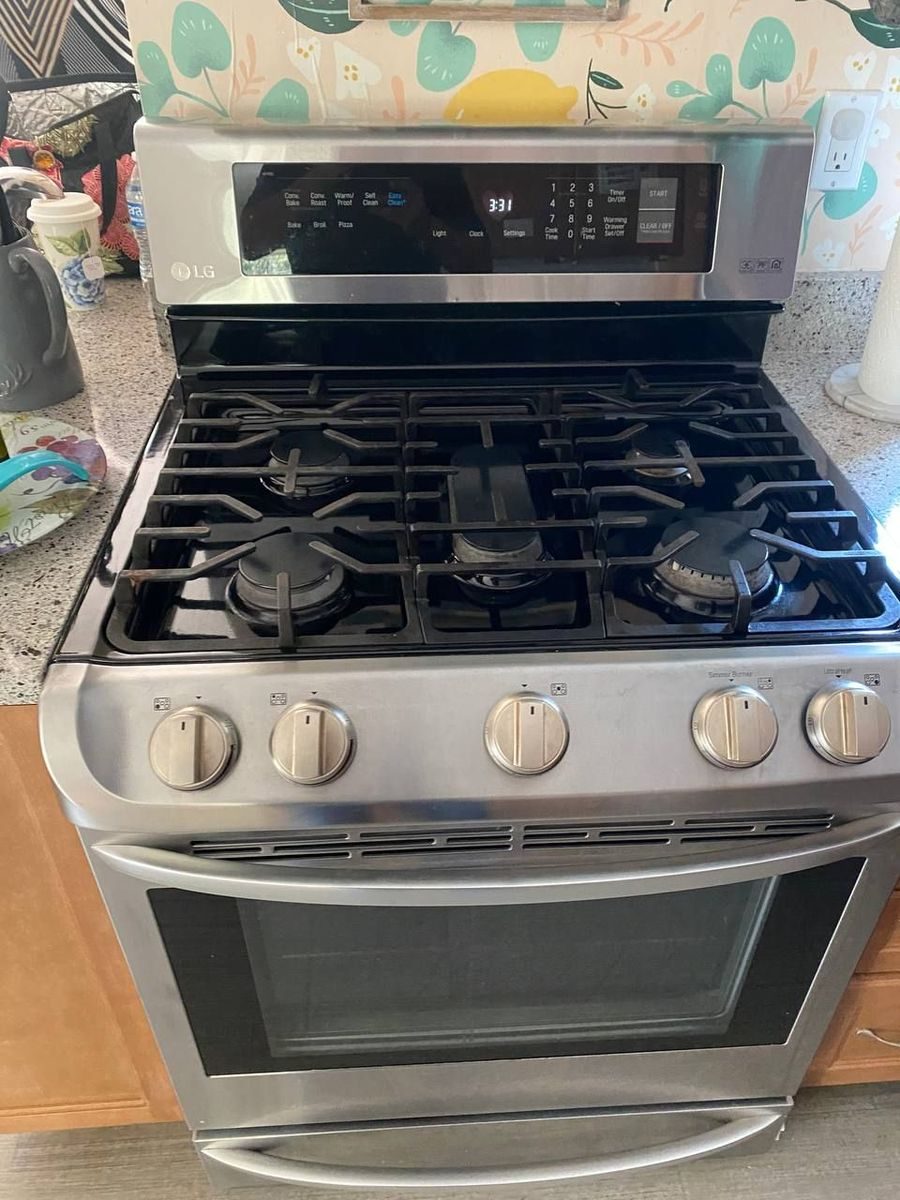
No. 11
Bake and broil elements, igniters and the oven sensor are metered before any part is ordered, on gas, electric and induction models alike.
Go to the service page
No. 12
When the ice stops after a power outage, the fill tube has often frozen. We check the water valve, the filter and the tube before blaming the ice maker.
Go to the service pagePossibly, though the cause is often simple. If nobody reinstalled the shipping bolts before loading, the drum swung loose on the road, which can hurt the shock absorbers, springs or door boot. Also make sure those bolts are out now, since a washer spun with them still in place shakes hard. If both check out, our technician inspects the suspension, bearings and leveling.
Waiting is safer. When a refrigerator lies down, compressor oil can drift into the refrigerant lines, so stand it upright and give it several hours before plugging it in, longer after a long haul, and follow the owner's manual. If it still runs warm a day later, book a visit; we test the compressor and sealed system, the evaporator fan motor and each defrost part.
Yes. Homes in the historic village get the same testing as any other: we measure airflow, check the equipment and explain what we find. These houses often mix systems, such as baseboard heat with a ductless mini-split added, or a heat pump fitted to older ducts. If replacing beats repairing, you get a written quote where equipment and installation share a single number.
Yes, renters are welcome to book. When you do, tell the office who owns the equipment and who signs off on repairs, whether that is the landlord or a property manager. The technician pins down the fault, puts the cost in writing, and work starts only once the responsible person agrees. Replies in Spanish are available whenever you ask.
Saying no is fine; you then pay only for the diagnostic visit. The office quotes the amount of that fee while scheduling. If you approve the work instead, the same fee sits inside the repair total rather than on top of it. Whichever you pick, the technician walks you through the findings so you can choose what comes next.
Ready when you are
Use the booking page to claim a day and arrival slot, or ring the DuPont line from 8 AM through 7 PM daily. A confirming call from our office comes first; later your technician phones once rolling toward you.
Online booking
Tell us what is acting up and when suits you. A coordinator phones to confirm the slot, and your technician calls again when heading your way.
These registrations are open to anyone. Look the numbers up on L&I Verify, and see our licenses page for what each one covers.
Read what each license allows