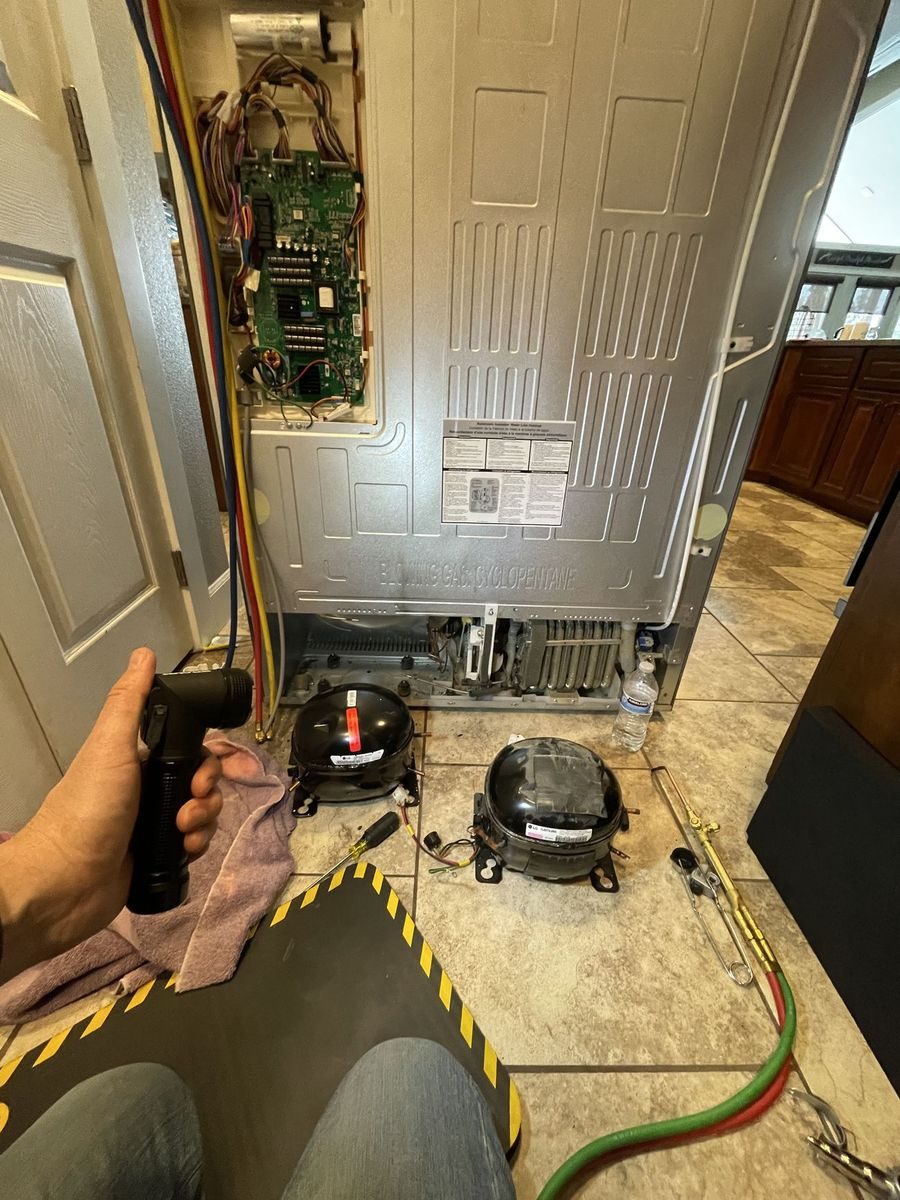
No. 1
Refrigerator repair
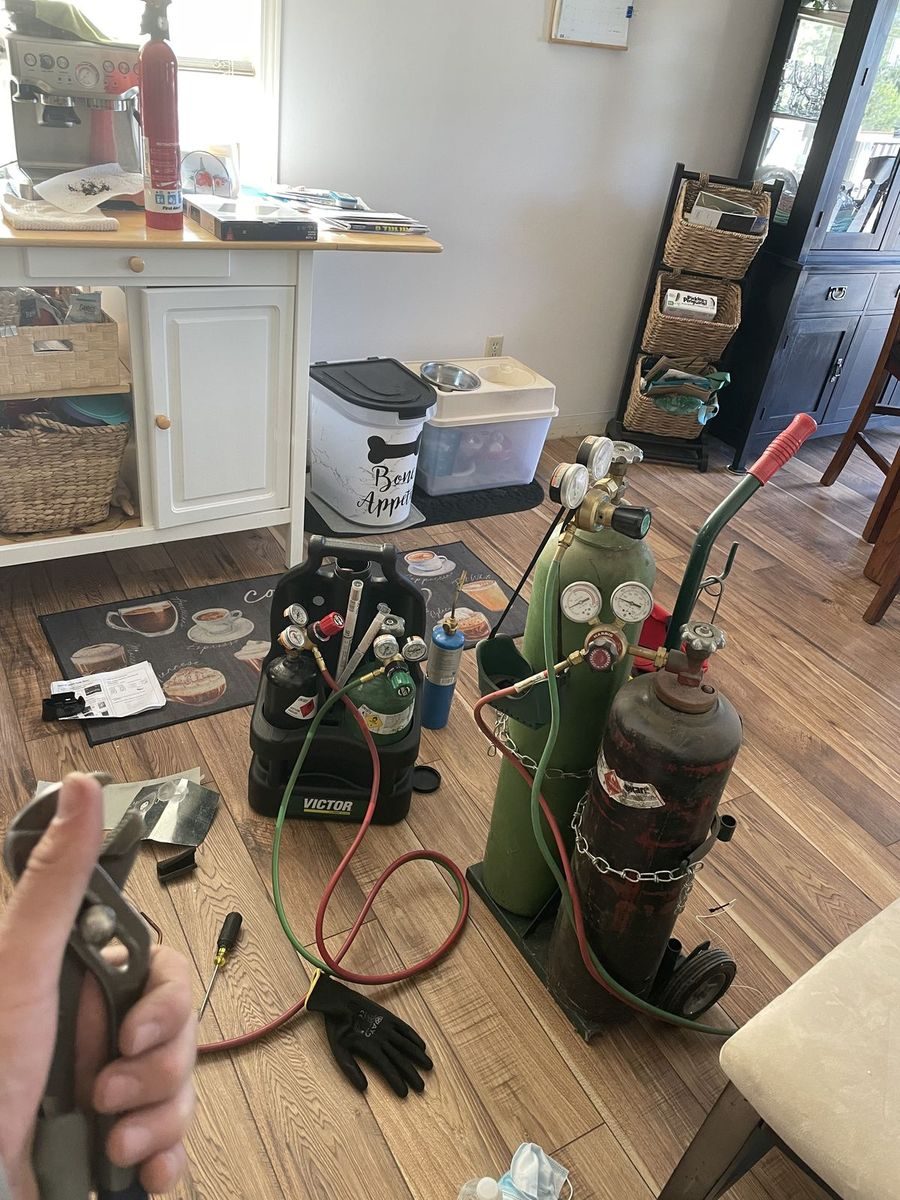
Warm shelves usually come from frost on the coil, a fan that has stopped or a failed defrost part. Sealed-system repairs happen at home, by technicians holding EPA 608 Universal credentials.
Go to the service page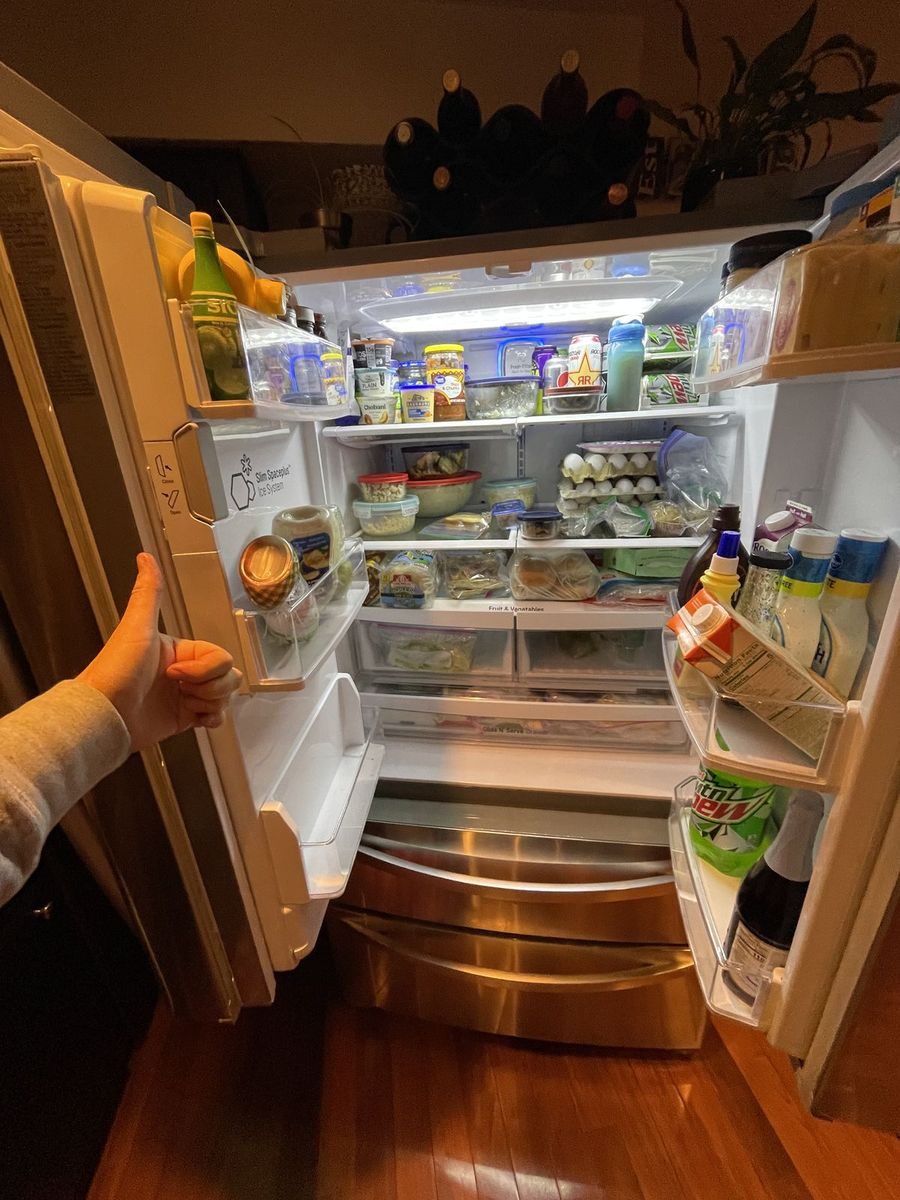
Refrigerator and freezer repair · South Sound
Refrigerator trouble tends to creep in: a crisper that feels cool rather than cold, a freezer wall that ticks, a compressor humming through dinner and dessert alike. Our technicians take temperatures, amp draw and resistance readings to pin down the failing part, then put a repair price on paper and pause there until you answer.
Quick answer
Milk turning warm while ice cream stays hard points to airflow. Usually frost has entombed the evaporator because a defrost heater, thermostat or board quit, or else the evaporator fan has seized. Hot cabinet walls plus a compressor that never pauses suggest a matted condenser or a slow fan beside it; clicking with no start suggests the start relay. Each candidate gets measured, and a written price reaches you ahead of any repair.
Because both compartments draw on one source of cold. In a typical top-freezer, bottom-freezer or side-by-side, a single evaporator coil hides behind the freezer's rear panel, and a small fan shoves that chilled air along a duct and past an air damper into the fresh-food section. Bury that coil under frost, or stall that fan, and the freezer stays frigid simply by sitting beside the coil while the shelves next door drift past 40°F. Twisting the dial colder only keeps the compressor grinding against a blocked coil.
Defrost is what keeps the coil breathable. A few times daily, cooling stops and a heater switches on, either a glass tube or a metal sheath clipped below the coil, while a bimetal defrost thermostat or a thermistor tracks coil temperature and ends the cycle once the ice has gone. Meltwater trickles along a trough, drops through a drain tube, and collects in a shallow tray by the compressor, whose warmth evaporates it. A heater burned open, a thermostat that never closes, a sensor telling lies, or a board that forgets to call for defrost all produce one picture: a white slab of ice and a lukewarm crisper drawer.
Fridges and freezers sit inside 07D, the appliance specialty that Washington's Department of Labor and Industries lists on our electrical contractor license. Anyone opening a sealed system must also hold the EPA 608 Universal credential, and ours do, so one visit can handle a stalled fan motor or a refrigerant leak, whichever the readings point toward.
Numbers come first. A probe thermometer goes in each compartment, a clamp meter reads the compressor's draw, and the frost pattern on the coil often tells a defrost failure apart from a low charge at a glance. Next come resistance checks on the heater and sensor, voltage at both fans, and a look at gaskets and hinges, because a sagging door lets damp kitchen air frost the coil quicker than defrost can keep pace.
Once a failed part is confirmed, you get the repair price on paper, and the technician holds off until you decide. Booking sets a diagnostic fee for the visit, and the office quotes that figure up front. Approve the fix and that fee vanishes into the cost of the repair; say no, and that fee is everything owed for the day. Our vans usually stock thermal fuses, door switches, start relays and fan motors. Boards and sealed-system components sometimes have to be ordered, and their cost goes onto the quote ahead of any order. Warranty coverage is written onto the invoice you keep.
Each tab carries a photo from our service work and the first checks we make on that job. Choose a tab, or let them change by themselves.
No. 1
Warm shelves usually come from frost on the coil, a fan that has stopped or a failed defrost part. Sealed-system repairs happen at home, by technicians holding EPA 608 Universal credentials.
Go to the service page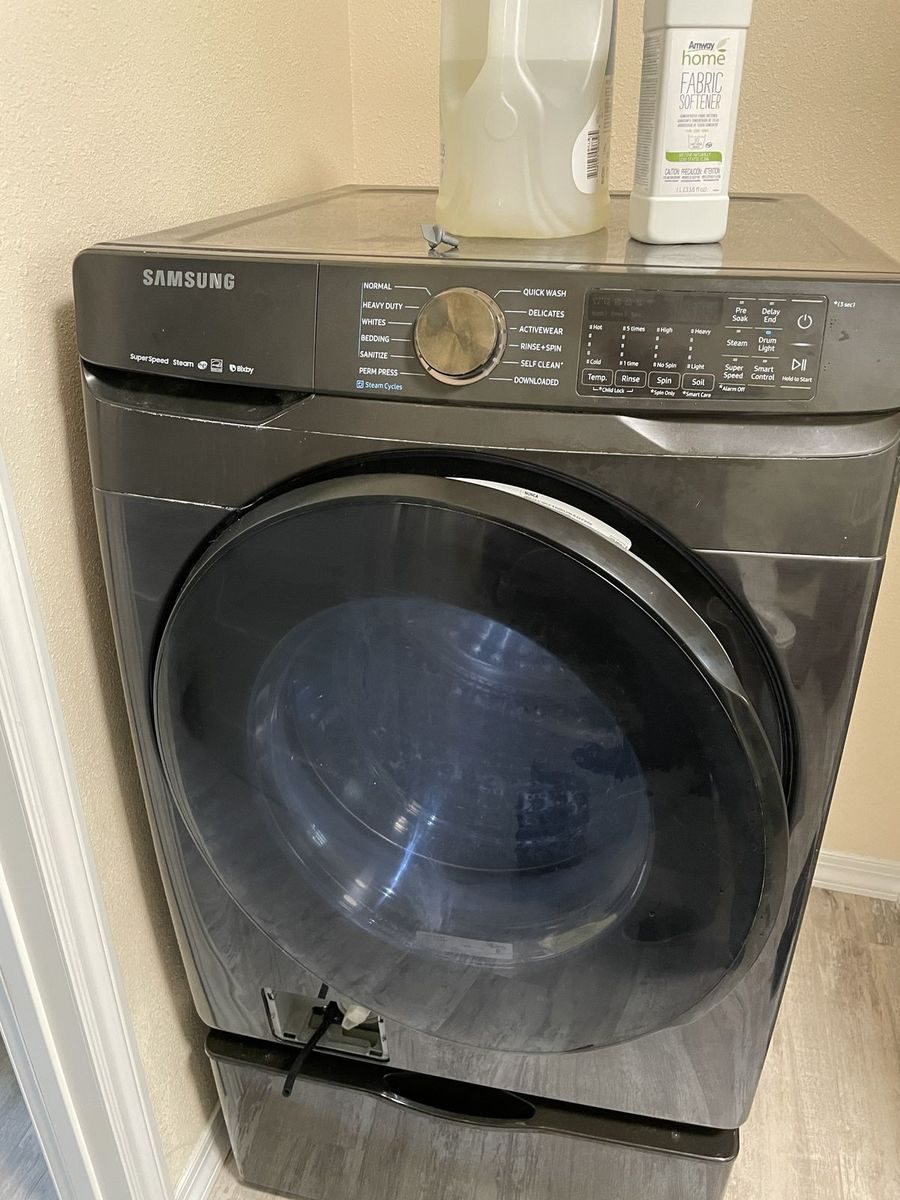
No. 2
Rural wells around Yelm and Rochester carry sediment that clogs inlet screens. A slow fill or a musty front-loader boot is where most washer visits start.
Go to the service page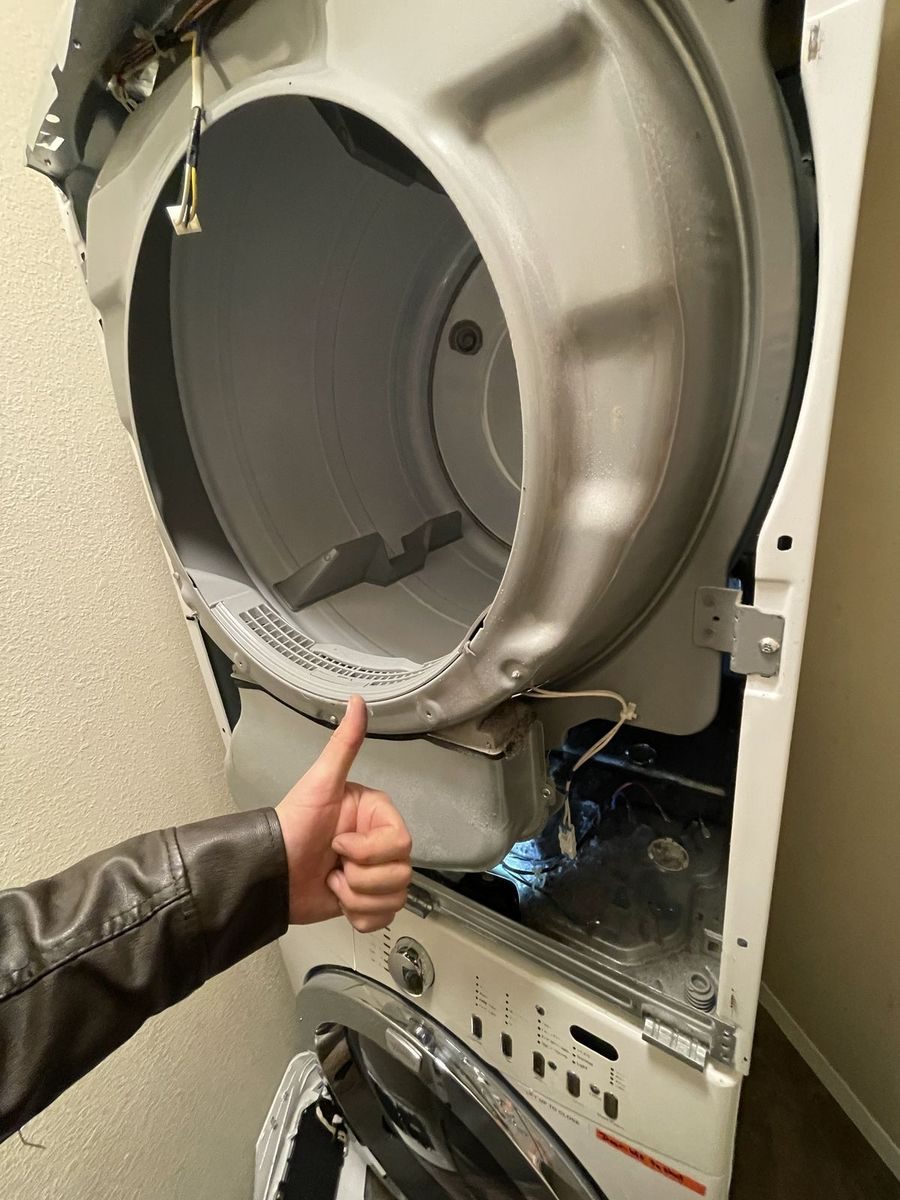
No. 3
Damp air and long vent runs make lint pile up fast in South Sound laundry rooms. The vent is tested together with the element or burner and the thermal fuse.
Go to the service page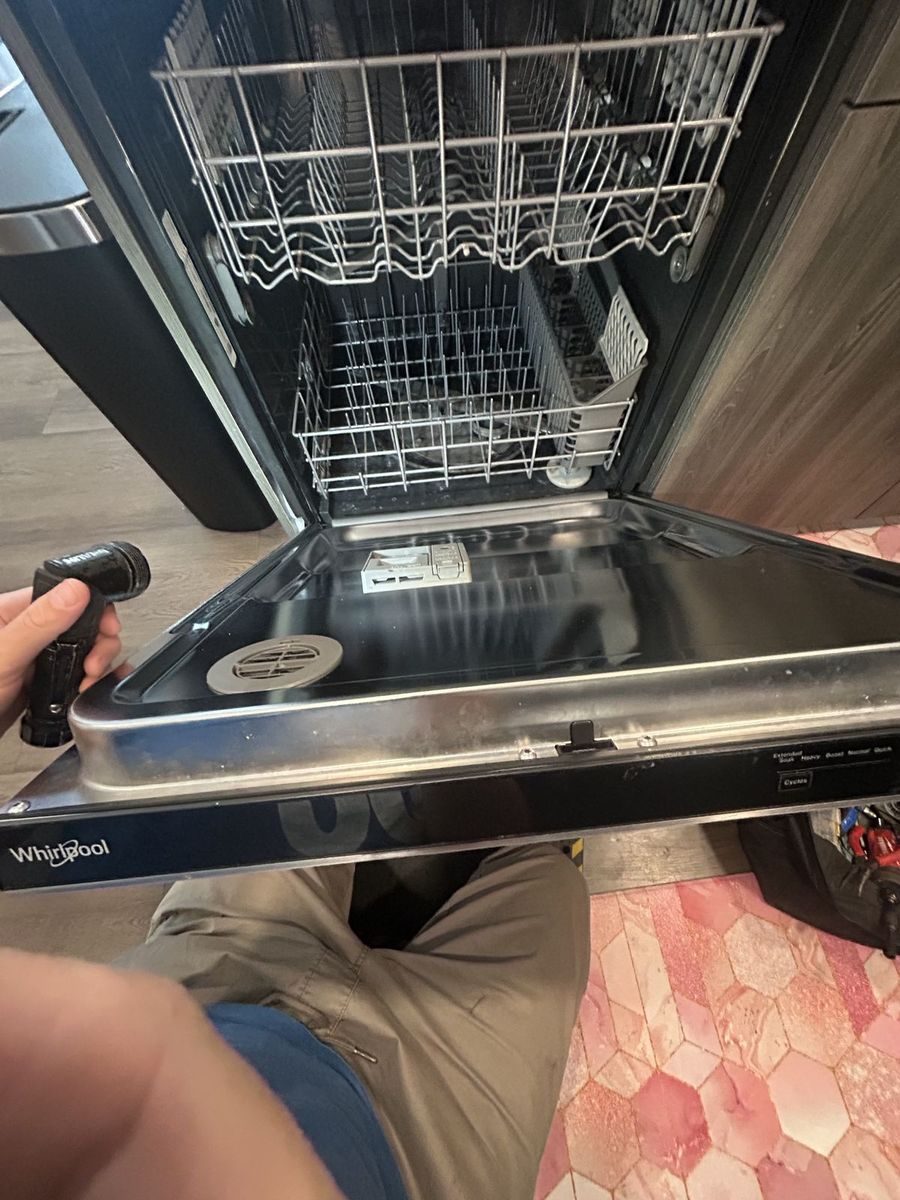
No. 4
Cloudy glasses and a tub that will not drain point to the filter, the drain pump or a hose without its loop under the counter. Each gets checked in order.
Go to the service page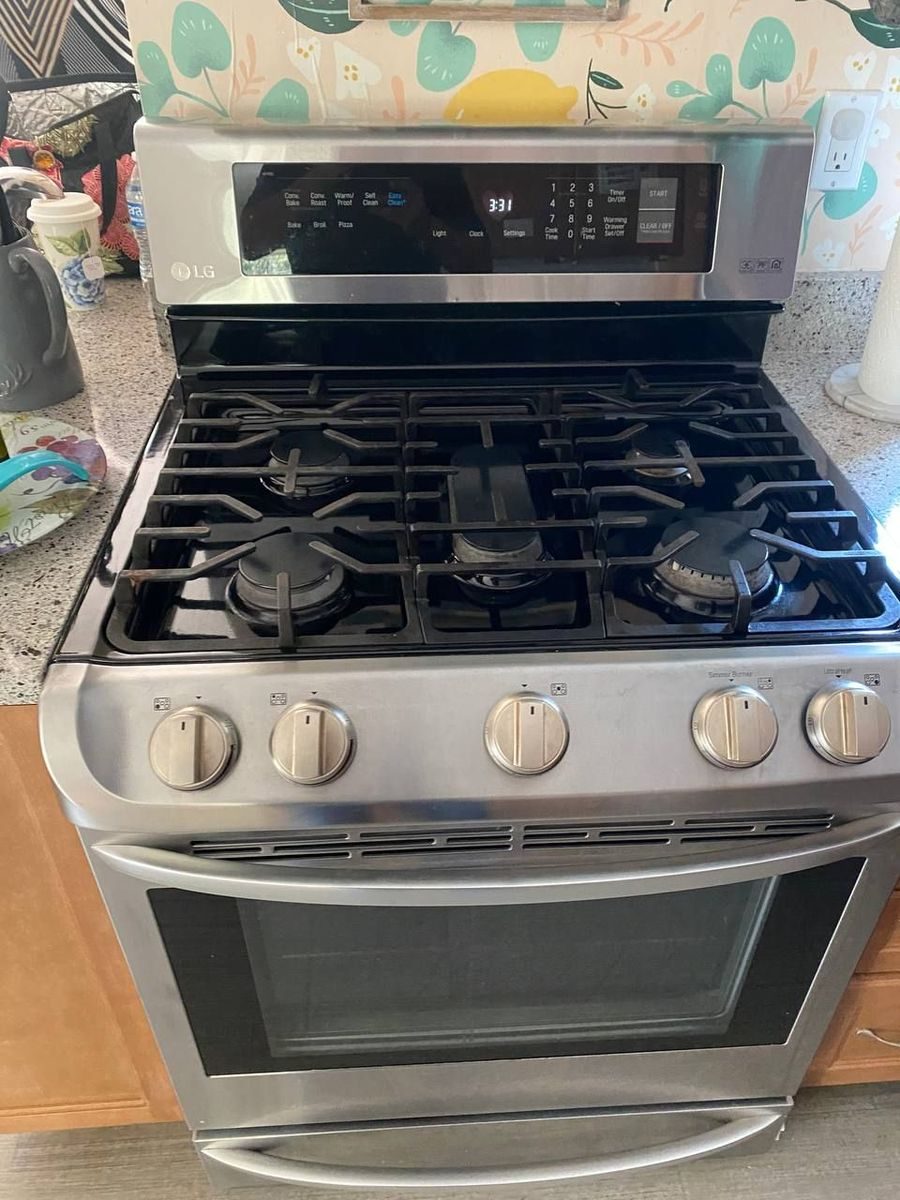
No. 5
Bake and broil elements, igniters and the oven sensor are metered before any part is ordered, on gas, electric and induction models alike.
Go to the service page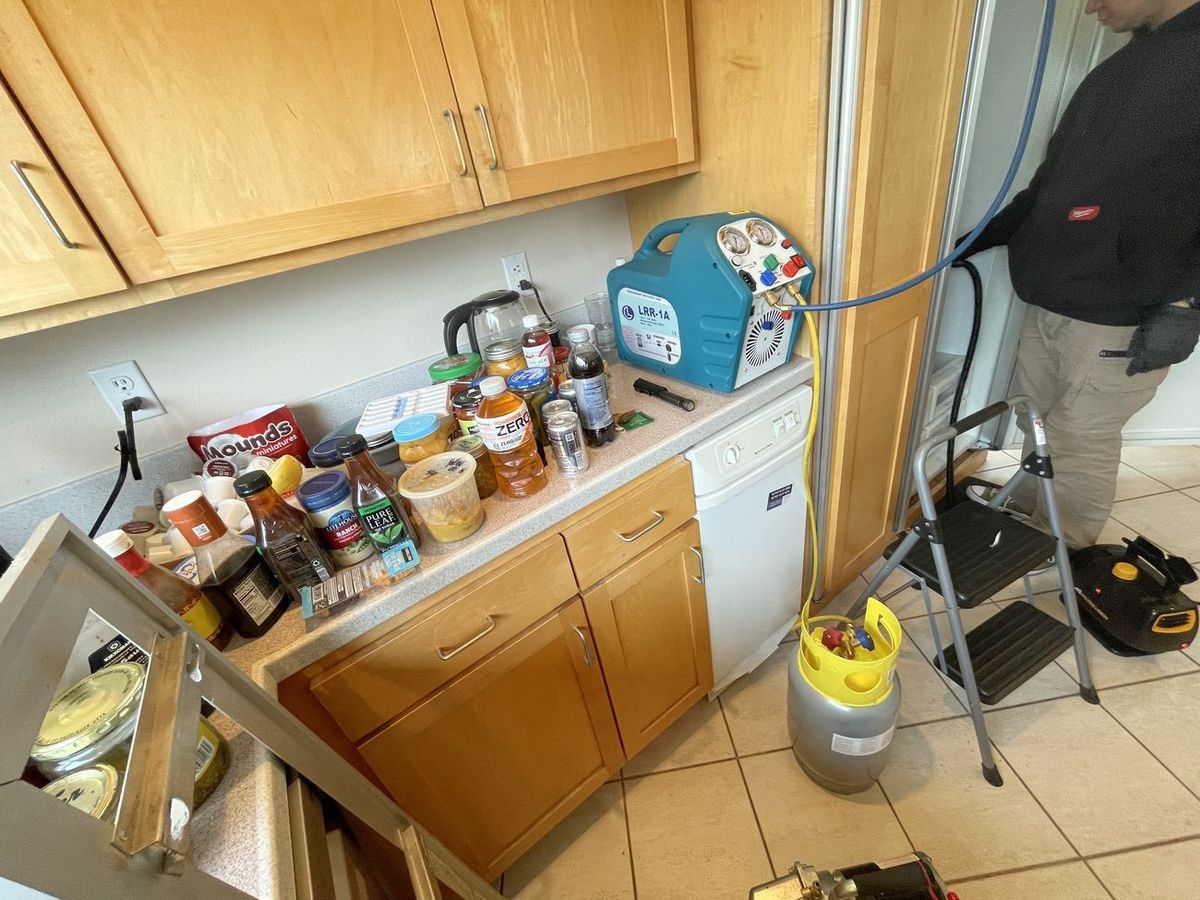
No. 6
When the ice stops after a power outage, the fill tube has often frozen. We check the water valve, the filter and the tube before blaming the ice maker.
Go to the service page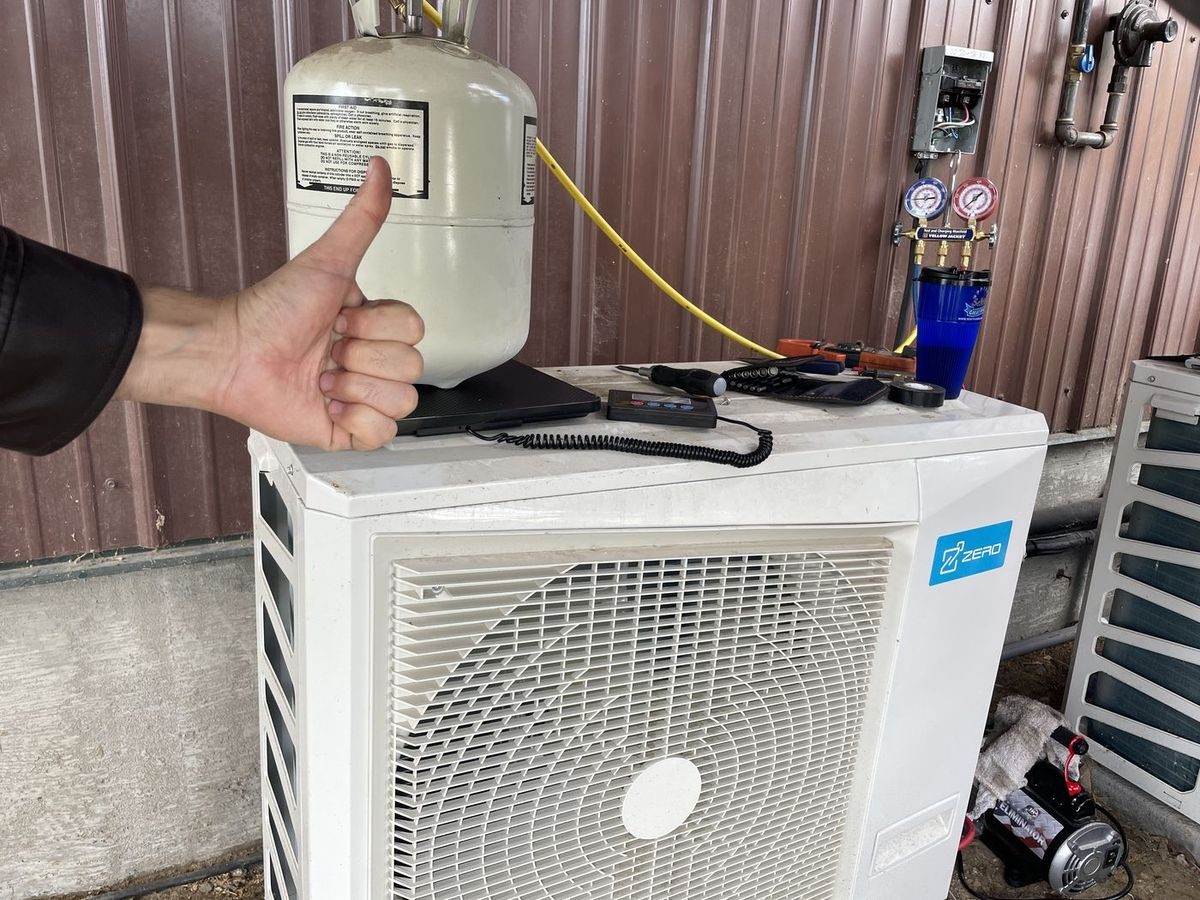
No. 7
Olympia winters stay wet and just above freezing for weeks, so defrost does a lot of work. We read the coil sensor, the defrost board and the charge before anything else.
Go to the service page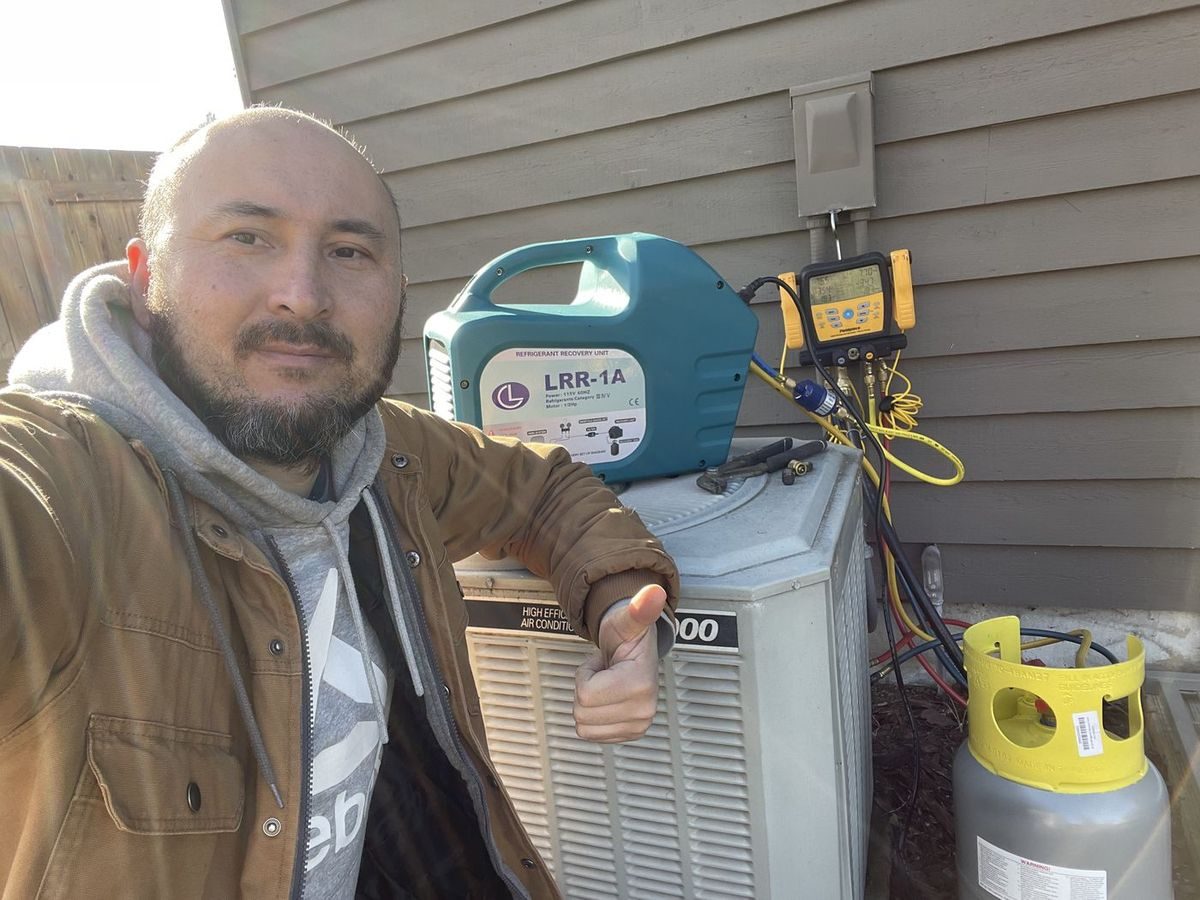
No. 8
Cooling was an afterthought in many South Sound homes until the 2021 heat dome. When a newer system lags on a hot day, airflow, the capacitor and the charge come first.
Go to the service page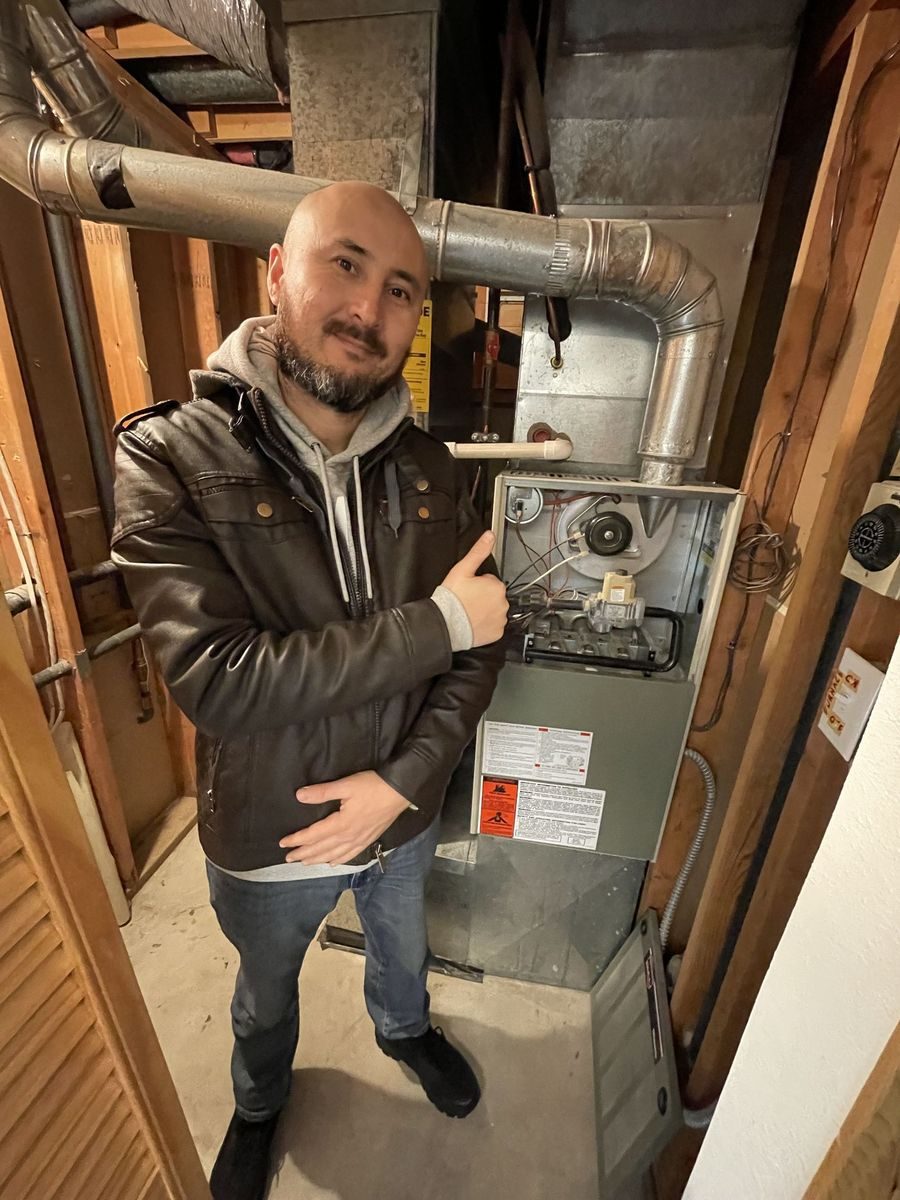
No. 9
Gas or electric, a furnace that quits on a cold morning is traced step by step: thermostat call, inducer, pressure switch, igniter, flame sensor, limit.
Go to the service page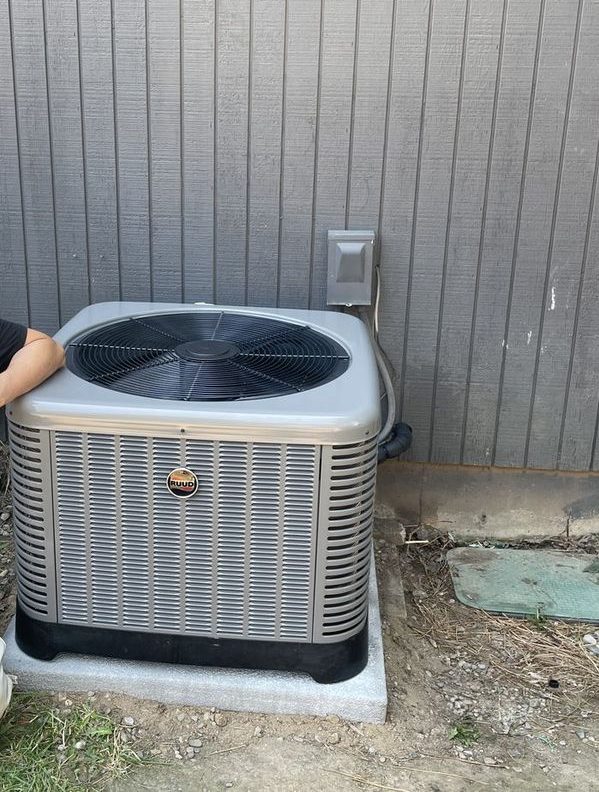
No. 10
A new system starts with a load calculation and a dry, level pad. Prairie gravel drains fast; in low clay corners we set the unit higher.
Go to the service page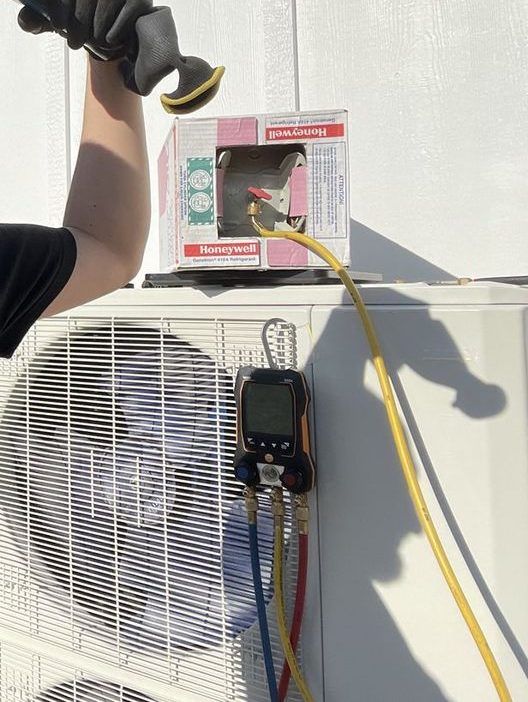
No. 11
Ductless heads suit older Olympia houses with no space for ducts. The line set runs outside, so its insulation and the condensate drain get a close look.
Go to the service page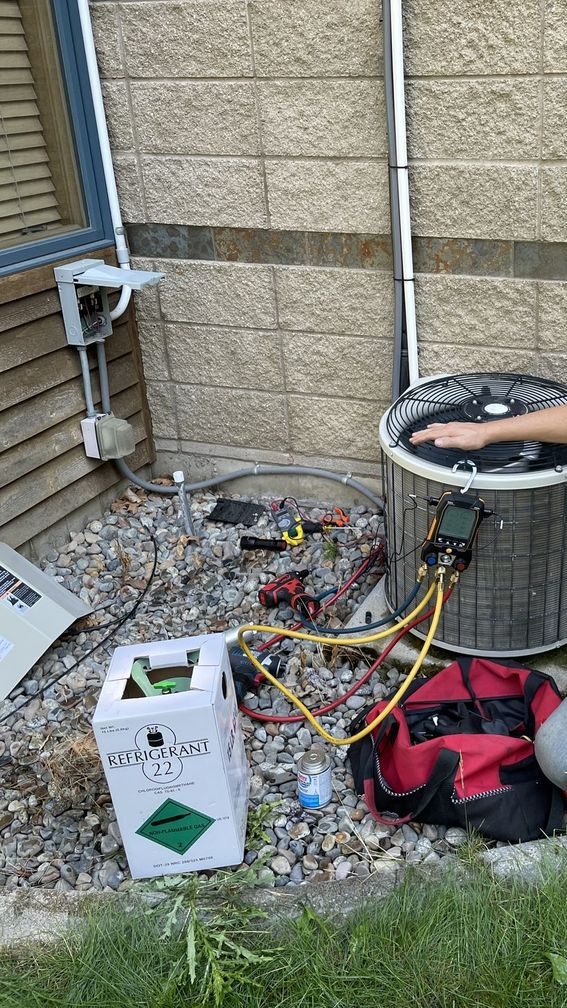
No. 12
Spring and fall visits clear needles and moss from the coil, open the drain holes in the base and test the defrost cycle before the long gray season.
Go to the service pageMoving season around the South Sound is rough on refrigerators. Households arriving in or leaving Lacey, Hawks Prairie and DuPont often see a fridge loaded flat on its back or side so it fits the truck. Lying down lets compressor oil wander into the refrigerant lines, and plugging the unit in right away can push that oil where it does not belong and strain the compressor. Stand it upright and let it rest at least as long as it spent lying down, overnight when possible, before plugging in. Still no cold after a full day upright? The move may have kinked a line or cracked a brazed joint, and that deserves a visit.
Garages here stay cool and damp for months. Through long wet winters in the 30s and 40s, a two-door model whose lone sensor lives on the fresh-food side may barely run in an unheated garage, letting the freezer go soft, and when an arctic outbreak drags nights under 20°F, as in January 2024, some units nearly quit cycling. Damp air also corrodes terminals and frosts gaskets. Then come outages: February 2024 snow and December 2022 freezing rain cut power across Thurston County, and the spike when lines come back can kill a control board or a start relay. Pull the plug while the house is dark, and reconnect only after power has held a few minutes, so the board misses that first jolt.
Most of the time, yes. Relays, boards, fan motors and defrost parts are contained repairs, and the cabinet, liner and sealed system around them still have plenty of service ahead. Sealed-system trouble on an older fridge is where the choice gets harder: an evaporator with a pinhole, or a compressor refusing to start. Builder-grade refrigerators in Hawks Prairie subdivisions are reaching the age where that question comes up, and on a plain top-freezer the sealed-system quote can approach what a new unit costs. Built-ins and pricier French-door units tilt things toward repair, since their cabinets are built into the kitchen itself. You get the price in writing, along with our read on the gaskets, liner and compressor, and the decision stays yours.
Probably not. A freezer holding near zero tells us the compressor and refrigerant are still moving heat, so the fault almost always lies in delivering cold air to the fresh-food side: a frost-blocked evaporator after a defrost part failed, an evaporator fan that quit, or a damper stuck shut. Each of those can be confirmed with a meter and repaired without opening the sealed system.
Usually not. Stand it upright and let it rest at least as long as it lay on its side, overnight if you can, so oil drains back into the compressor before you plug it in. Then give it a full day to reach temperature. If the compressor runs and nothing gets cold, or it clicks without starting, a line may be kinked or the compressor strained, and a technician should look.
On many two-door models the only temperature sensor sits in the fresh-food section. When a damp South Sound garage hovers in the 30s, that sensor already feels chilly, so cooling seldom kicks on, and the freezer side creeps upward. Certain refrigerators are designed for unheated spaces, and others take a garage heater kit sold by the maker. Otherwise, moving the unit indoors for the coldest months, or using a garage-rated chest freezer, solves it.
It can ruin the electronics, which are what most often fail after an outage. Control boards, the relays on them and display boards are sensitive to the spike that can arrive when service is restored after a snowstorm or windstorm, while the compressor usually comes through fine. Our technicians check voltage at the appliance, test each board output, and recommend a new board only if those readings say so.
Yes, when the numbers make sense. Sealed-system work requires EPA 608 Universal, and our technicians have it. Expect leak detection, electronic or with soap bubbles, then recovery of the remaining charge, brazing at the leak or around a new component, a fresh filter-drier, deep evacuation, and a charge weighed onto a scale. All of that runs well past a fan or relay job, so you see the quote first.
Yes; it becomes your entire bill then. The office quotes that amount during scheduling, online or by phone, and it covers the work of tracing the fault and pricing a fix. Approve the repair instead and the fee rolls inside its total, never billed twice. Both ways, you walk away knowing exactly what failed, and no part gets swapped unless you say so.
Ready when you are
Settle on a date and an arrival window using the booking calendar, or phone us; calls get picked up each day, 8 AM through 7 PM. Afterward the office rings to lock in the visit, and your technician checks in by phone while en route.
Online booking
Tell us what is acting up and when suits you. A coordinator phones to confirm the slot, and your technician calls again when heading your way.
These registrations are open to anyone. Look the numbers up on L&I Verify, and see our licenses page for what each one covers.
Read what each license allows