No. 1
Washer repair
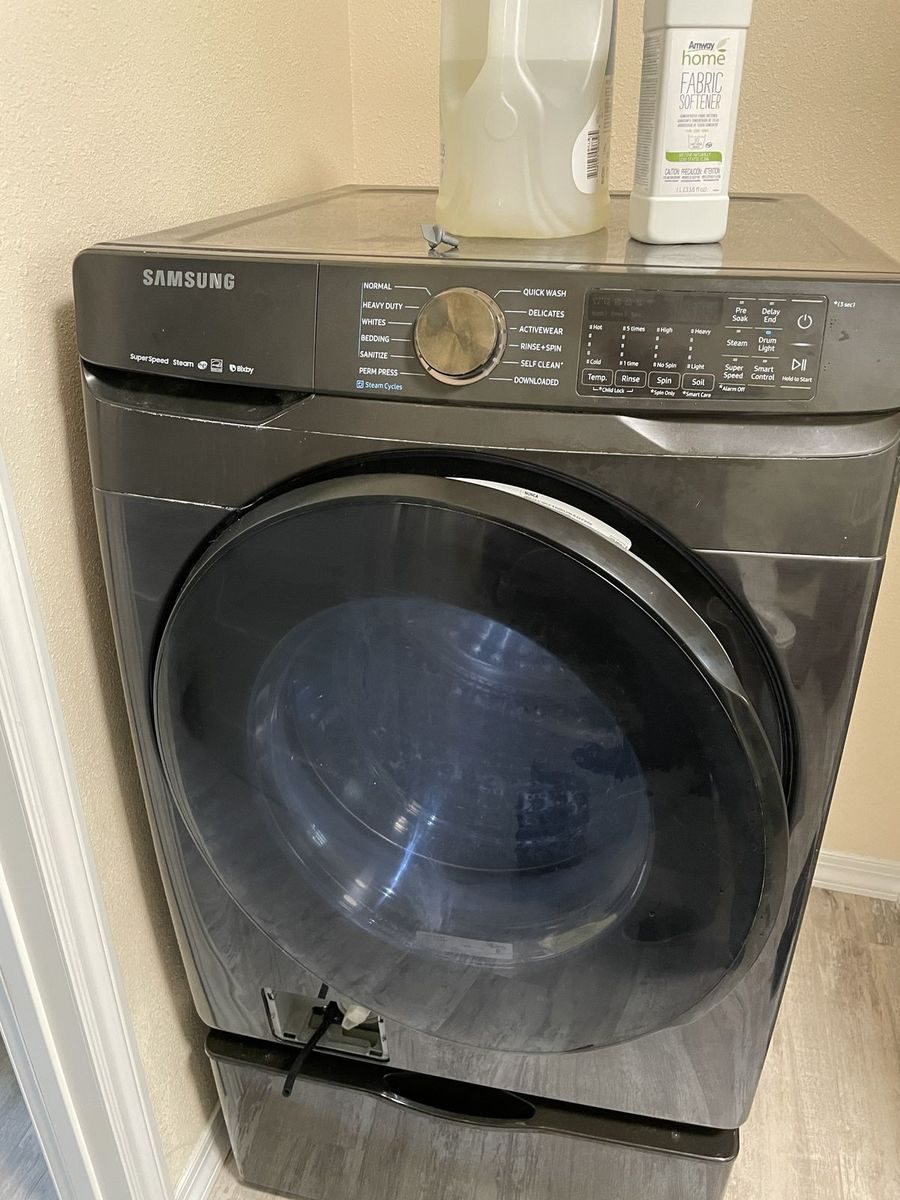
Rural wells around Yelm and Rochester carry sediment that clogs inlet screens. A slow fill or a musty front-loader boot is where most washer visits start.
Go to the service page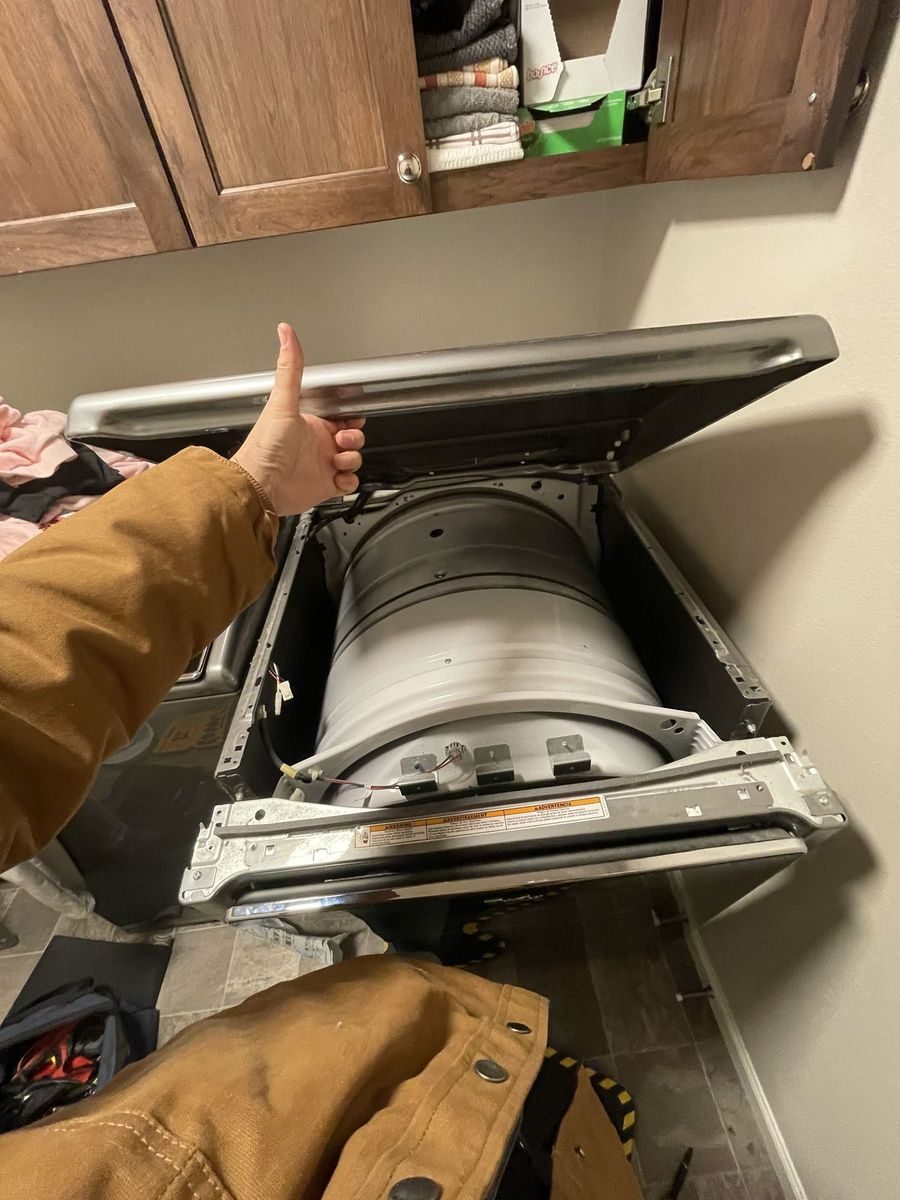
Washing machine repair · Thurston County
A washer that smells like a wet basement, quits with water sloshing in the drum, or pounds the wall on spin is pointing at a tired part. Our technicians read its stored codes, meter the pump, valves, lid lock and suspension, and write a repair price for you to accept or decline.
Quick answer
Washer calls usually trace back to a short list: a drain pump or coin trap jammed by socks, coins or hair ties; inlet screens choked with well sediment or iron; a front-loader door boot that tore or grew mildew; a lid lock that stopped reporting closed; or suspension rods and shocks worn soft. Error codes shrink that list further. A meter confirms the culprit, and you see its price before any wrench turns.
Because a modern washer runs on permission slips. Its control board refuses to fill until the lid lock or door latch reports closed, refuses to spin until a pressure sensor reports an empty tub, and refuses to advance if the motor cannot reach speed. Lose any one signal and everything freezes, usually with a code lit up. Samsung washers flag fill trouble as 4C and drain trouble as 5C, older ones showing nd; LG uses IE, OE and UE for inlet, drain and unbalanced loads, and Whirlpool, Maytag and GE each keep their own lists.
The parts behind those codes are small and testable. Drain pumps crack an impeller or choke on a sock lodged in the coin trap. Inlet valves burn open a solenoid coil or pack their little screens with grit. Lid switches snap an actuator. Door boots split along the bottom fold where water pools. Suspension rods, springs and shock absorbers wear soft until the outer tub slaps the cabinet. Each of those gives a reading on a meter or a feel in the hand, and our vans tend to carry valves, belts, pumps and door switches.
Washers belong to the 07D Appliance Repair specialty carried on our Washington electrical contractor license. Our work stops at the machine and its hoses; shutoff valves in the wall, the drain standpipe and the house lines behind it are a plumber's territory, and you will hear from us plainly if the trouble starts on that side.
It opens with the machine's own memory. Most current washers store recent fault codes, and a service-mode test lets the technician run fill, lock, drain and spin one step at a time to see where things stall. Then the meter comes out: ohms on pump and valve coils, continuity through the lid lock's switch, the pressure sensor's response as the tub fills, and a flashlight under the cabinet for the suspension and hoses. On front-loaders the whole bottom fold of the door boot gets pulled back and inspected, since tears and mildew both hide there.
With the fault found, the technician writes a repair price and steps back while you decide. Each visit has a diagnostic fee; the office names its amount while you settle on a day and window. Say yes and the fee is absorbed into the repair's total; say no and that fee by itself settles the visit. Since door switches, belts, inlet valves and drain pumps usually ride in the van, plenty of common failures get fixed before the technician packs up. Ordered parts are priced in writing beforehand, and your invoice states the warranty in writing.
Each tab carries a photo from our service work and the first checks we make on that job. Choose a tab, or let them change by themselves.
No. 1
Rural wells around Yelm and Rochester carry sediment that clogs inlet screens. A slow fill or a musty front-loader boot is where most washer visits start.
Go to the service page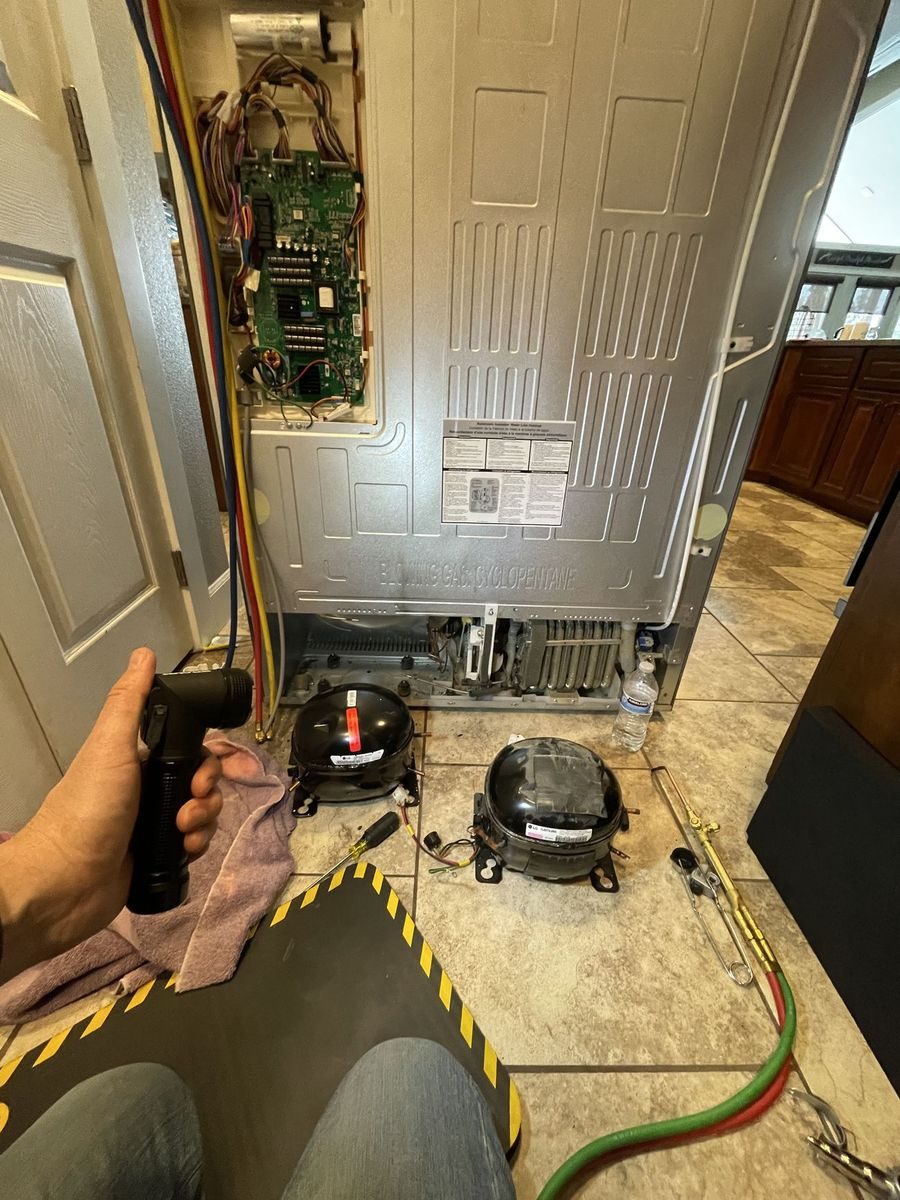
No. 2
Warm shelves usually come from frost on the coil, a fan that has stopped or a failed defrost part. Sealed-system repairs happen at home, by technicians holding EPA 608 Universal credentials.
Go to the service page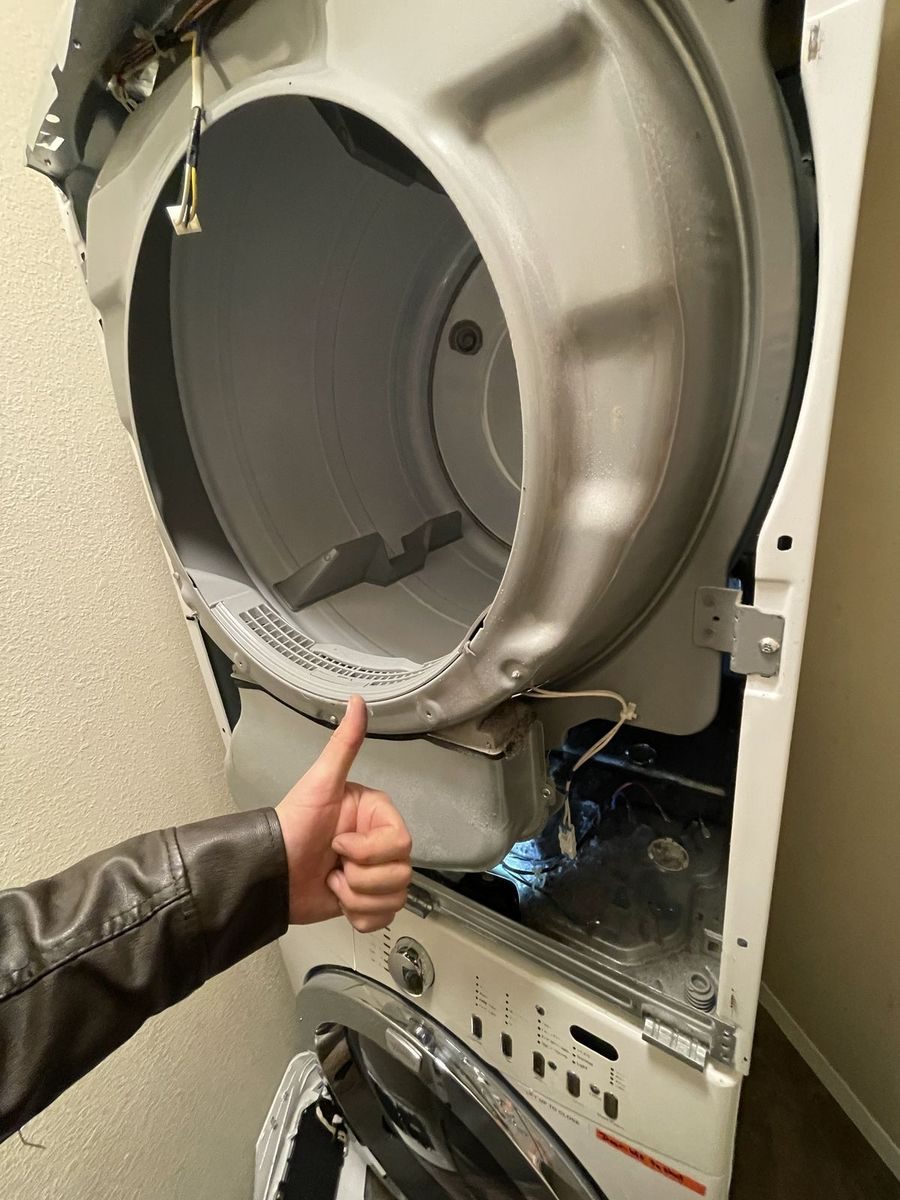
No. 3
Damp air and long vent runs make lint pile up fast in South Sound laundry rooms. The vent is tested together with the element or burner and the thermal fuse.
Go to the service page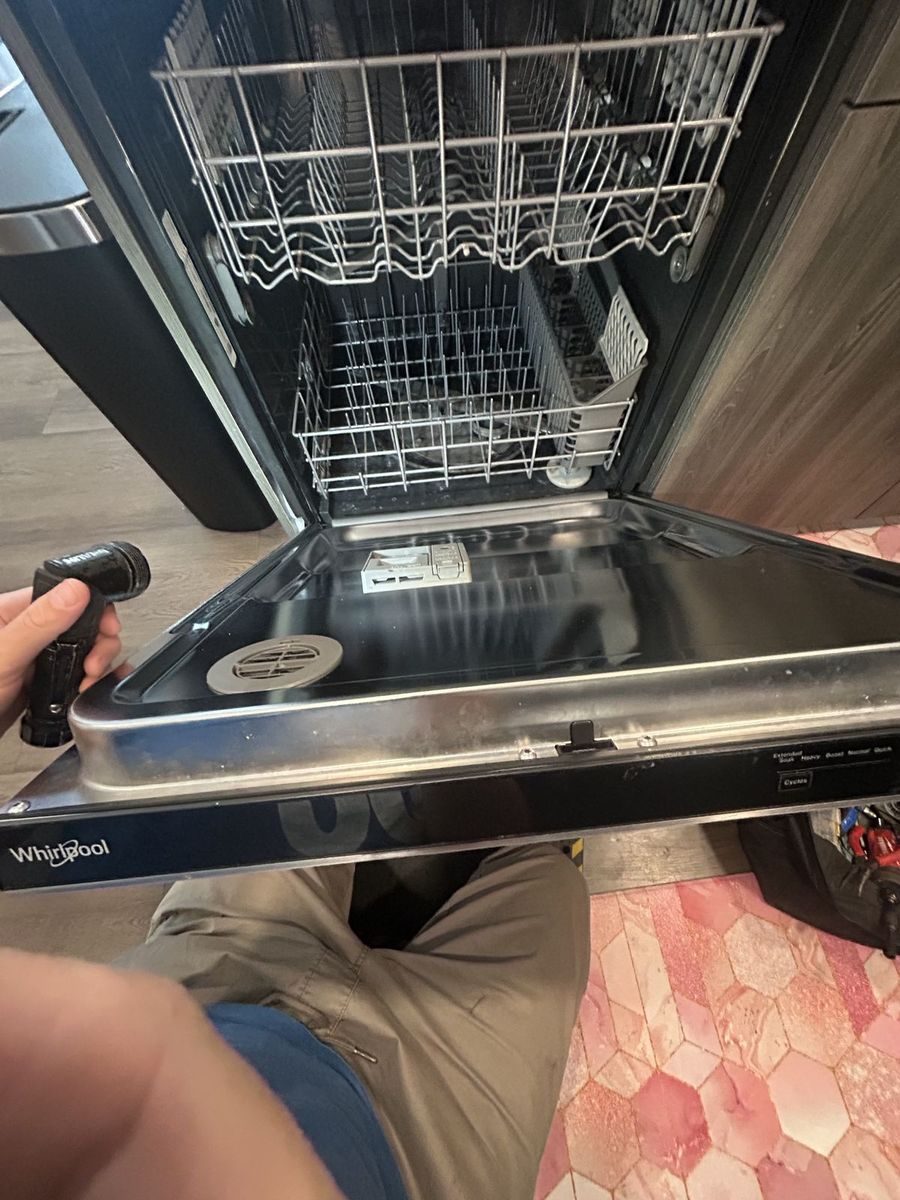
No. 4
Cloudy glasses and a tub that will not drain point to the filter, the drain pump or a hose without its loop under the counter. Each gets checked in order.
Go to the service page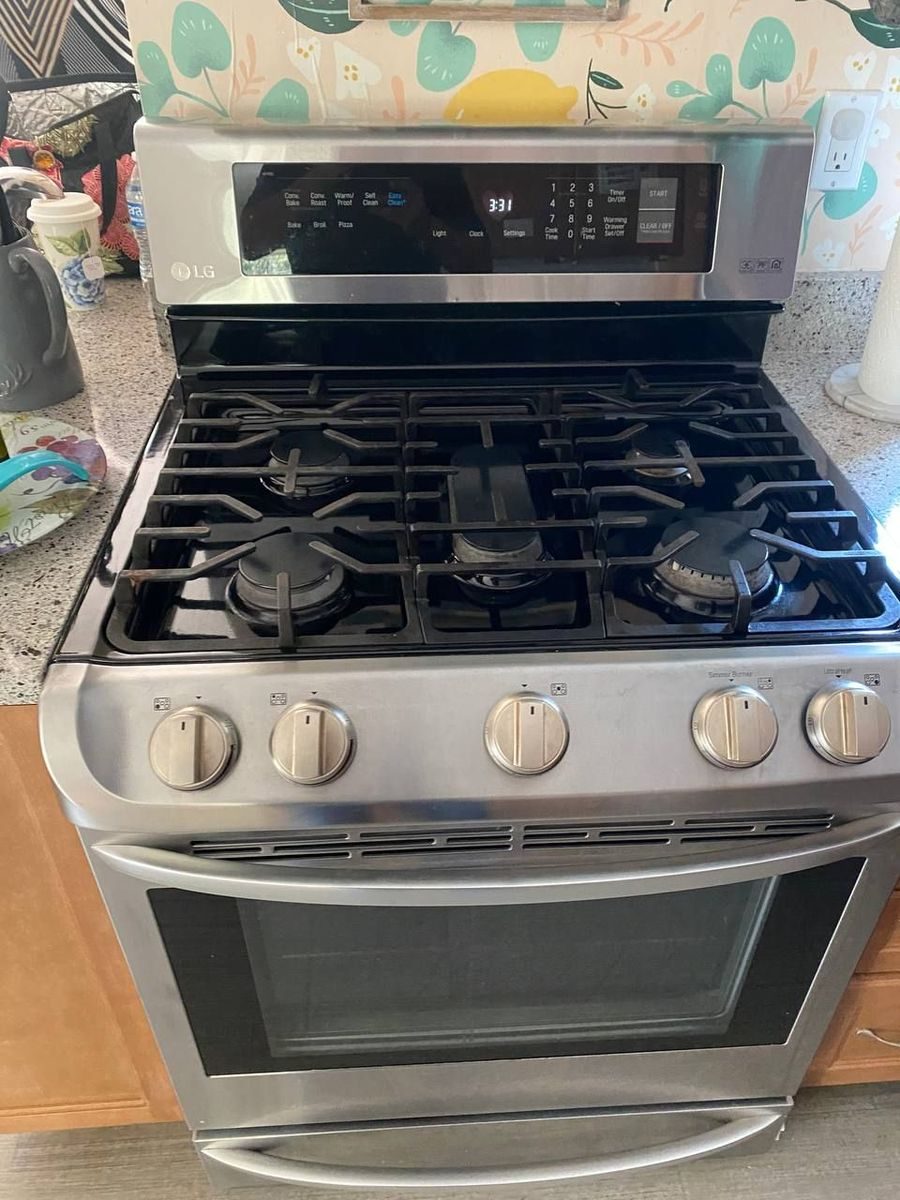
No. 5
Bake and broil elements, igniters and the oven sensor are metered before any part is ordered, on gas, electric and induction models alike.
Go to the service page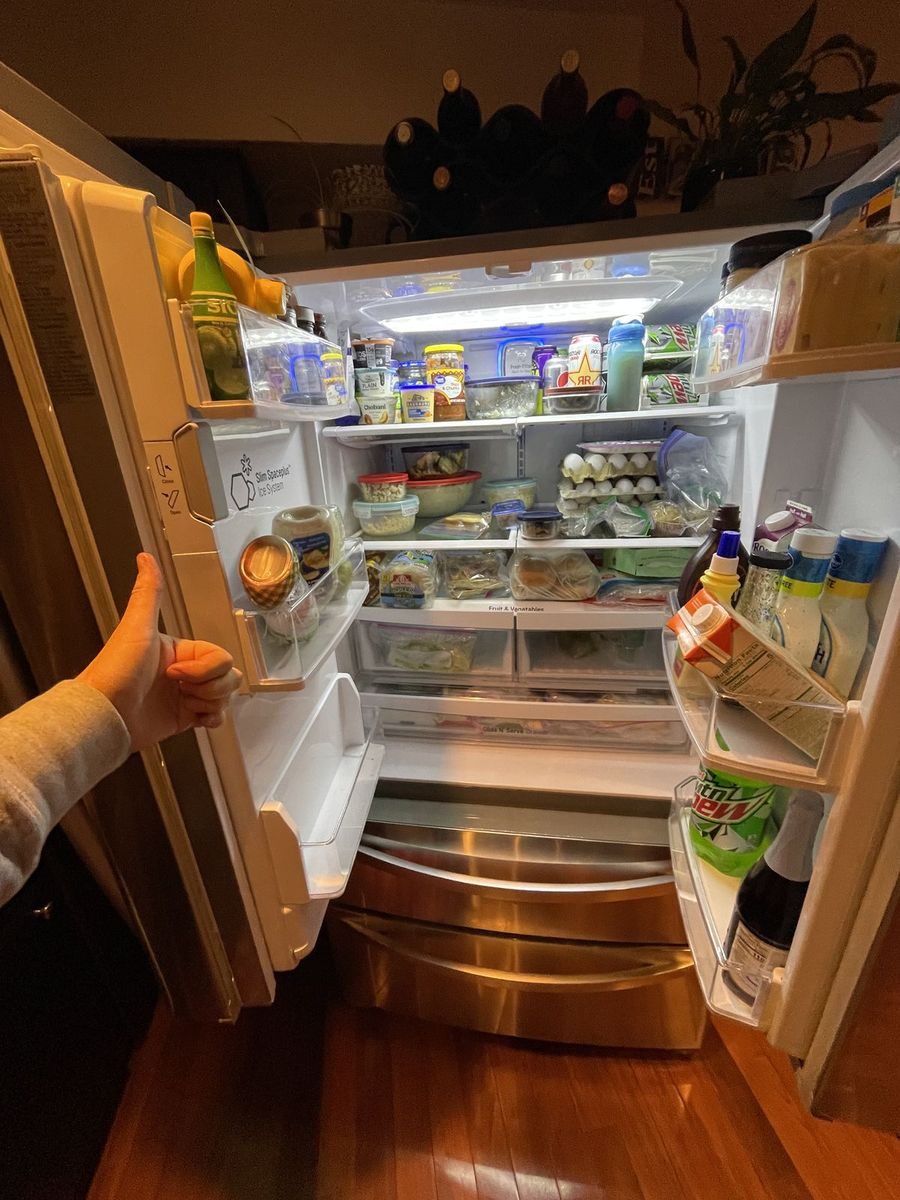
No. 6
When the ice stops after a power outage, the fill tube has often frozen. We check the water valve, the filter and the tube before blaming the ice maker.
Go to the service page
No. 7
Olympia winters stay wet and just above freezing for weeks, so defrost does a lot of work. We read the coil sensor, the defrost board and the charge before anything else.
Go to the service page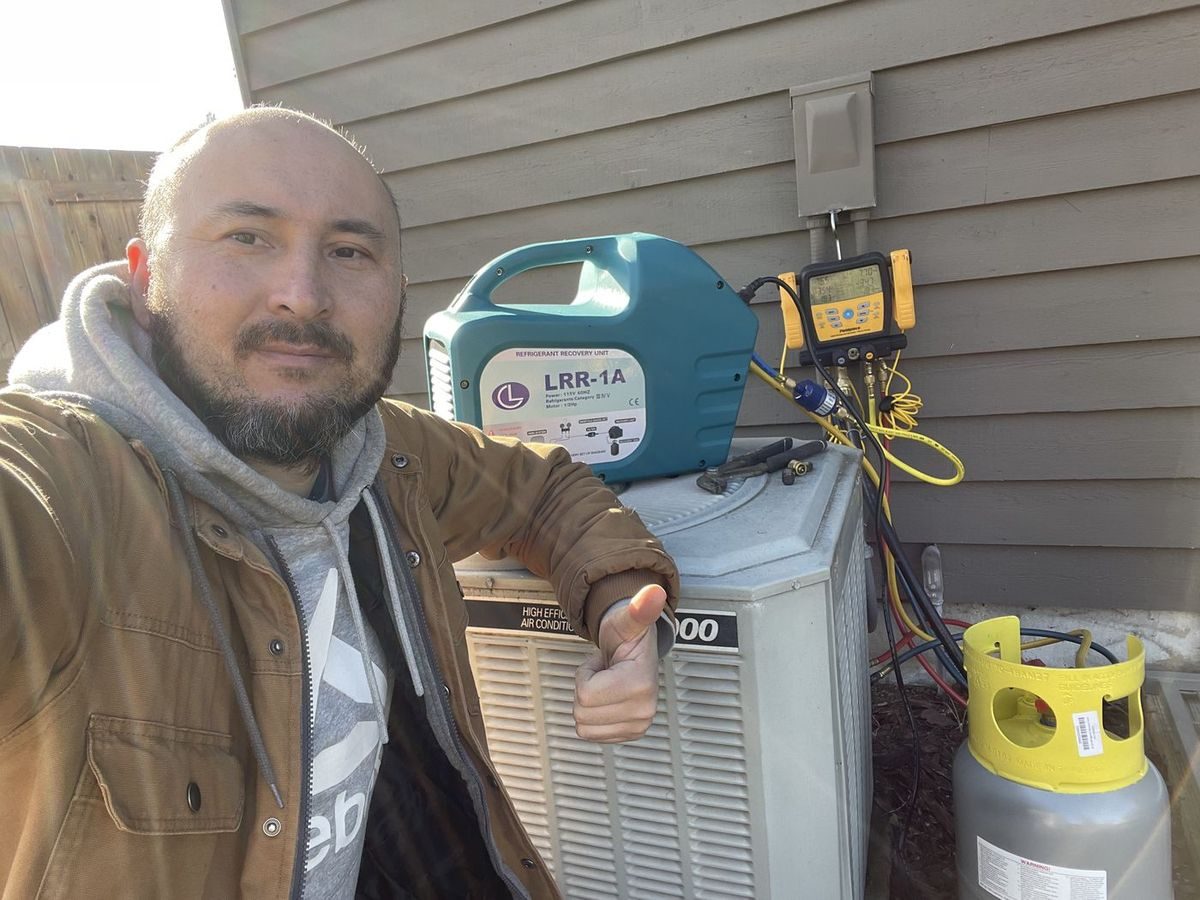
No. 8
Cooling was an afterthought in many South Sound homes until the 2021 heat dome. When a newer system lags on a hot day, airflow, the capacitor and the charge come first.
Go to the service page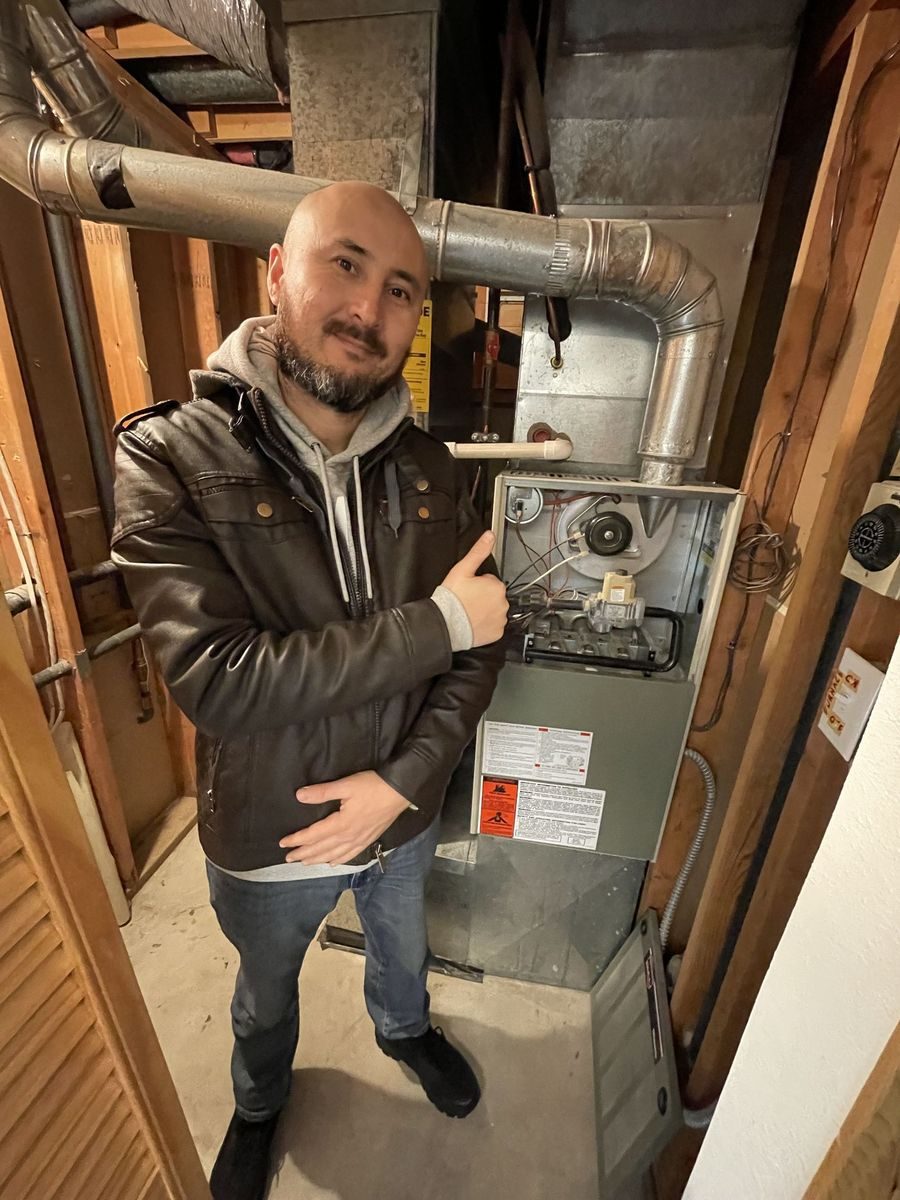
No. 9
Gas or electric, a furnace that quits on a cold morning is traced step by step: thermostat call, inducer, pressure switch, igniter, flame sensor, limit.
Go to the service page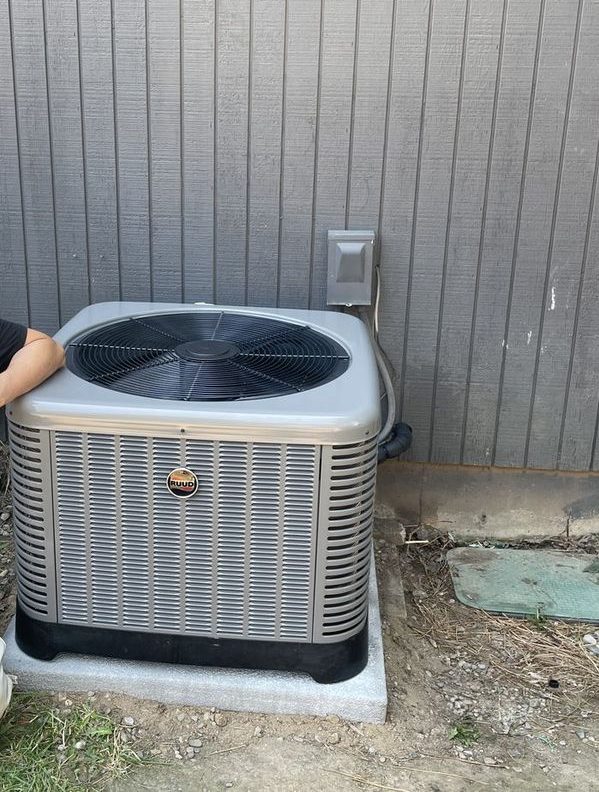
No. 10
A new system starts with a load calculation and a dry, level pad. Prairie gravel drains fast; in low clay corners we set the unit higher.
Go to the service page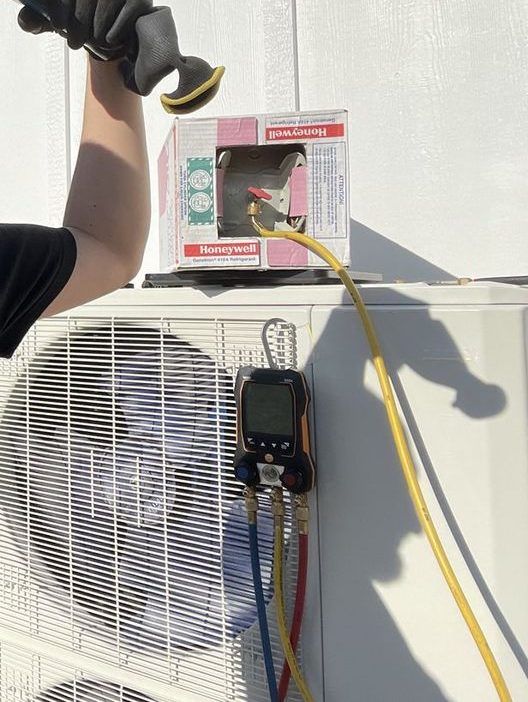
No. 11
Ductless heads suit older Olympia houses with no space for ducts. The line set runs outside, so its insulation and the condensate drain get a close look.
Go to the service page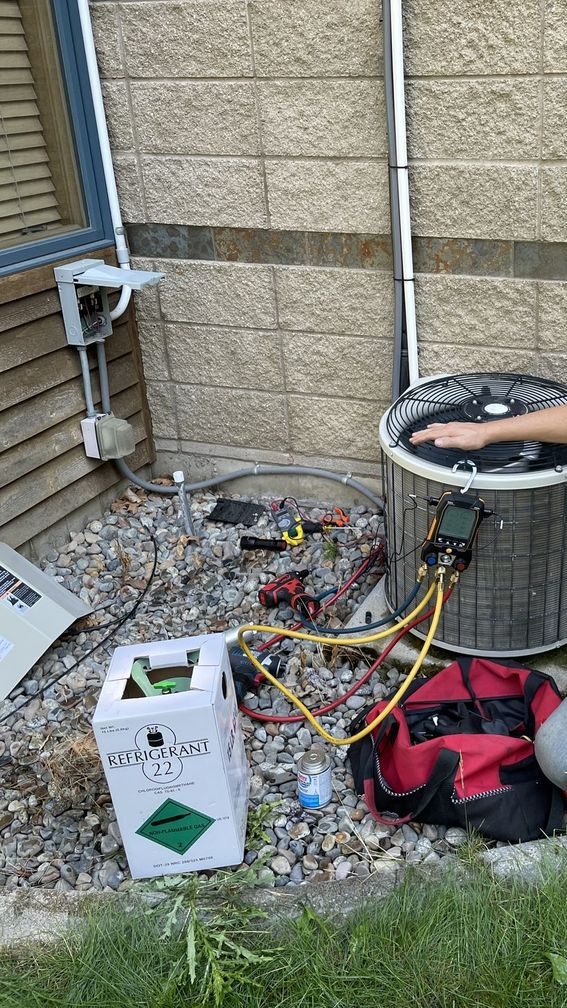
No. 12
Spring and fall visits clear needles and moss from the coil, open the drain holes in the base and test the defrost cycle before the long gray season.
Go to the service pageLacey's city water is all groundwater, pumped from 20 production wells tapping three aquifers, and according to the city's 2026 water quality report, hardness swings between 32 and 120 mg/L by source, with iron and manganese detected in some. Olympia leans on the McAllister Wellfield from September through May, and Tumwater runs on city wells. Out past the city limits, in Rochester, Tenino, Rainier and around Yelm, plenty of homes draw from private or small community wells, where sediment, iron and minerals reach a washer's inlet screens sooner. Rusty grit in the screen, orange tinting on whites and a fill that takes forever are the tells. Adding a whole-house sediment filter is a job for a plumber; cleaning the screens is ours.
Damp air finishes what the water starts. From November through January, the soggiest stretch of an Olympia year, a laundry room over a crawlspace or a cramped closet in an older Eastside or South Capitol house rarely dries out, so boots and detergent drawers sprout mildew fast. Moves add their own failures. Households moving in from far away, many landing in DuPont's Northwest Landing or in Hawks Prairie, often get a washer shipped without its transit bolts, or a stacked pair pulled apart and rejoined without the stacking kit seated. The first spin in the new house usually announces it.
Repair wins most of the time when the fault is a pump, a valve, a lid lock, a belt, a door boot or a set of suspension rods, since those are contained jobs on a machine whose tub and motor are still sound. The math changes when a front-loader's tub bearing goes: that jet-engine roar on spin usually means splitting the outer tub to replace bearing and seal, and on many models that bill rivals the price of a replacement. Older machines with a split outer tub or a failed main board often end up there too. Builder-grade laundry pairs in Hawks Prairie and Yelm subdivisions are reaching that age now. We write the price, point out anything else showing wear, and leave the choice to you.
A front-loader seals water in, and the boot fold, the sump and the detergent drawer stay wet between loads; in a humid South Sound laundry room they may never fully dry. Use a small dose of HE detergent, run the tub-clean cycle monthly, wipe the boot after the final load, and keep door and drawer ajar overnight. A smell that hangs on usually means a clogged pump filter or mildew grown into the rubber.
Most likely the transit bolts went back in for the move and never came out, or the washer is no longer level on its new floor. Check the back panel for bolts, set the feet, and run a small load. If it still bangs the cabinet, the move may have stretched or broken suspension rods, springs or shock absorbers, and our technicians can test and replace them as a set.
On Samsung washers, 4C signals a water supply problem and 5C, shown as nd on some older displays, signals a drain problem. For 4C, confirm both supply valves are open and the hoses are not pinched. For 5C, clean the pump filter, usually behind a small hatch at floor level. If the code returns, a technician tests the inlet valve, the drain pump and the water level sensor to find which one is failing.
Not overnight, but sediment, iron and minerals settle in the inlet valve screens and wear on the valve seats, so fills slow down and a valve may eventually stick open or shut. Homes on private wells around Rochester, Tenino, Rainier and Yelm see it most. Clean the screens once or twice a year, and if the house has a sediment filter, change its cartridge on schedule; installing one is plumber work.
Yes. Top-load and front-load machines from Speed Queen, LG, Samsung, Whirlpool, Maytag, GE, Kenmore, Frigidaire, Electrolux and Bosch are all familiar territory. Read the model and serial off the label, usually stuck under the lid, inside the door rim or on the rear panel, and pass them to the office when booking. Knowing the model lets the technician load matching parts before heading out.
No. Agree to the repair and its total already includes the diagnostic fee, so nothing is stacked on top. If the washer turns out not worth fixing and you decline, the fee covers that visit and nothing more. The office states that amount at booking, and the repair price shows up written down, giving you room to think it over before a single part leaves its box.
Ready when you are
Grab a day and an arrival slot on the booking page, or phone; our lines stay staffed 8 AM to 7 PM all week long. A confirmation call comes from the office first; later, your technician rings during the drive over.
Online booking
Tell us what is acting up and when suits you. A coordinator phones to confirm the slot, and your technician calls again when heading your way.
These registrations are open to anyone. Look the numbers up on L&I Verify, and see our licenses page for what each one covers.
Read what each license allows