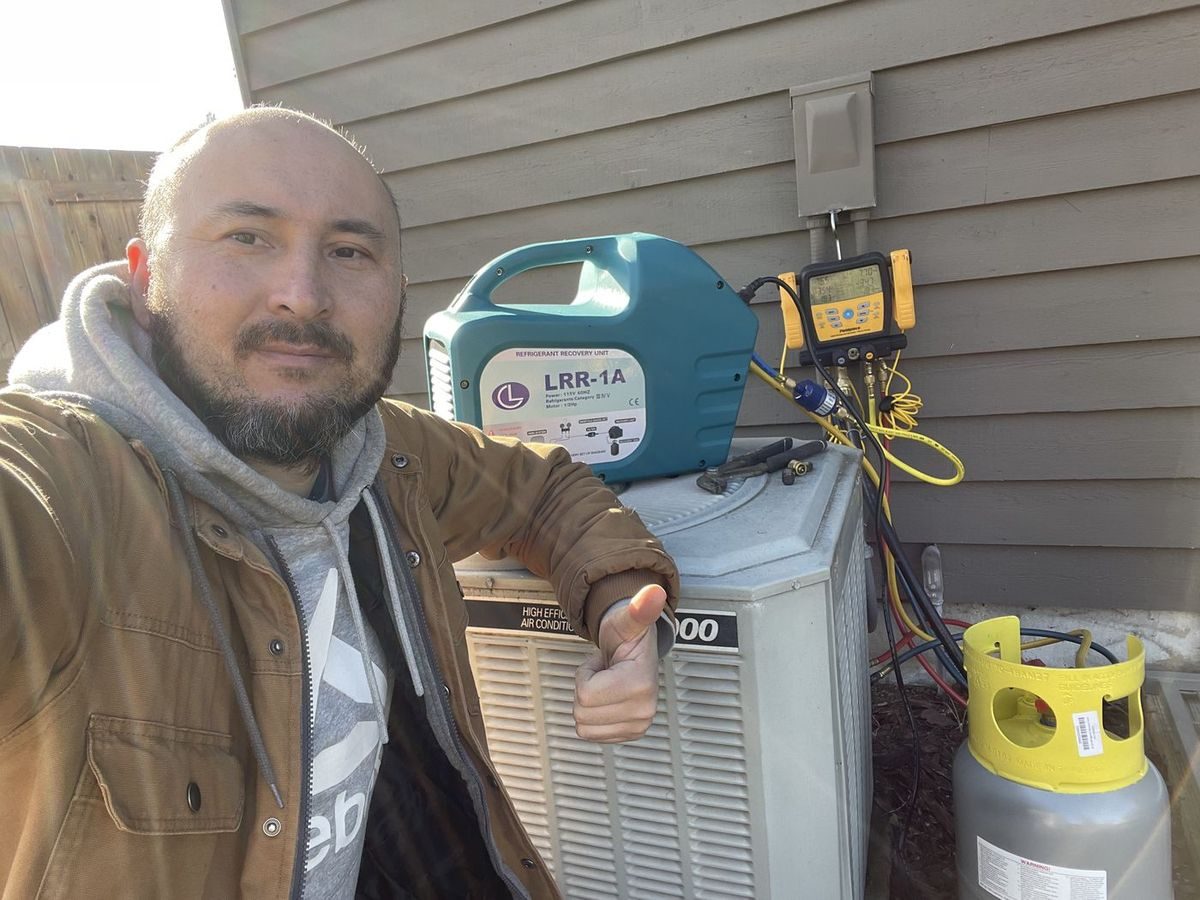
No. 1
Air conditioner repair
Cooling was an afterthought in many South Sound homes until the 2021 heat dome. When a newer system lags on a hot day, airflow, the capacitor and the charge come first.
Go to the service page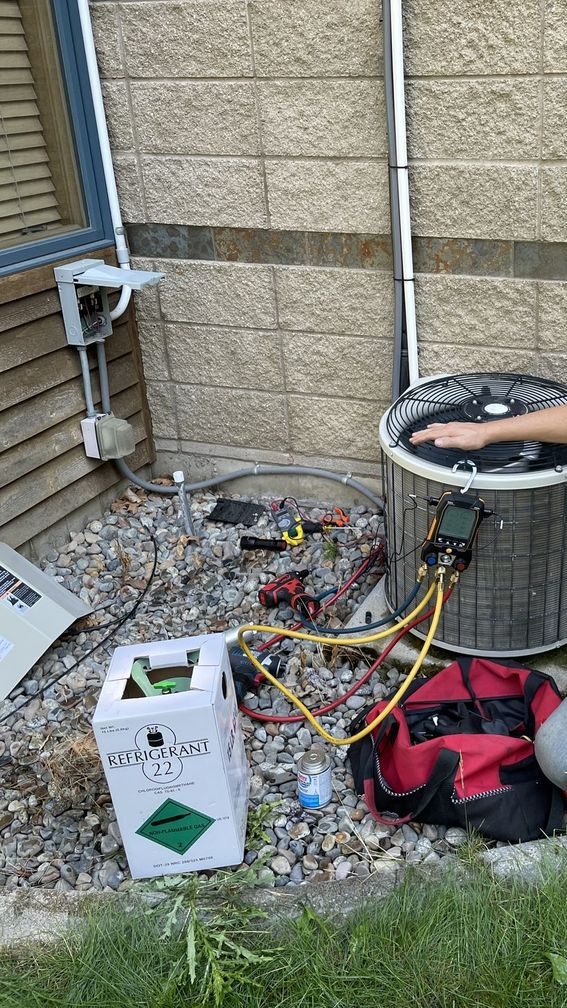
Central air and heat pump cooling repair in the South Sound
Around Olympia, central air can sit untouched for ten months and then face a week in the 90s with almost no warning. Our technicians find whatever went wrong during the idle months, from a swollen capacitor to a pinhole leak, and you see the repair price on paper well ahead of any replacement.
Quick answer
An air conditioner that gives out on the first hot day here most often points to one of five weak spots: a run capacitor that weakened over winter, a condenser fan motor with seized bearings, a charge that leaked down slowly, a condensate drain choked with algae, or a condenser coil coated in cottonwood and dust. We test those first, note the price in writing, and hold off until you give the go-ahead.
Because that afternoon is the first real workout in months. With July and August highs averaging around 78°F, central air in the South Sound spends most of the year switched off, sitting outdoors through roughly fifty inches of rain. A capacitor that lost strength last fall, a dried-out fan bearing, or a leak too slow to notice all stay hidden until the thermostat finally asks for full cooling.
Heat waves raise the stakes. During the June 2021 heat dome, Olympia reached 102°F on June 26, an all-time record of 105°F the following day, and then 110°F on June 28. Equipment sized for a normal South Sound summer ran without pause, head pressure soared, and tired capacitors and contactors failed in the hottest hours. Few systems sized for this climate hold 72 degrees indoors at 110 outside, but a healthy one keeps a far more livable margin.
Under the 06A HVAC/Refrigeration specialty on our Washington electrical contractor license, we repair central air, heat pumps running in summer mode, and ductless mini-splits, and refrigerant is handled only by staff holding the EPA 608 Universal credential. If rooms keep climbing and the vents feel tepid, grab a slot online or ring the office.
The technician works from readings, not hunches. Indoors come the thermostat call, the filter, blower operation, total static pressure, and the drop in temperature from return grille to supply register, usually somewhere near 15 to 20 degrees on a healthy system. Outdoors come power at the unit, capacitor microfarads against the label, contactor faces, fan motor amps and bearing play, and the condenser coil. If those numbers point at charge, gauges go on, and superheat or subcooling is compared with the manufacturer's target for that day's conditions.
You read the repair price on paper before any part changes. Diagnosing the problem carries a fee of its own, named by the office as you set the appointment. Approve the work and that fee merges into the repair bill; turn it down and the fee by itself settles the visit. Capacitors, contactors, fan motors and condensate pumps usually ride along, while a TXV, coil or compressor is priced for your model before it is ordered. Written warranty terms appear on the invoice.
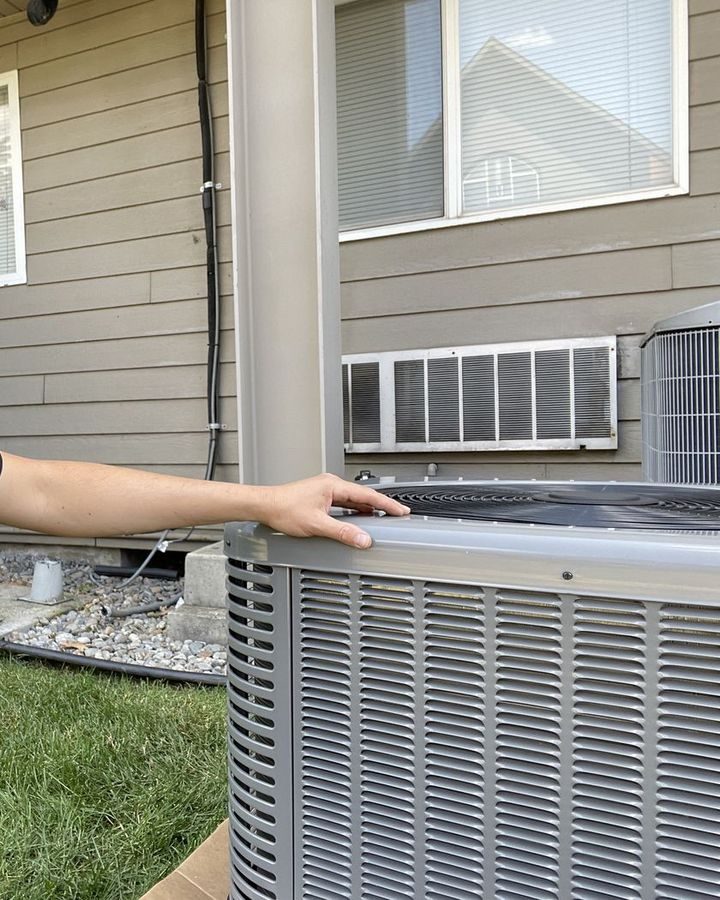
They ask for a hard sprint after a long rest. November through January, the wettest stretch of the year, soaks the condenser week after week while moss and algae creep into its fins. In late spring, cottonwood fluff drifts in and mats with dust, so by the first 90-degree afternoon the coil can be half blocked, and July, the driest month at about half an inch of rain, never rinses it. A gentle hose rinse from top to bottom, with the breaker off and never with a pressure washer, keeps the fins open.
Two-story homes feel the strain first. In many Hawks Prairie subdivisions built over the last two decades, one system serves both floors, and the upstairs bedrooms sit at the far end of the longest ducts, under the hottest part of the house. In a heat wave that can mean bedrooms that never cool before bedtime. We check that upstairs registers get their share of air, that second-floor returns are not starved, and that the blower runs at a cooling speed. Houses built with no central air at all often ask us, after a hot spell, about adding a heat pump.
Each tab carries a photo from our service work and the first checks we make on that job. Choose a tab, or let them change by themselves.
No. 1
Cooling was an afterthought in many South Sound homes until the 2021 heat dome. When a newer system lags on a hot day, airflow, the capacitor and the charge come first.
Go to the service page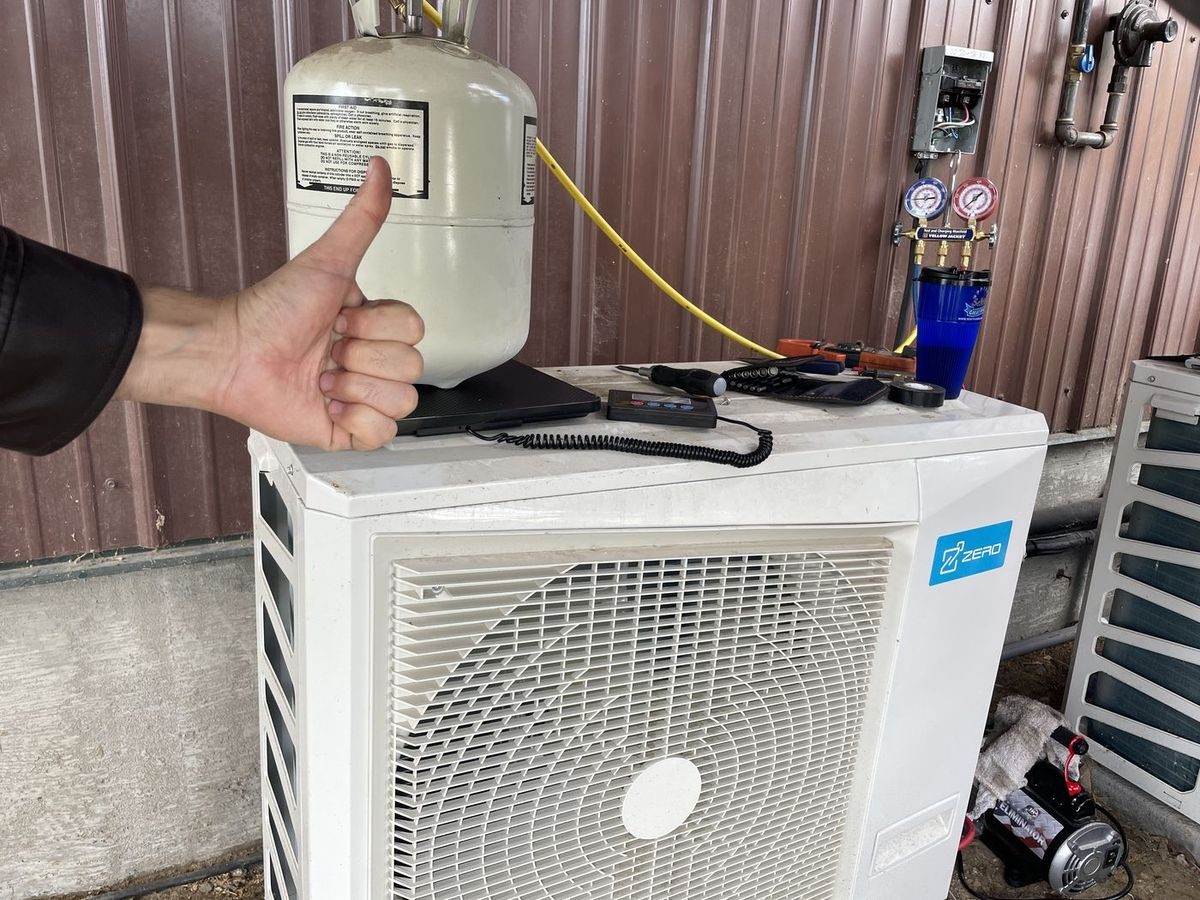
No. 2
Olympia winters stay wet and just above freezing for weeks, so defrost does a lot of work. We read the coil sensor, the defrost board and the charge before anything else.
Go to the service page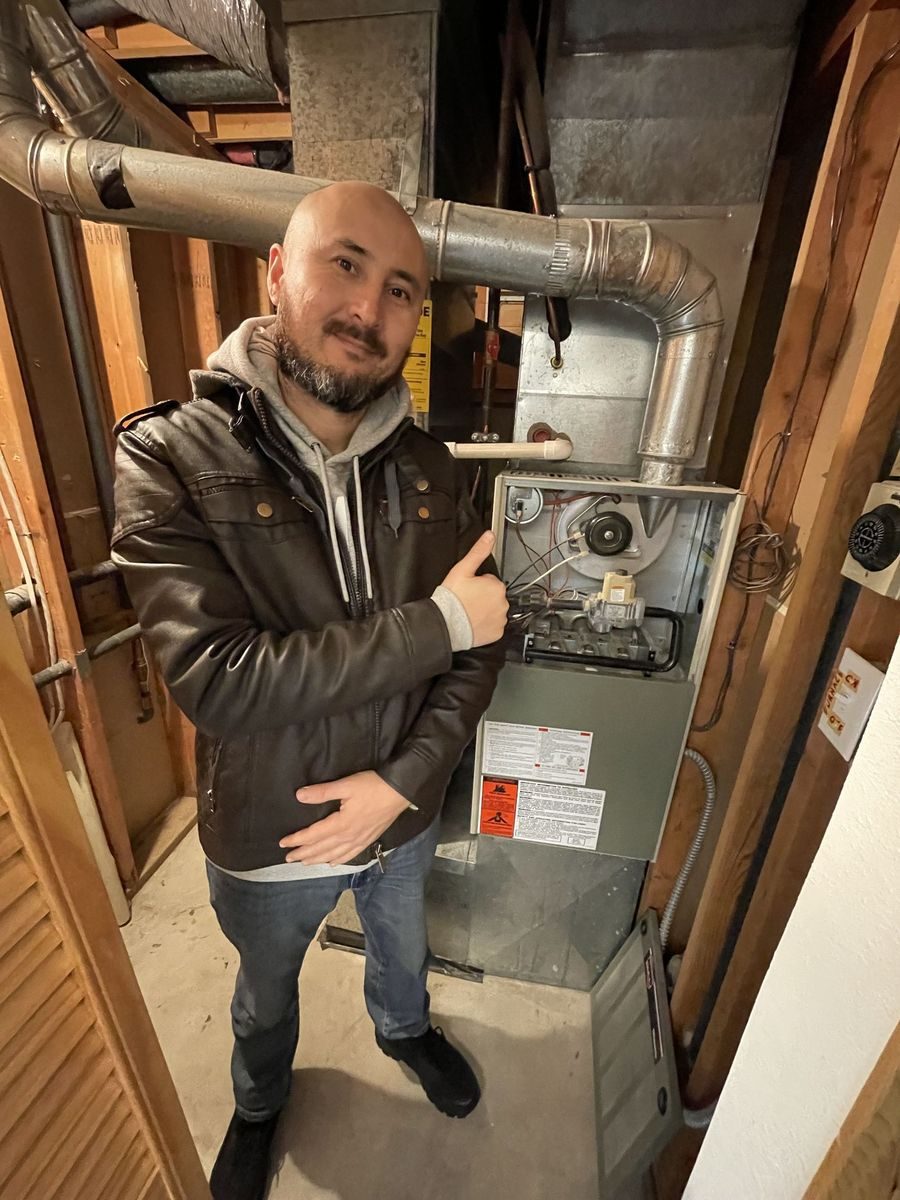
No. 3
Gas or electric, a furnace that quits on a cold morning is traced step by step: thermostat call, inducer, pressure switch, igniter, flame sensor, limit.
Go to the service page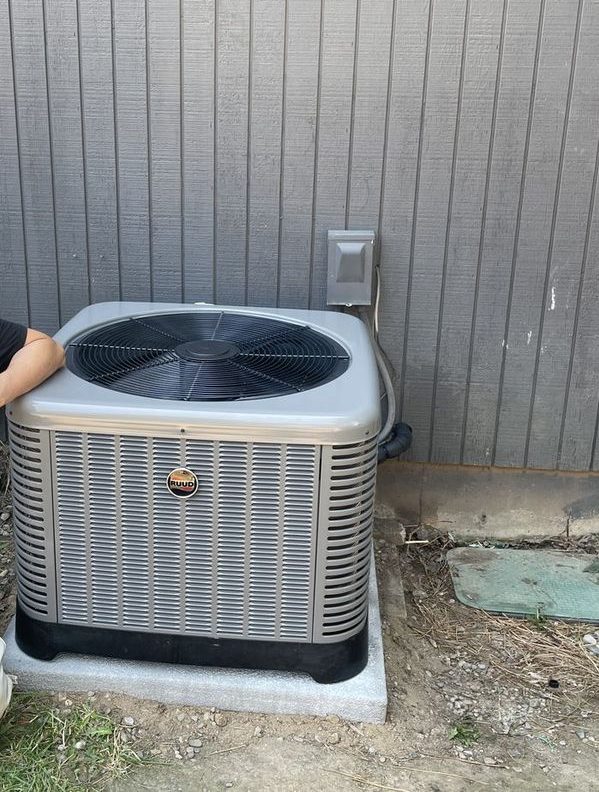
No. 4
A new system starts with a load calculation and a dry, level pad. Prairie gravel drains fast; in low clay corners we set the unit higher.
Go to the service page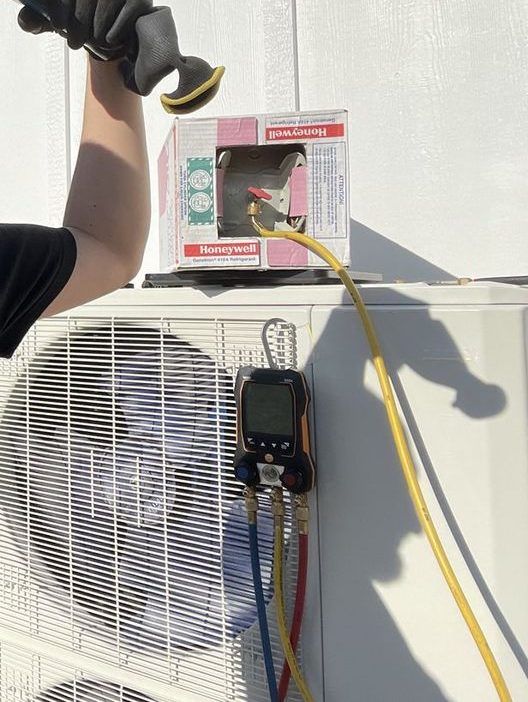
No. 5
Ductless heads suit older Olympia houses with no space for ducts. The line set runs outside, so its insulation and the condensate drain get a close look.
Go to the service pageNo. 6
Spring and fall visits clear needles and moss from the coil, open the drain holes in the base and test the defrost cycle before the long gray season.
Go to the service page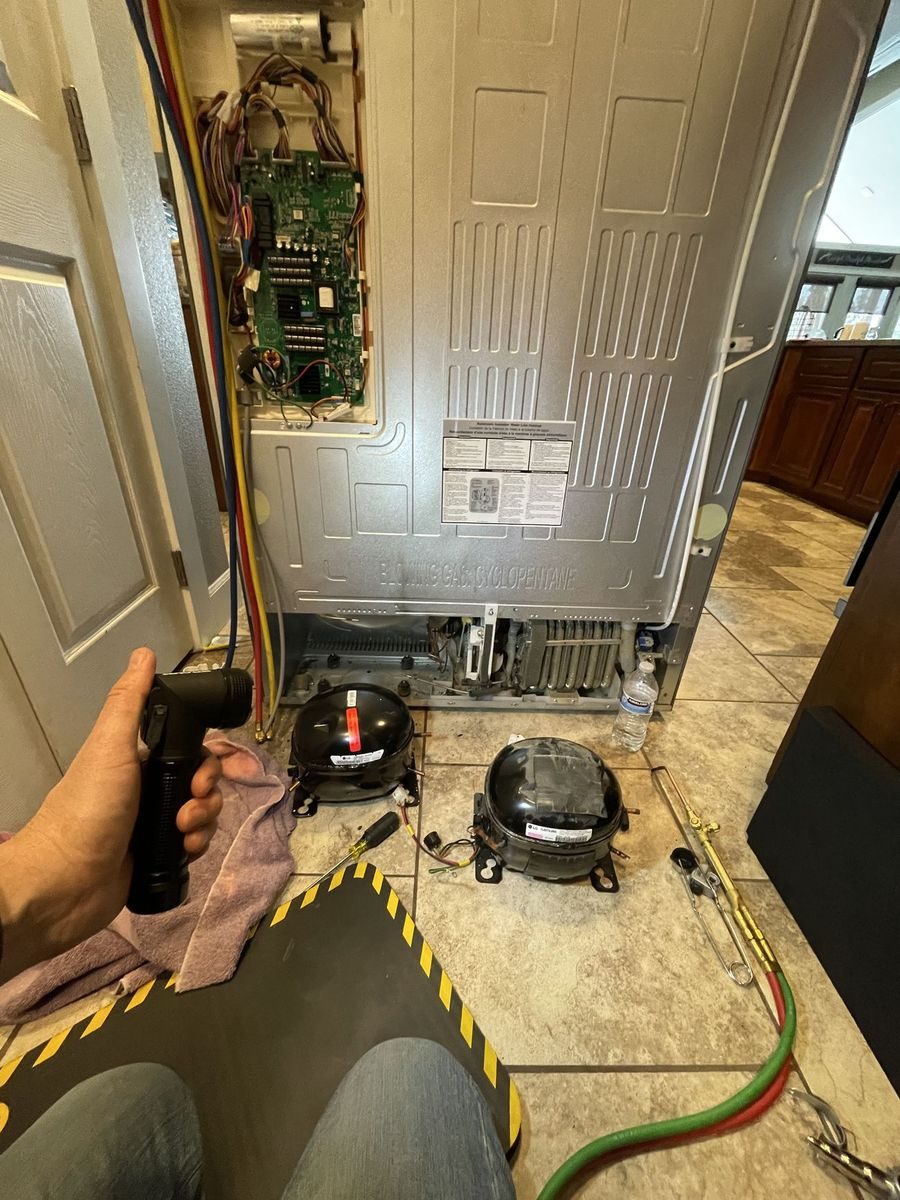
No. 7
Warm shelves usually come from frost on the coil, a fan that has stopped or a failed defrost part. Sealed-system repairs happen at home, by technicians holding EPA 608 Universal credentials.
Go to the service page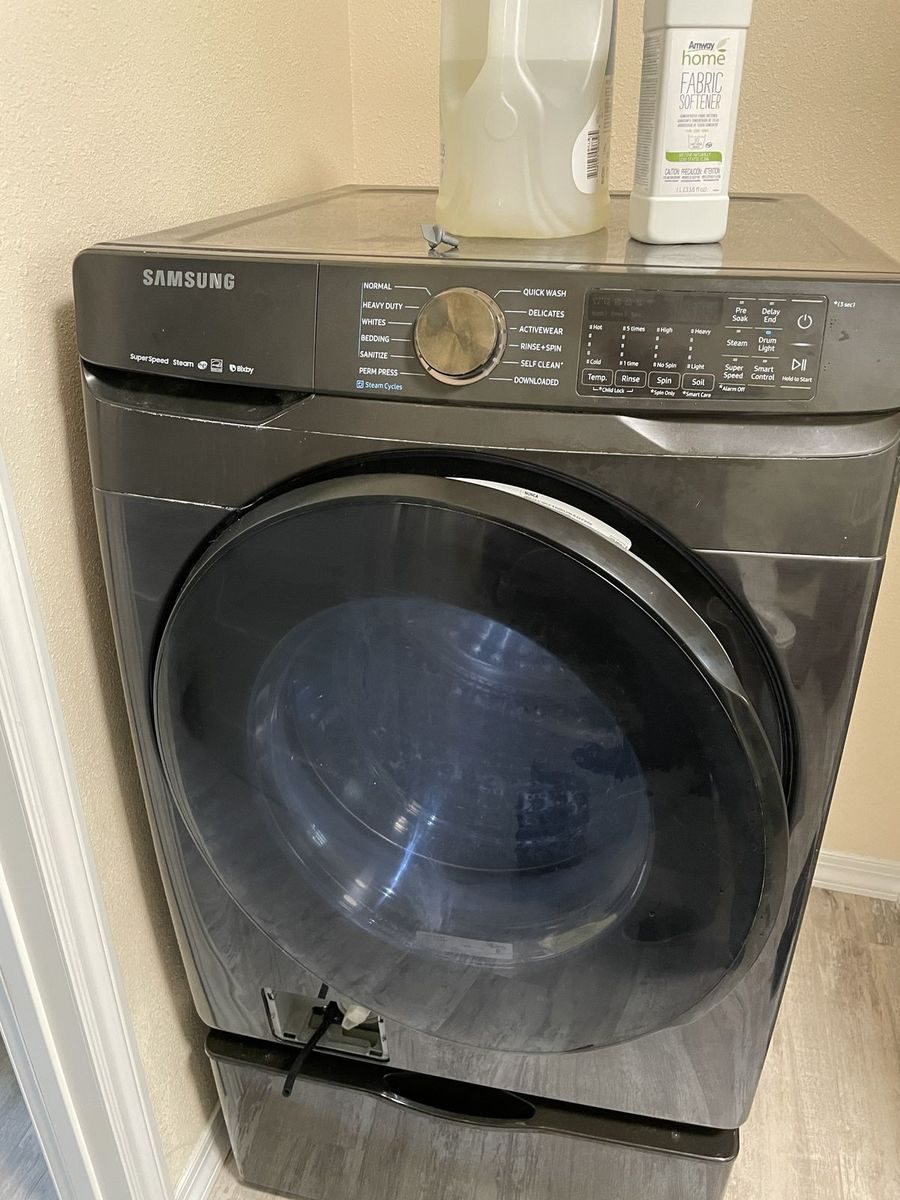
No. 8
Rural wells around Yelm and Rochester carry sediment that clogs inlet screens. A slow fill or a musty front-loader boot is where most washer visits start.
Go to the service page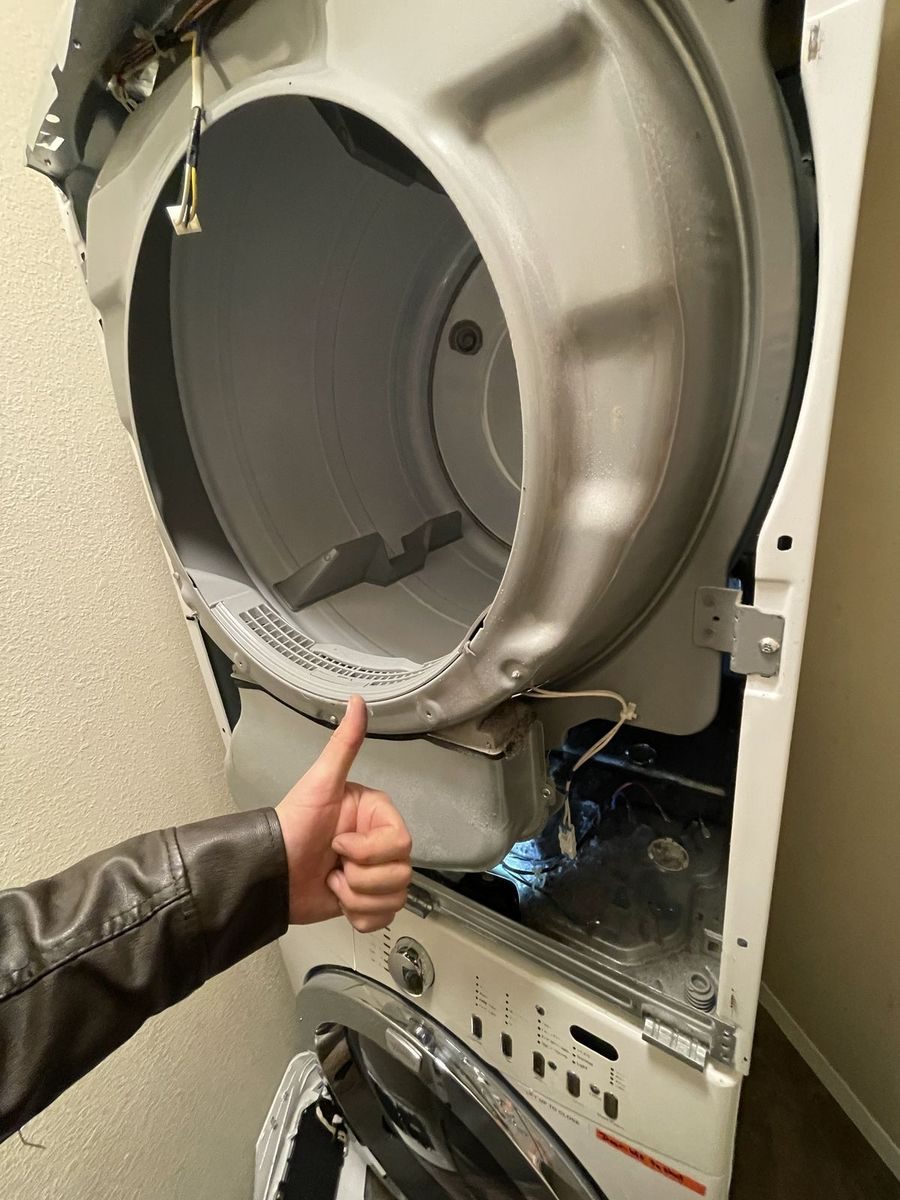
No. 9
Damp air and long vent runs make lint pile up fast in South Sound laundry rooms. The vent is tested together with the element or burner and the thermal fuse.
Go to the service page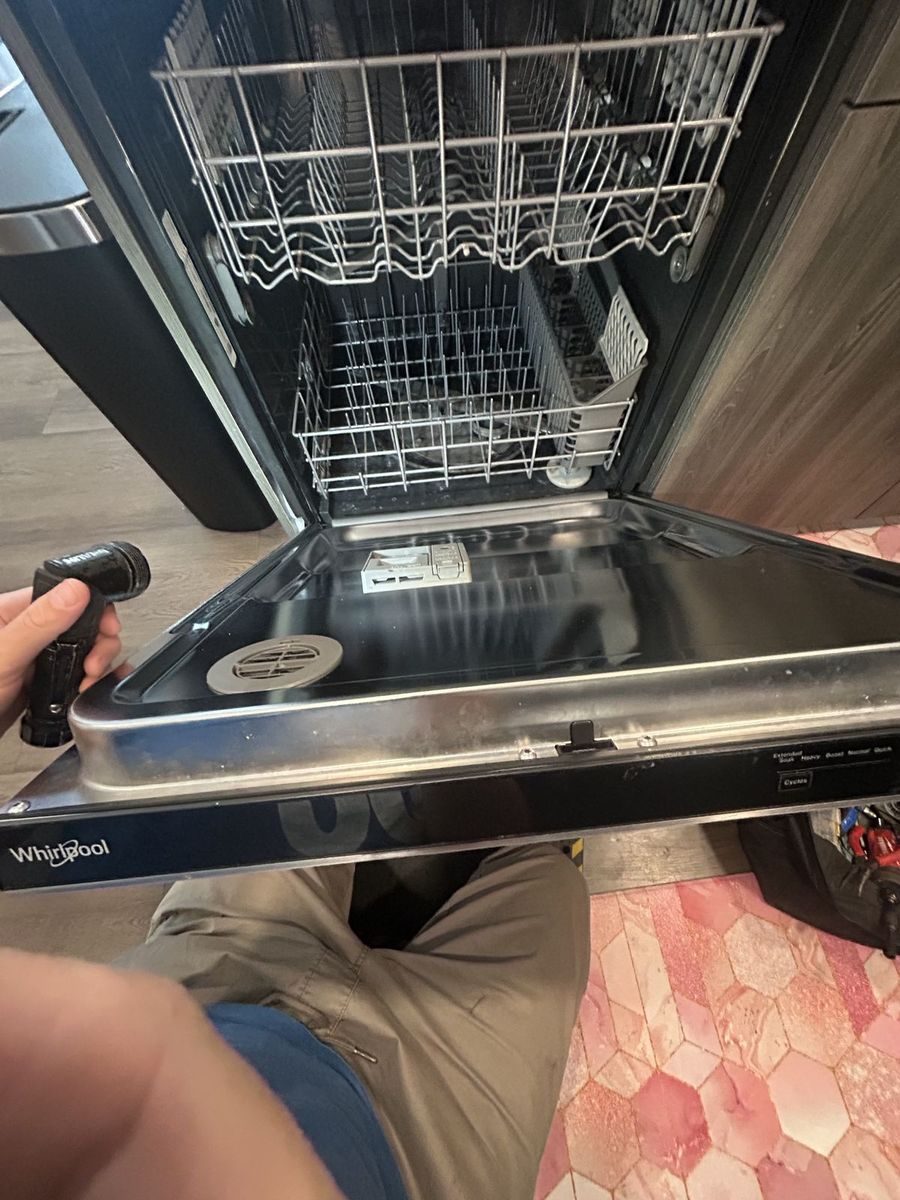
No. 10
Cloudy glasses and a tub that will not drain point to the filter, the drain pump or a hose without its loop under the counter. Each gets checked in order.
Go to the service page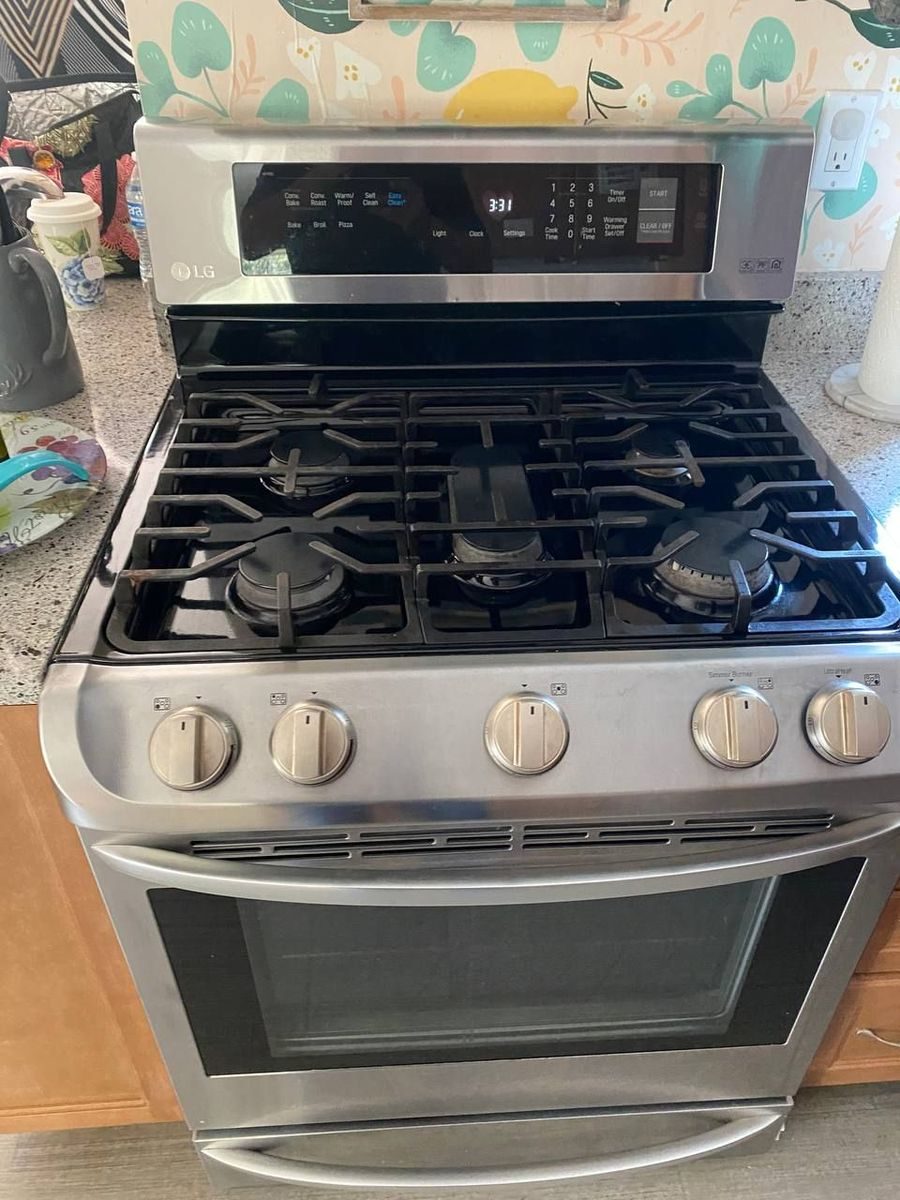
No. 11
Bake and broil elements, igniters and the oven sensor are metered before any part is ordered, on gas, electric and induction models alike.
Go to the service page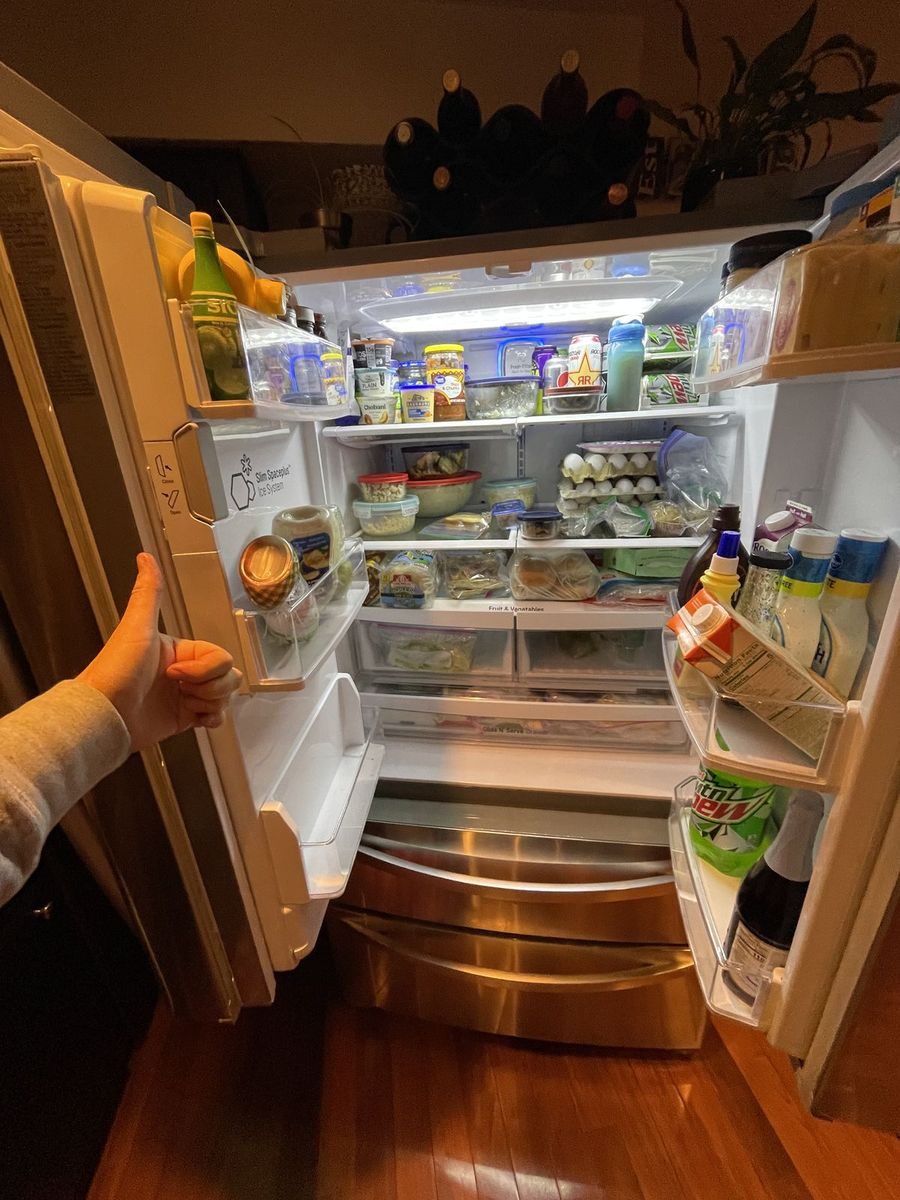
No. 12
When the ice stops after a power outage, the fill tube has often frozen. We check the water valve, the filter and the tube before blaming the ice maker.
Go to the service pageMost AC breakdowns justify a repair: a capacitor, contactor, fan motor, float switch or drain line is a contained fix, and a single reachable leak can be found and sealed. The argument for replacing builds when the compressor has failed, when both the indoor coil and the condenser leak, or when the system still runs on R-22, now out of production, which leaves every recharge dependent on scarce reclaimed refrigerant. In those cases both options arrive in writing: what the repair costs, and a quote for a new air conditioner or heat pump that rolls equipment and installation into one figure. The call stays yours.
Heat loads every part at once. High outdoor temperatures drive head pressure and compressor amps up, and a capacitor that limped along at 80 degrees can fail outright at 100. A contactor pitted by years of starts may stick or burn open, and a slightly low charge suddenly matters. A spring checkup catches most of these weak parts before the heat arrives.
Plan on several hours with the thermostat set to run the fan only and cooling off, longer if the ice is thick. Running the compressor against a frozen coil can slug it with liquid refrigerant and cause damage. Lay a towel near the air handler in case meltwater overwhelms the drain pan, then call us, since the ice returns until the cause is fixed.
Not without finding the leak. An air conditioner does not consume refrigerant, so a low charge always means some escaped. Our EPA 608 Universal credential holders track the leak to its source, repair it where they can, pull the system into a vacuum and weigh back the amount stamped on your equipment's label. Topping off a leaking system only buys a short reprieve.
It can. Older systems often list R-22 on the outdoor unit's label, and that refrigerant is no longer produced in the United States, so any recharge depends on limited reclaimed supply. A small, fixable fault on an R-22 system can still be worth repairing, while a major leak usually tips the decision toward replacement. Either way, we lay out both options in writing.
Warm air rises, the roof bakes the top floor, and in many two-story homes the upstairs rooms sit at the end of the longest duct runs, often with too few return grilles. We measure airflow and temperatures room by room, then adjust dampers and blower speed where that helps. If the equipment is undersized, we say so and outline options, such as a ductless head upstairs.
Turn cooling off at the thermostat if the outdoor unit is humming, buzzing or iced, so the compressor is not damaged. Close blinds on sunny windows, run fans, and spend the warmest hours in the coolest room or a cooler public building. Then book online, or call the office during its 8 AM to 7 PM hours; booking early in the day helps.
Ready when you are
Open the booking page, settle on a date and the window when the technician should arrive, or dial in while the phones are staffed, 8 AM to 7 PM daily. A quick confirmation call follows from our office, and replies in Spanish are yours for the asking.
Online booking
Tell us what is acting up and when suits you. A coordinator phones to confirm the slot, and your technician calls again when heading your way.
These registrations are open to anyone. Look the numbers up on L&I Verify, and see our licenses page for what each one covers.
Read what each license allows