No. 1
Heat pump repair
Olympia winters stay wet and just above freezing for weeks, so defrost does a lot of work. We read the coil sensor, the defrost board and the charge before anything else.
Go to the service page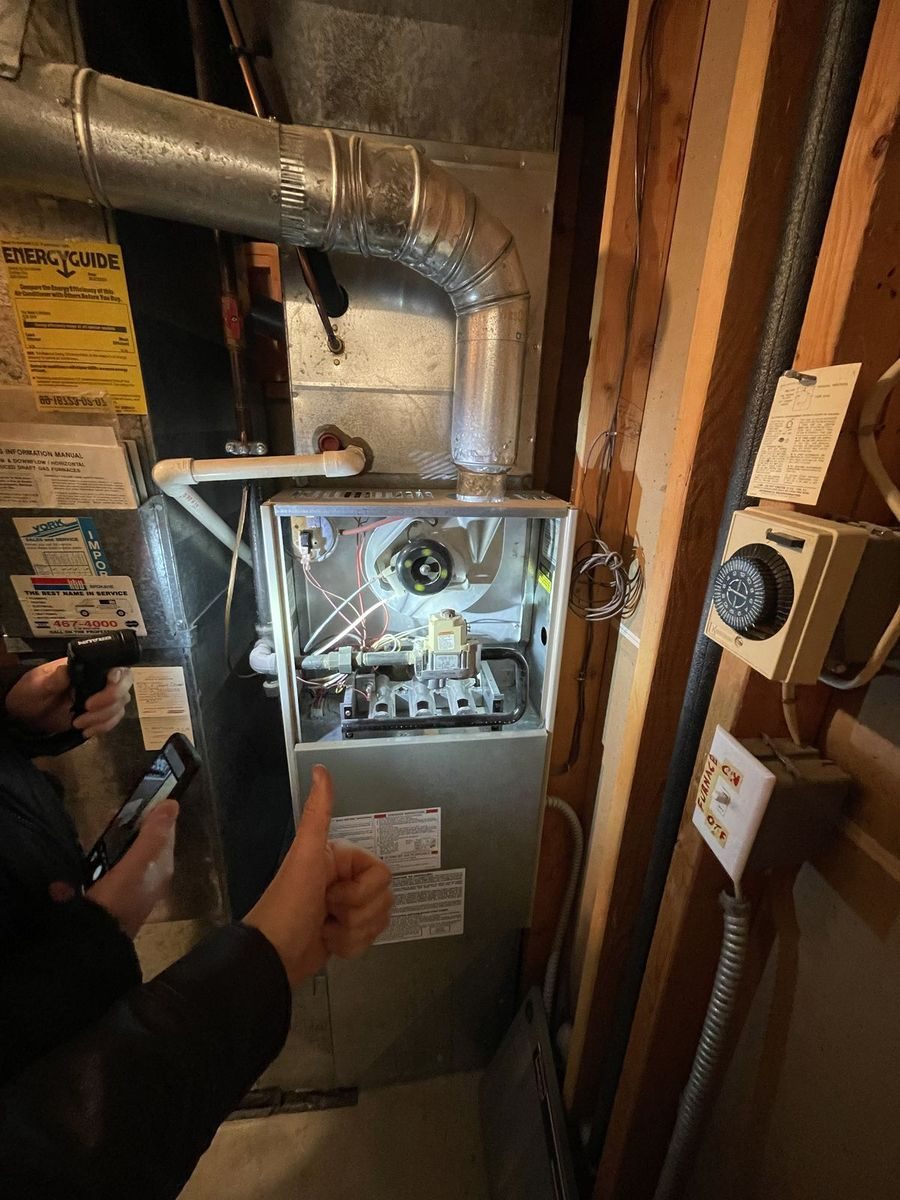
Olympia, WA · 98501 · 98502 · 98506 · 98512
The capital has some of the oldest housing in the South Sound. Basements and crawlspaces, heat pumps fitted into houses designed around a furnace, washers squeezed into hall closets: those are the conditions our technicians work in across Olympia, from downtown out to the bays.
Quick answer
Larch HVAC & Appliance handles heat pump, furnace, central air and mini-split repair, plus kitchen and laundry appliances, throughout Olympia's 98501, 98502, 98506 and 98512 ZIP codes. Claim a date on the booking page and then the arrival window that fits your day, or ring the office, open 8 AM until 7 PM daily. The diagnostic fee is quoted up front; an approved repair swallows it, and a declined one leaves it standing alone.
Because so many Olympia houses went up long before heat pumps or central air existed. Downtown, through South Capitol's historic blocks, and across Bigelow and the Upper Eastside, homes commonly sit over a basement or a crawlspace, and any cooling arrived decades later, if it arrived at all. That is a big reason the June 2021 heat dome landed so hard here. Olympia broke its all-time record with 105°F on June 27, then broke it again the following afternoon at 110°F.
A retrofit carries quirks of its own. When a heat pump joins an older house, it often inherits ductwork drawn up for a furnace: undersized returns, long runs through a damp crawlspace or an unfinished basement, and joints that have loosened over the years. The result can be high static pressure, a weak temperature split at the farthest registers and a blower motor straining harder than it was built to. Older floor plans also tuck laundry into tight closets, leaving little room for a dryer vent to run short and straight.
Water and schedules shape the work too. Olympia's supply comes mainly from the McAllister Wellfield, groundwater near the Nisqually area that serves the city from September through May, while city wells on the east and west sides add volume in spring and summer. And with so many residents working downtown on fixed office hours, our booking runs on an arrival window you pick yourself, and the technician phones you once rolling, so nobody burns a morning of leave waiting.
Airflow tops the list in older homes. Before blaming a retrofitted heat pump for weak heat, our technicians take total static pressure, inspect the filter rack and crawl the duct runs below the floor for crushed or separated sections. Crawlspace and basement air holds moisture through most months, so we also look for rust in air handler cabinets, grime caked on blower wheels, and algae in condensate lines that can overflow a drain pan. In winter, the usual heat pump faults are a defrost board that has stopped starting cycles, a coil sensor reporting the wrong temperature, or a reversing valve stuck between heating and cooling.
Basement gas furnaces fail in a recognizable order. A burner that lights and drops out within seconds usually points at a grimy flame sensor whose microamp signal has sagged. When nothing lights whatsoever, look to a cracked hot-surface igniter, an inducer that hums without turning, or a pressure switch that never closes. Windstorm and ice outages add a different fault, because the surge when power returns can kill a furnace control board or a thermostat. Should the basement smell of gas, walk out before touching anything; dial 911 or the gas utility once you are well clear of the house. Under our 06A HVAC/Refrigeration specialty we repair the furnace and the heat pump, and all refrigerant work falls under our technicians' EPA 608 Universal credential; gas piping is never part of our job.
Tight spaces and damp air cause most of them. Stacked or side-by-side laundry pairs wedged into closets often exhaust through long, kinked ducting, and in a humid house that adds up to marathon dry times, a hot cabinet and finally a popped thermal fuse. Washers sitting on older basement floors, or on joists over a crawlspace, can walk across the room during spin once suspension springs or leveling feet wear, and a sluggish drain frequently turns out to be a sock lodged in the drain pump.
Inlet screens collect grit over the years whatever the source, and homes past the city limits on a private well see sediment and iron reach them sooner. Refrigerator calls in Olympia center on defrost heaters, evaporator fans and water valves; range and oven calls on bake elements, igniters and the occasional failed control. GE, Whirlpool, KitchenAid, Maytag, LG, Bosch, Frigidaire and Electrolux all come across our bench under the 07D Appliance Repair specialty.
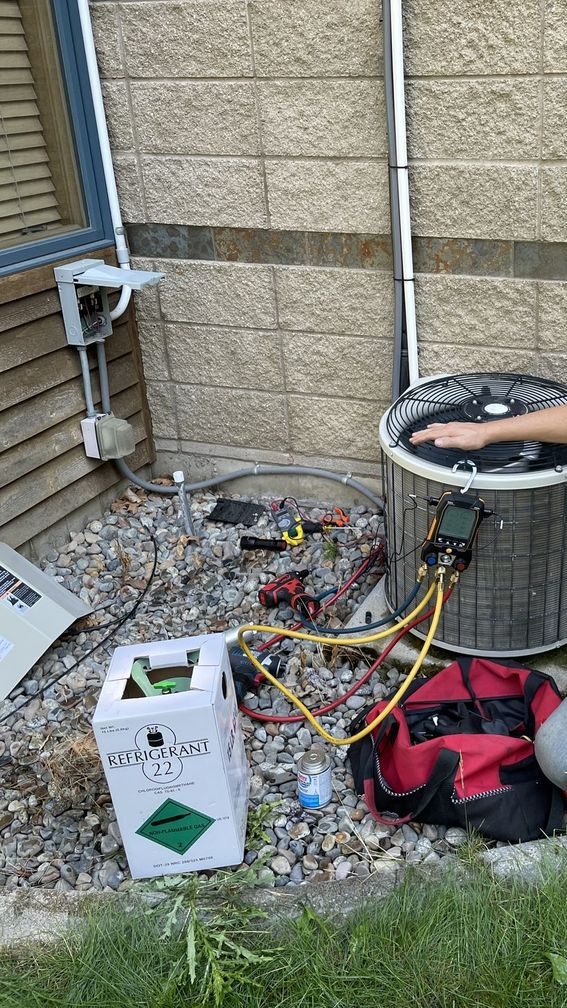
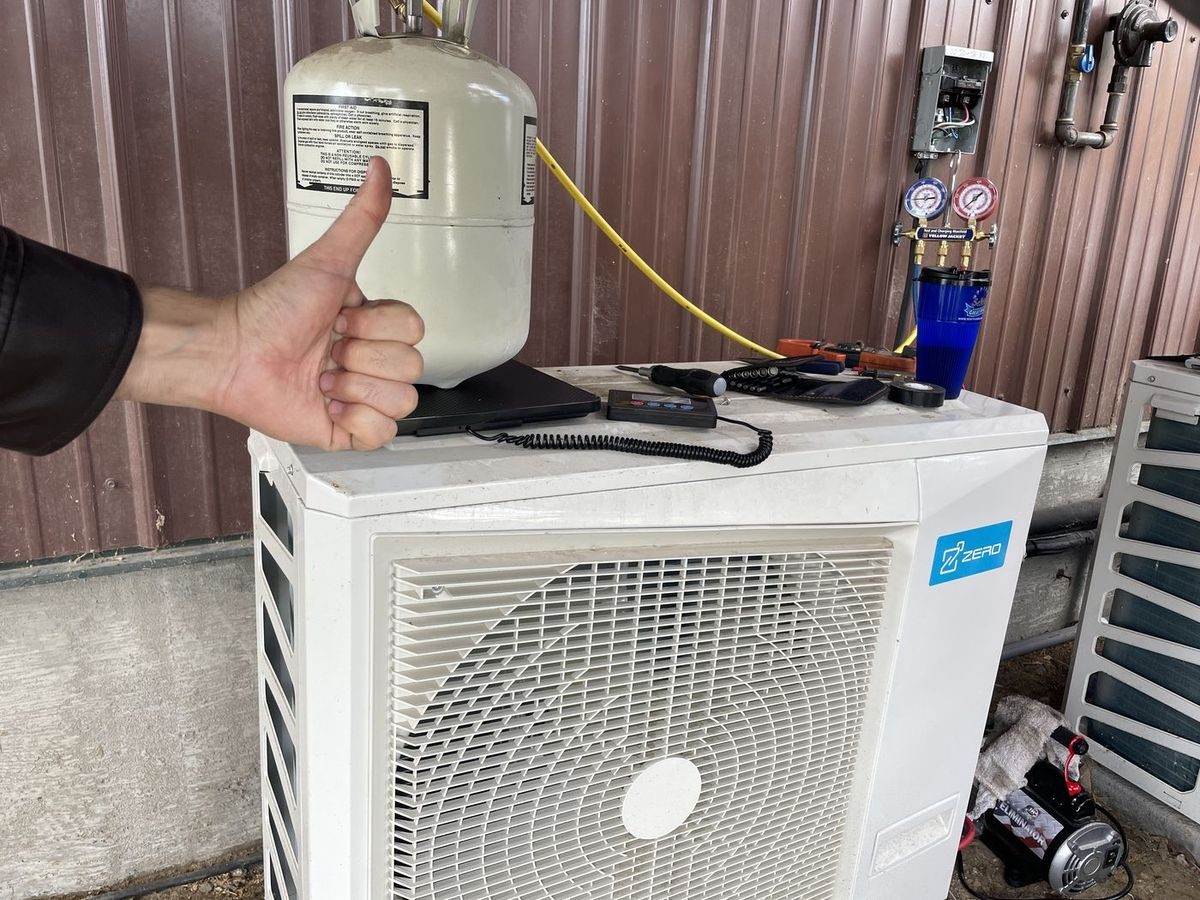
Each tab carries a photo from our service work and the first checks we make on that job. Choose a tab, or let them change by themselves.
No. 1
Olympia winters stay wet and just above freezing for weeks, so defrost does a lot of work. We read the coil sensor, the defrost board and the charge before anything else.
Go to the service page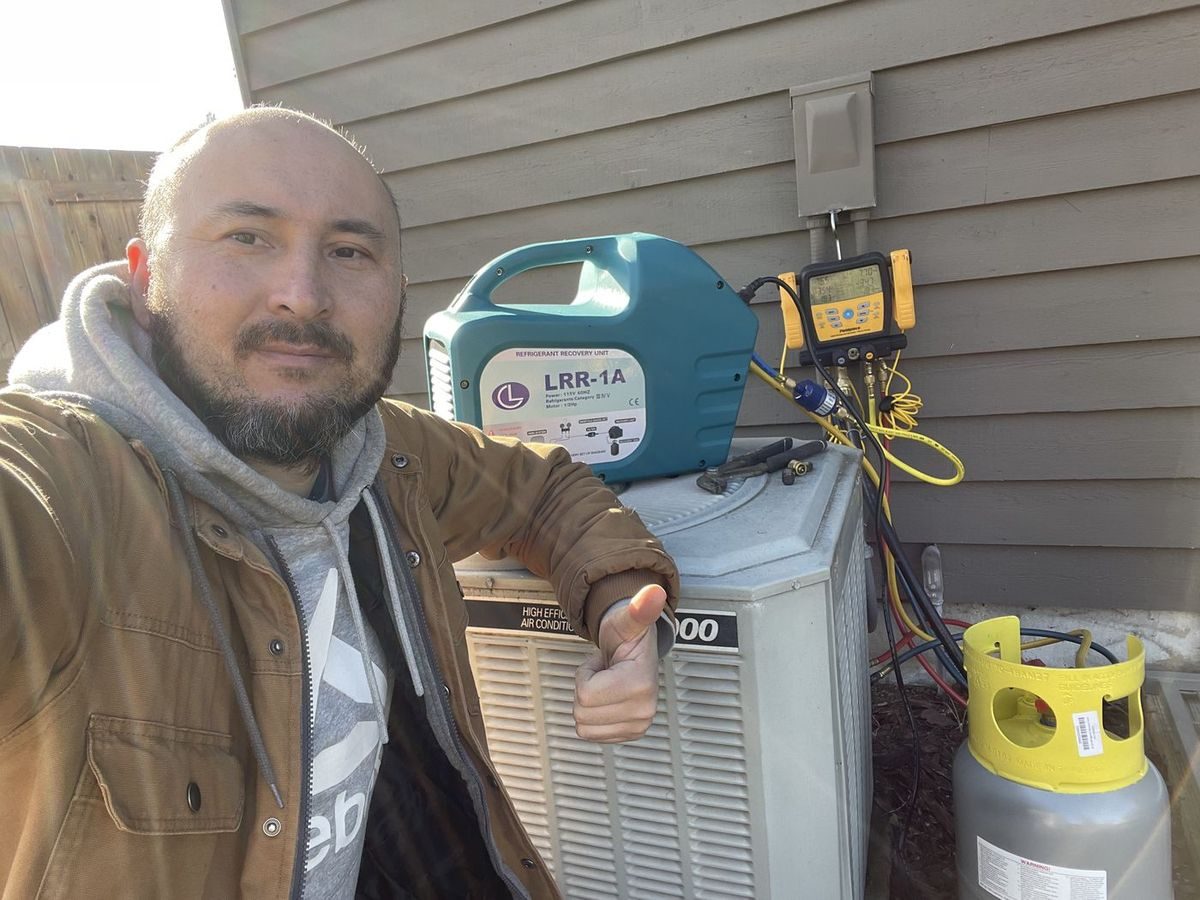
No. 2
Cooling was an afterthought in many South Sound homes until the 2021 heat dome. When a newer system lags on a hot day, airflow, the capacitor and the charge come first.
Go to the service page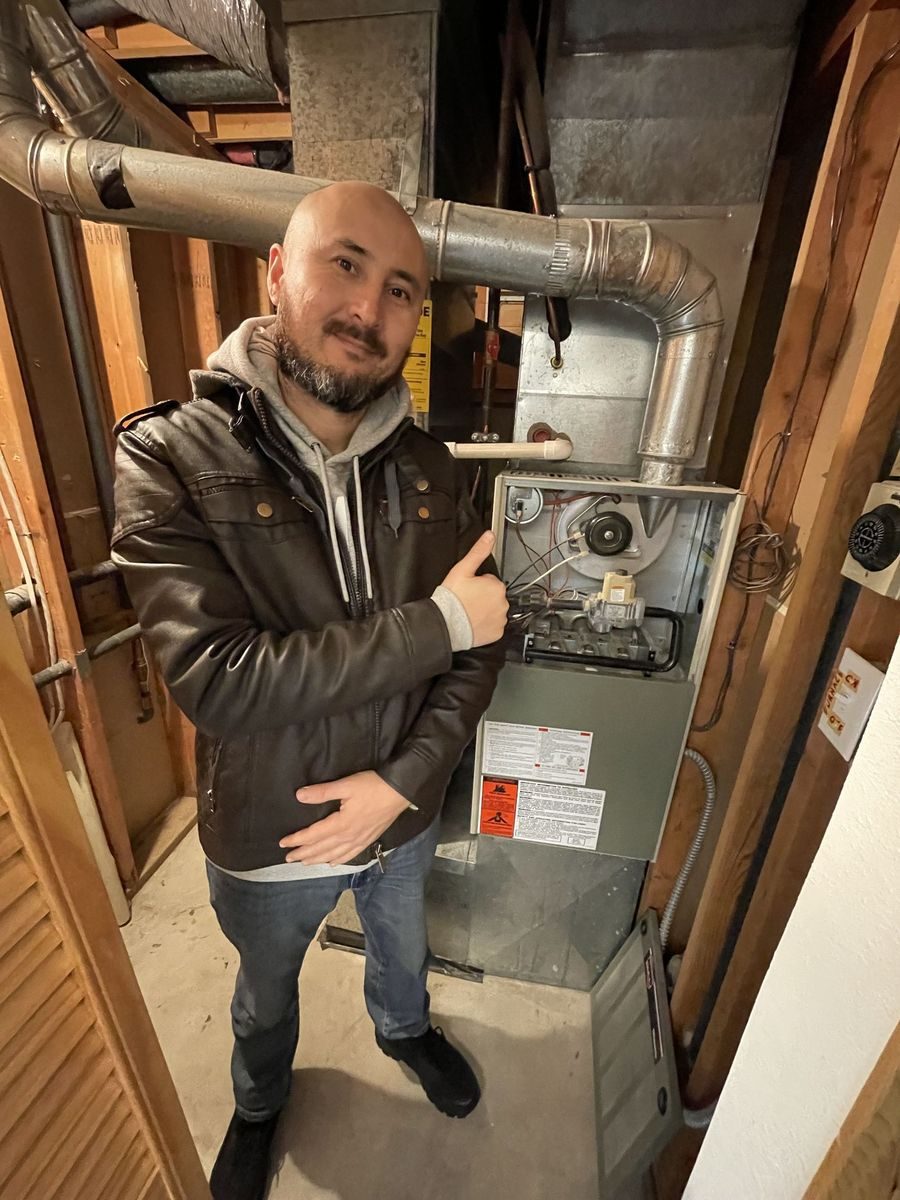
No. 3
Gas or electric, a furnace that quits on a cold morning is traced step by step: thermostat call, inducer, pressure switch, igniter, flame sensor, limit.
Go to the service page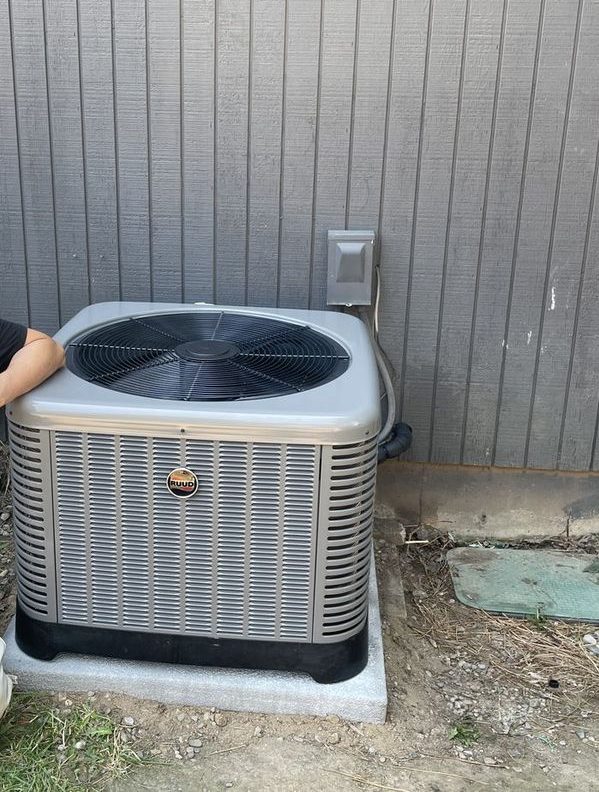
No. 4
A new system starts with a load calculation and a dry, level pad. Prairie gravel drains fast; in low clay corners we set the unit higher.
Go to the service page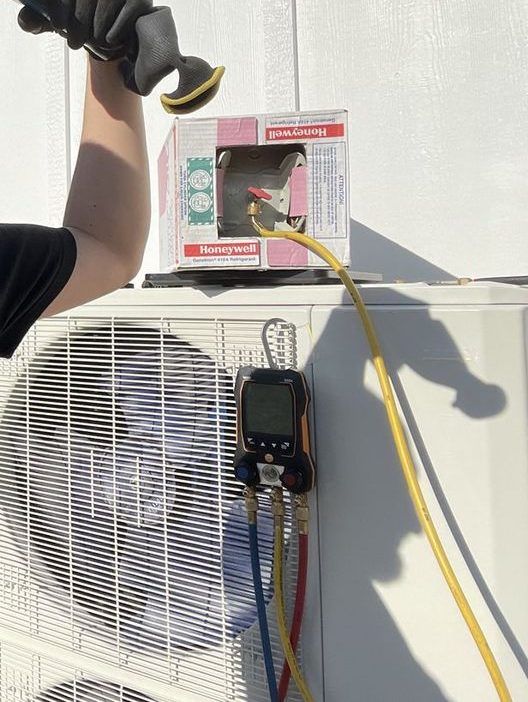
No. 5
Ductless heads suit older Olympia houses with no space for ducts. The line set runs outside, so its insulation and the condensate drain get a close look.
Go to the service pageNo. 6
Spring and fall visits clear needles and moss from the coil, open the drain holes in the base and test the defrost cycle before the long gray season.
Go to the service page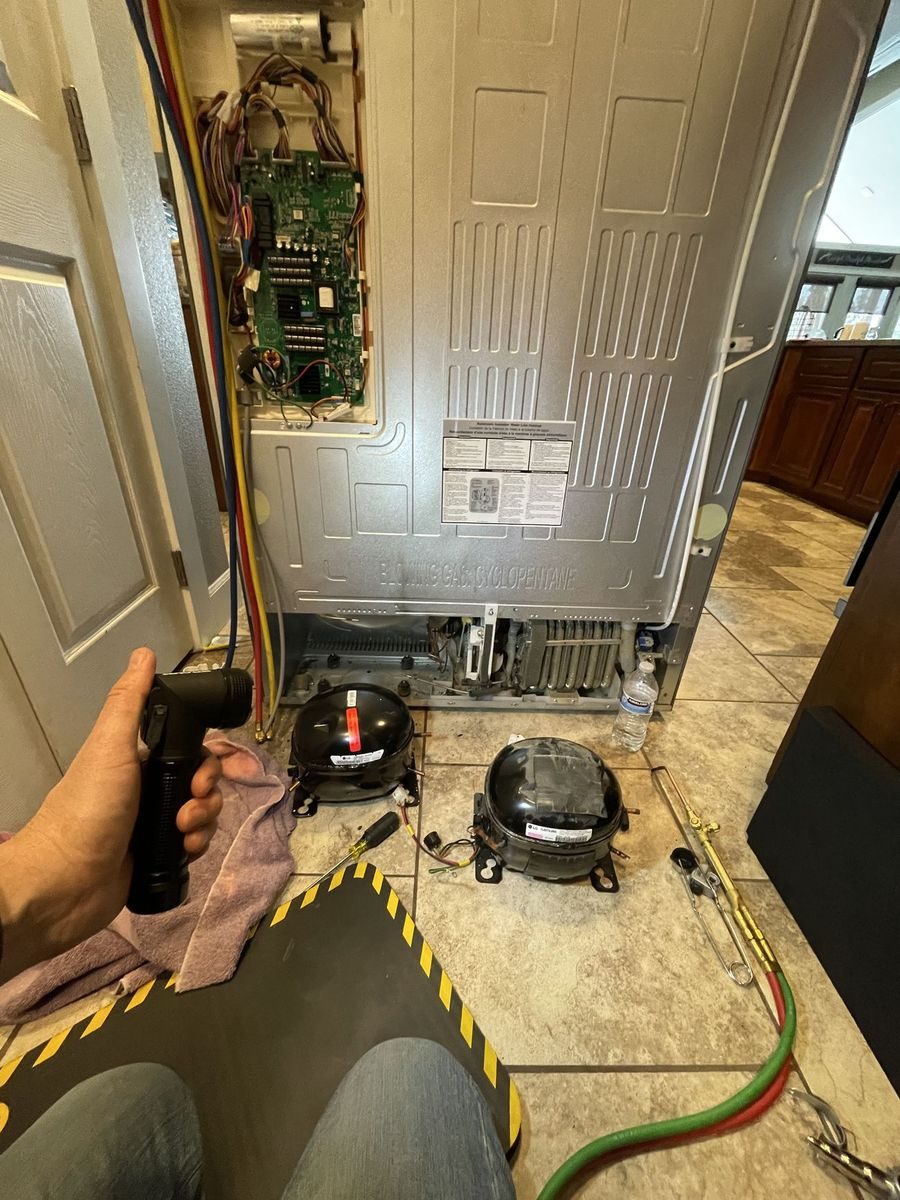
No. 7
Warm shelves usually come from frost on the coil, a fan that has stopped or a failed defrost part. Sealed-system repairs happen at home, by technicians holding EPA 608 Universal credentials.
Go to the service page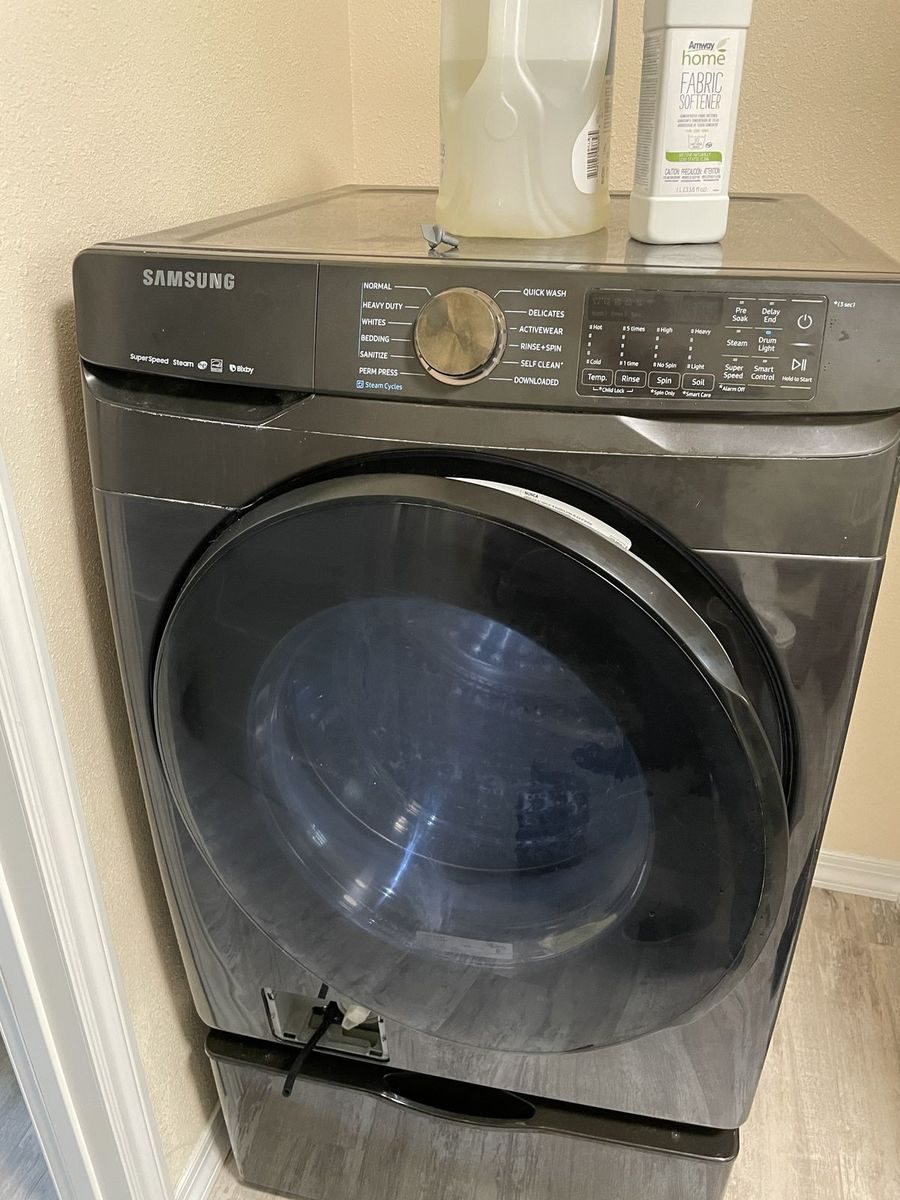
No. 8
Rural wells around Yelm and Rochester carry sediment that clogs inlet screens. A slow fill or a musty front-loader boot is where most washer visits start.
Go to the service page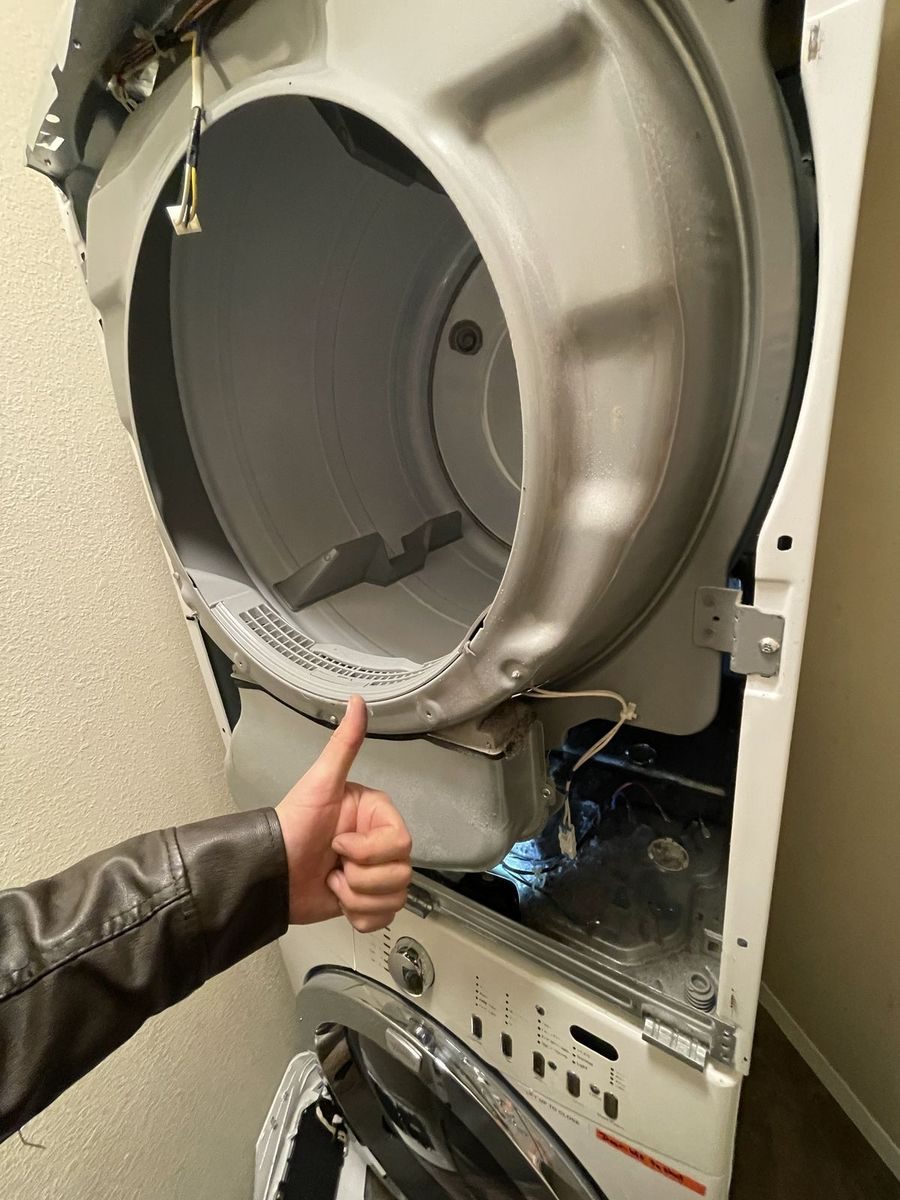
No. 9
Damp air and long vent runs make lint pile up fast in South Sound laundry rooms. The vent is tested together with the element or burner and the thermal fuse.
Go to the service page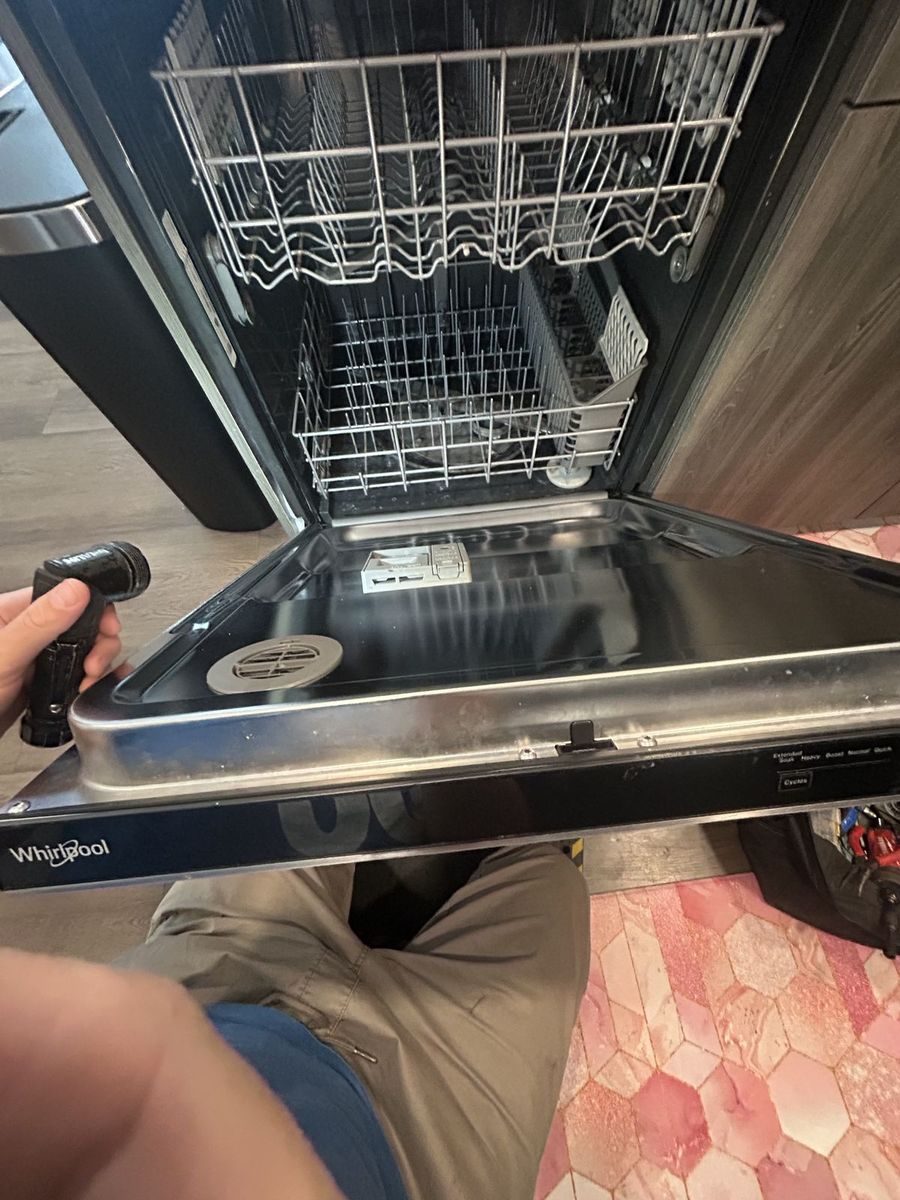
No. 10
Cloudy glasses and a tub that will not drain point to the filter, the drain pump or a hose without its loop under the counter. Each gets checked in order.
Go to the service page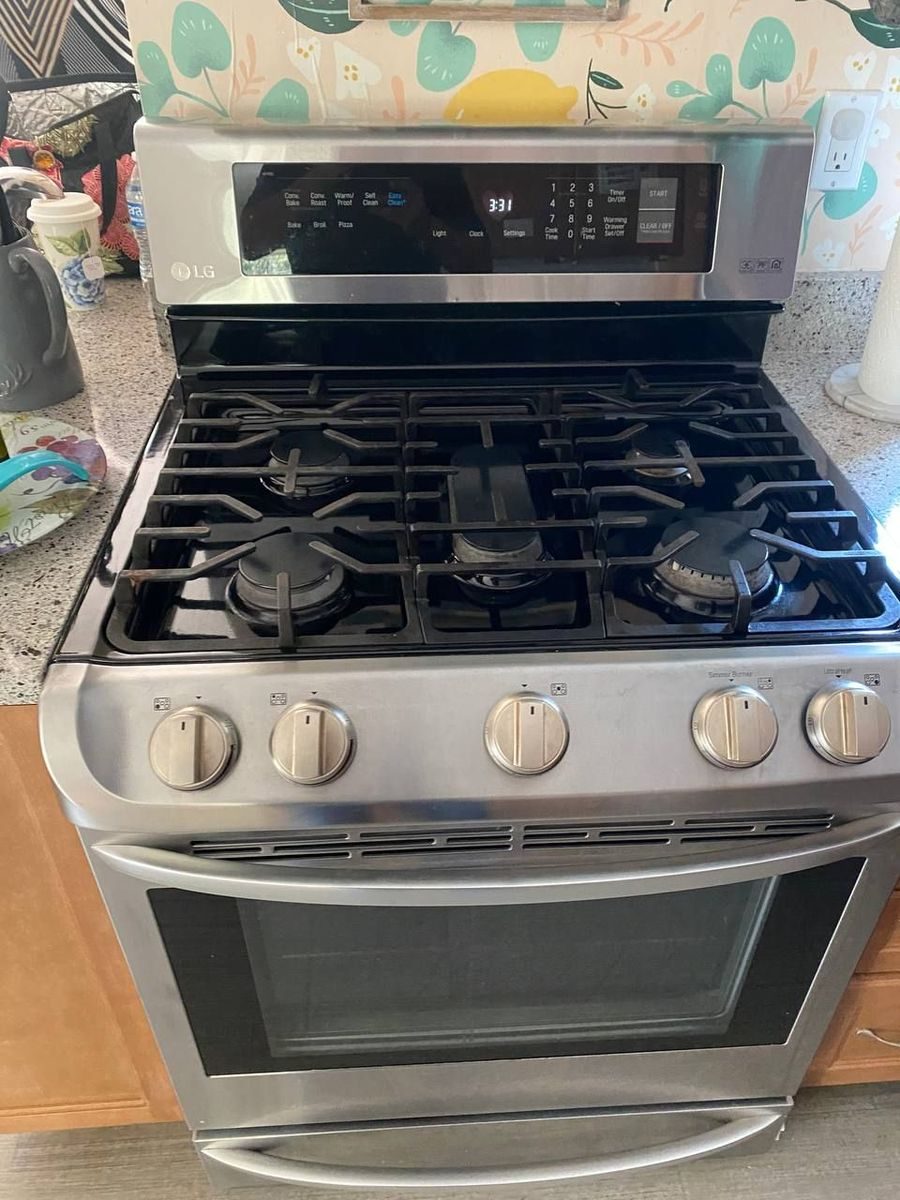
No. 11
Bake and broil elements, igniters and the oven sensor are metered before any part is ordered, on gas, electric and induction models alike.
Go to the service page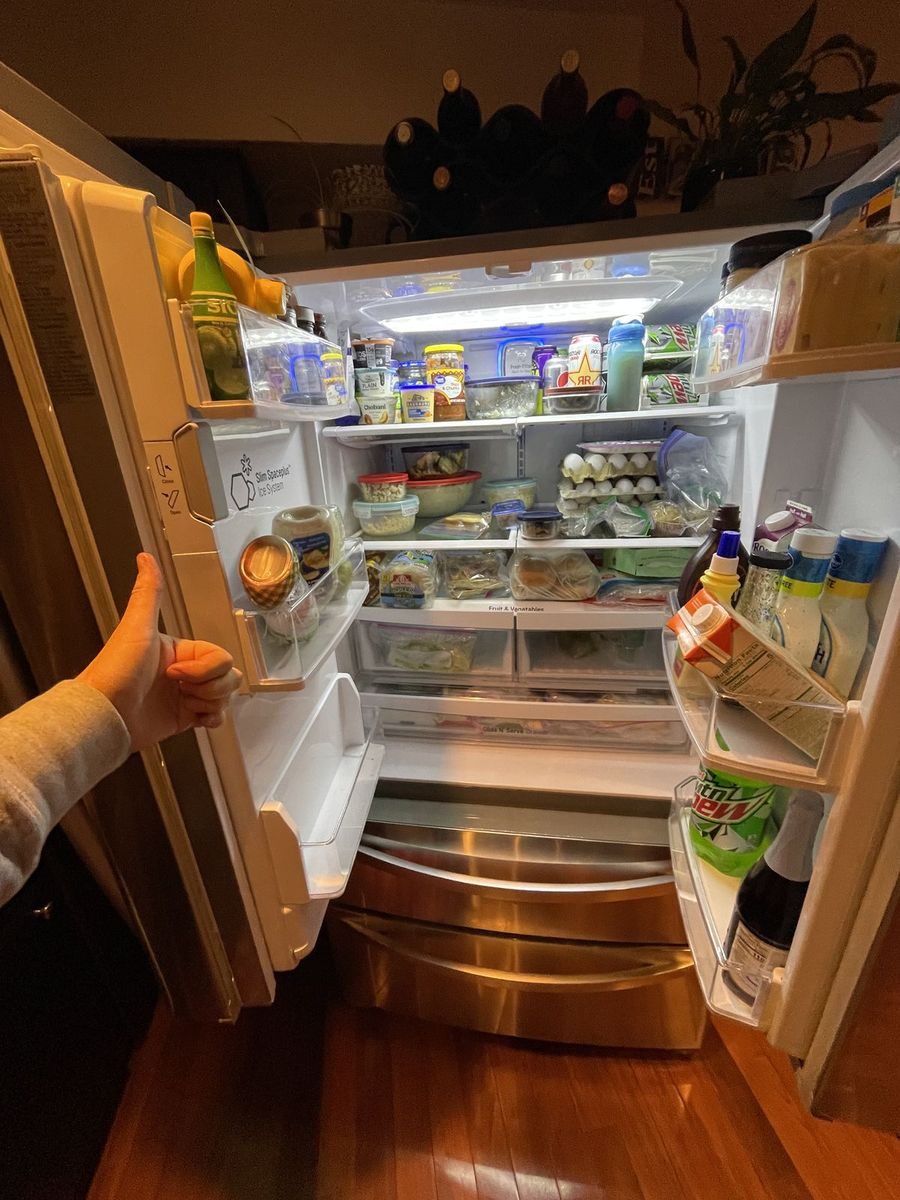
No. 12
When the ice stops after a power outage, the fill tube has often frozen. We check the water valve, the filter and the tube before blaming the ice maker.
Go to the service pageJust south of downtown, South Capitol's historic homes usually have basements and heating that has been replaced more than once. A furnace or air handler wedged into a basement corner may be working against ducts that were sized for something else, so supply temperatures and static pressure guide our diagnosis long before any part comes off the truck.
Older Eastside homes around Bigelow often heat with electric baseboard and an added ductless mini-split, or with a heat pump fitted years after construction. On mini-splits we wash the indoor coil and blower wheel, clear the drain line, check flare joints for oil that hints at a leak, and read the outdoor board's error codes.
On Cooper Point and across the Westside, outdoor units under fir canopy fill with needles and moss through every wet season. We clear the coil and the cabinet base, open the drain holes, and test the outdoor fan motor and capacitor before chasing anything deeper.
Calls from Goldcrest and Wildwood cover the whole range, from basement gas furnaces to ducted heat pumps to ductless heads in a single room. Whatever is there, the visit follows one order: power at the equipment, then capacitors and contactors, then airflow, then refrigerant readings, so a small electrical part is never mistaken for a failed compressor.
In the Northeast neighborhood and around Indian Creek, damp crawlspaces are the recurring theme. Ducts and sometimes the furnace itself sit below the floor, where condensation rusts cabinets and loosens duct joints. We check for air leaking into the crawlspace, a blower running dirty and a condensate line slowed by algae.
Along East and West Bay Drive, homes sit close to salt water, and that air pits outdoor coil fins and corrodes terminals faster than inland. We look closely at contactor lugs, capacitor terminals and the condenser coil, and suggest a gentle coil rinse as part of each seasonal tune-up.
Usually yes, with the right plan. If the current ductwork can carry the volume of air a heat pump needs, a ducted heat pump can replace or pair with the furnace; if not, ductless heads are often the better fit. We measure static pressure and look at the duct runs first. A new system arrives as one written quote covering equipment and installation, under our 06A specialty and General contractor license.
Mostly from the McAllister Wellfield, groundwater near the Nisqually area that supplies the city from September through May, with east-side and west-side city wells adding to it in spring and summer. Every source leaves some deposit in inlet screens over time. Homes outside city limits on a private well tend to see sediment and iron arrive faster, so we check those valves first.
Most often the exhaust cannot escape fast enough. Long or crushed vent runs, common in closet installs, trap humid air so the load never dries. We check exhaust airflow, test the heating element along with both thermostats, the cycling one and the high-limit, check the thermal fuse, and clear lint from the dryer's internal path. If the duct beyond the wall needs work, we explain what we found.
Yes. Mention Spanish when you phone, or add a line about it in your booking notes, and the office follows up in that language. A Spanish edition of this whole site exists as well. Booking runs the same either way: choose your date and window, wait for the office to confirm by phone, and expect the technician's call before arrival.
Only the diagnostic fee, which the office quotes before your visit is set. If you choose to go ahead, that same fee is counted within the repair price, never stacked on it. Whichever way you lean, you get the repair figure in writing before anyone starts, and nothing moves forward until you say yes. The invoice carries our written warranty terms.
Ready when you are
Use the online form to claim a day and a time window, or phone the office; someone picks up from 8 AM to 7 PM, all week long. A confirming call follows, and the technician phones ahead before pulling up.
Online booking
Tell us what is acting up and when suits you. A coordinator phones to confirm the slot, and your technician calls again when heading your way.
These registrations are open to anyone. Look the numbers up on L&I Verify, and see our licenses page for what each one covers.
Read what each license allows